Showing posts with label uganda. Show all posts

Thursday, March 22, 2012

Northern Uganda, Invisible Children, and Humanitarian Arrogance

Returnee Village near Gulu in 2006

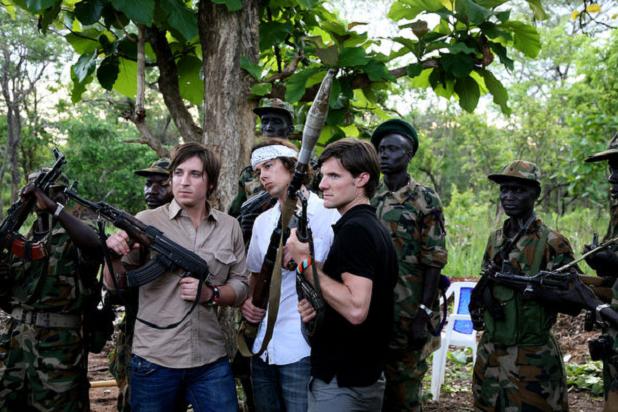
I posted something on Facebook the other day about phenomenon of the "Invisible Children" viral video that is trying to raise the profile of the leader of the Lord's Resistance Army (LRA) Josephy Kony and advocate for US military action in Northern Uganda to bring him to justice to the ICC. I have a few opinions about the conflict in Northern Uganda as I visited the region three times, twice in 2006 to do advocacy on the return of the IDPs and the reintegration of child combatants and once in 2007 to assess MSF's work on sexual violence there. While I am by no means an expert, having sat in the despicable super crowded sad IDP camps and trekked out to the areas of return (as well as having memorably spent Thanksgiving in Juba with the Acholi delegation to the LRA peace talks) I have some idea of the issue. I happened to be ziplining through the jungles of Northern Laos when the video came out and was alerted to it by my friend C and her kids who had asked her about it and wanted to know if they should donate. So I started watching all the back and forth on Facebook and the news once i got back to civilization. In general, I agreed with most of the criticism and since I was a bit late to the game, I didn't get too involved. I met the Invisible Children group back in 2006 and I just remember hearing a lot of complaints about their naivety as well as seeing this iconic photo of them which rubbed a bunch of us the wrong way (for the uninitiated, humanitarians do NOT pose with guns. We are adamantly anti-gun because we're neutral and we;re trying to remain that way. There are WAY too many rumors that we are CIA, US spies, gun runners already so we actively try to dissuade that).

Anyway, the article I posted was about the UN's SRSG for Children and Armed Conflict (Special Representative of the Secretary General) commenting that instead of pushing for a military solution to the LRA (which has failed for years), they would be better off investing that money in services for the former child combatants. This was an excellent and very timely point. The SRSG is tasked with advocating and independently investigating crimes against children in conflict zones for the UN. I'm highly critical of the UN (even more so after having worked for them for a year) but one thing I always felt was that the SRSGs who work on thematic issues take their jobs very seriously and are strong advocates for their causes. These are not just political appointments - these are people who are well known for working in these fields. They are independent and report back to the Security Council with their findings. What they don't have, usually, is much power. While appointed by the Secretary-General, all they can do is report and use their "good offices" to encourage the member states of the UN to take action. Of course, this rarely happens. There are too many vested interests at play for the UN to be able actually address most of the atrocities out there.

 I spent four years in Washington DC advocating with the US government and the UN to do more to address displacement in places like Darfur, Northern Uganda, Sri Lanka, the Democratic Republic of Congo, Liberia, Sierra Leone, Haiti, and South Sudan. I left the advocacy position that I had because I was tired of banging my head against the wall with a predominantly Republican administration and congress who were monomaniacally interested in the Global War on Terror only. But along the way, I met some amazing advocates. And amazing people who put their neck out to do the right thing for people. In the strangest of places, I would find people who were very interested in ending trafficking of children, stopping women from being raped outside the IDP camps of Darfur, stopping UN Peacekeepers from raping women, and in doing the best that they could with the resources they had. Many of them worked for NGOs, some worked for the UN, some worked for US Congress, some worked for memberstates in the UN. In general, the lessons I learned is that we're all in it together and you have to keep your mind open when you are agitating for change. You don't know what argument will sway what powerful person and get them to make the small change you want.

Then I went to work for MSF, Medecins Sans Frontieres, one of the pre-eminent humanitarian organizations in the world. It was my dream job. I wanted to be one of the people who craft the "voice of outrage". I felt that my strengths were in helping add my American citizenship and language skills to the voices of the least powerful and most oppressed in the world to try to bring change to their world. It was a decision that I was thrilled with when I took it but one that I learned to regret in the years after. While I worked for the branch of MSF most known for taking a "human rights" position, it turned out that the organization really didn't care much any more about speaking out on behalf of the oppressed. The much vaunted "temoignage" that most people associate with MSF is dying. The in-fighting between the sections and the way decisions are made (usually only about operational access - never what the people in the country might want) really got under my skin.

So back to Facebook. I posted my little link on facebook where I have many friends form my time in Washington DC, my time at MSF, my time in the UN, and from my home in South Carolina. I like to post links because it might enlighten someone who doesn't read the same articles, websites, magazines, and newspapers as I do. I also love to read other people's links. I know Facebook is not really a venue for well-thought out argument and decent discourse but I have had good arguments on it in the past that I have enjoyed and even learned something from. But the interchange I had with a former colleague made me realize what bothered me about working at MSF was the anti-intellectualism in charge there often. Some of the people that I met there were proud to be ignorant of how the UN works, how international politics works, and how MSF might fit into it. They always played down the role that MSF might have in providing information and taking a stance on behalf of the people who we are supposed to serve. I don't mean to say that my colleague I had the debate with is not an intellectual. He would probably say that he does not strive to be. He's a smart man though - moved from business to humanitarianism, has a quick wit, a smart brain, and really likes an argument. he's open to suggestions and seems to always be seeking more information. However, the debate with him triggered something in me.

His argument boiled down to "its better to DO SOMETHING rather than to advocate or talk about the problem". This irritated me because its the same sad refrain that I learned about in graduate school in the 90s. It smacks of Edward Said's Orientalism, of "the White Man's Burden", and the belief that because you want to do charity, the recipients should be eternally grateful innocent recipients without any thoughts of their own. It also reminded me of the tyranny of the "operational" - do something mentality that predominates in the leadership of MSF. They are critical of those who speak out. The common refrain was that Oxfam had sacrificed quality of operations in the field to focusing on advocacy (a point that people at Oxfam would not agree with). So my colleague has moved into management at MSF and now says "how can a publically funded talk shop criticize someone doing operations?" I heard this refrain all the time when I proposed doing advocacy at MSF. There was so much disdain for the people who spend a lot of time trying to move governments and human rights abusers to the peace talk tables or trying to get agreements to end violence. Its so easy to criticize anyone who is not "operational" but by being operational, you don't necessarily inhabit the high ground. I've seen plenty of useless MSF (and other) projects that don't either add to sustainability, address the real needs of the most vulnerable and helpless in the population, or actually cause more harm by putting local orgs out of work. I've seen the casual colonial like atmosphere of (predominantly white) expats from Northern Europe and the Americas making decisions that impact the populations of desperately poverty stricken communities without once consulting them or setting up a proper way to make sure that the programs were handed over to someone who could actually run them. There is an argument to be made that malicious governments allow "do-gooder" aid agencies to do their work for them so they can invest in other more interesting things that insuring their citizens have healthcare and education and other human rights. (Oddly enough, a comedy novel I just read called "Worst Date Ever" made this argument about Northern Uganda beautifully!) Pure operations that don't consult the population or respond with any form of accountability to them can be harmful. The AID blogosphere is filled with examples of "noble do-gooders" out to save the African continent by "just doing something." I think there is even a twitter hashtag called #SWEDOW (Stuff We Don't Want) that is exactly about this phenomenon. People smarter and more on top of things than me have written about this often.

Despite my criticism of MSF in this post, I still support a lot of the work that they do. But increasingly I am disappointed in the (lack of) stances that they take- no longer taking opportunities to speak to the Security Council to bring the voices of the most powerless to the most powerful, refusing to speak out (even if the population begs them to) in order to maintain programs that may not even be reaching the most vulnerable, and my favorite example - making everything in their communications about them - "MSF DENIED ACCESS TO POPULATION" rather than focusing on the community losing life saving healthcare assistance. It's become a rather navel-gazing organization and not the place I thought it was until I went to work there.

PLEASE NOTE: This is a rant. My friends working at MSF may or may not read this. This is not to denigrate the hard work that they do but to participate in the time -honored criticism of the organization that we all worked and sweated and slaved over. In MSF, I earned the right to criticize them.

My point is that I still believe strongly in advocacy. There is a complimentary role for advocacy and operations. You do not have to sacrifice one for the other. And being a "doer" and not a "thinker" does not make one superior to others. The UN is an easy target for MSF snobbery. It is a talk shop. People there know that. But they also know that the only thing that has ever stopped wars and brought about peace is talk talk talk. So they have their role to play. MSF and other operational agencies have their role to play. And the independent SRSG's have their role to play in pointing out that governments could make a difference but don't. And Refugees International and Human Rights Watch have their role to play in pointing out that the UN is inherently conservative and doesn't like to rock the boat and needs to be kicked in the ass often. But sometimes, the organizations who like to criticize should sometimes look inside their own houses too and see whether or not they are doing everything they can too before they get on their high horses.

Sunday, February 27, 2011

Old Emails: 2006 in Northern Uganda

November 7, 2006
Kampala to Gulu

When RI visited Gulu in February 2006, it was too
dangerous to drive to Gulu. Due to attacks by the
Lord’s Resistance Army (LRA) who were fighting with
the Uganda People’s Defense Forces (UPDF), NGOs
usually flew or went in military convoys. Since the
government of Uganda and LRA have begun peace talks in
Juba, South Sudan, a lot has changed. My colleague,
Madame X, and I drove to Gulu from Kampala on Tuesday.
While there was a lot of initial confusion about
whether or not we would have to leave at 5am (as many
of you know, I’m not a morning person), we eventually
decided that we would leave at 7am so we would reach a
key bridge before the military convoys and get to Gulu
around 1pm. It was raining and quite cool when we left
Kampala and made our way through the traffic clogged
rush hour listening to a local radio ‘morning show’
that specializes in calling up listeners and
pretending to be in love with them and encouraging
them to declare their love as well. About an hour
outside of the city, the scenary changed- the sun came
out, the countryside became very lush with banana
trees and mango trees and occasional monkeys running
up to our car as we swerved around potholes.

Our driver, Andrew (not his real name), started to
tell me about his childhood in Gulu. “Sometimes, I sit
with my wife and I ask her why I was born an Acholi”
he told me, “to be born an Acholi is to have nothing
but problems.” He elaborated later – “my brother was
abducted by the LRA when he was fourteen years old. We
do not even know where he is. We believe he is dead.
He is dead to us. You see – we cannot be living always
in the past. We have to try to survive. My family fled
to Kampala when the rebels came to fight. But it is
the UPDF who gives us the problems.”

When we drove up to the outskirts of Gulu town, we
began to see the immense government-controlled camps
where the displaced Acholis live. While the conflict
with the LRA has lasted for over 20 years, it wasn’t
until about 1996 when the government of Uganda
mandated that the bulk of the population had to move
into these camps where they could be ‘protected’ by
the UPDF. In order to protect the population, the UPDF
enforced a very strict curfew, beating or killing
anyone found outside the camps for suspected
collaboration with the LRA. Sadly, putting everyone in
the camps, allowed the LRA to attack the population
with ease. Many times the camps would be attacked at
night and children abducted and huts burned down.

Andrew became more visibly agitated the closer we came
to the town. “See that soldier there? All he has to do
is use his gun and steal someone’s bicycle. That
person would have to give it to him. We have no power
here in our own land.” We arrived at our guesthouse
and he was anxious to leave. Have a cold drink, we
offered. “No. I am not from here anymore. I want to go
home to Kampala.” He said and drove off back down the
Gulu-Kampala road.

Friday, December 19, 2008

In action in Uganda

In June, I presented at a conference in Uganda supported by the RAISE Initiative. I was just checking out their website and found these photos of me "In action" - thought I would share them. See - from running around in landcruisers and interviewing women in war zones, I've turned into a convention-eer. But what a nice convention it was by the shores of Lake Victoria.


For any JSI alum reading this, yes, that is Steve Kinzett that I'm hanging out with.

Sunday, June 29, 2008

R and R in Uganda

Since my travel agency was unable to get me on a flight home until Sunday night and the travel planned from Kitgum to Kampala was on Friday, I faced the prospect of two days off with no plans.

I wanted to go to Jinja where they have the whitewater rafting into the source of the Nile and Lake Victoria for my two day break before returning to Amsterdam. I didn't bring any good travel clothes since I originally only came to Kampala for a conference. The idea of white water rafting or bungee jumping in a skirt didn't seem too smart and I couldn't see any shops nearby that sold cargo pants or shorts, since I was staying in the middle of a suburb. I asked the Ugandan staff at the MSF house (since no expats were around) the best way to get there. They insisted that I should take a matata. I decided to do it since it wasn't really obvious how I would hire a car and I didn't have a telephone to make any arrangements and the phone in the office was locked and inaccessible.

On line, and courtesy of a 10 year old Lonely Planet sitting in the office, I found a nice guesthouse that promised solitude and bird watching on the banks of the Lake Victoria. Since every morning since I had arrived in Uganda, I had been woken up by loud rooster crows, dog barking, goats bleating, and cows mooing - I was very much looking forward to a little R and R in a garden cottage with a “Balinese style bathroom" by the lake.

After a hair raising journey on the Matata crushed in with 13 other passengers, the one sitting next to me carrying three large boxes of glucose biscuits, I decided that I should hire a car for the ride home. Ugandan mini buses are scary! I was on the flip down seat next to the door and could clearly feel every pothole taken at 7o miles an hour. We swerved around large petroleum trucks, flew past cows in the road, and darted in and out of traffic for an hour and a half.

The Guesthouse seemed very close according to the map from the website. It was not. I ended up taking a moto taxi that assured me he knew where it was but got us lost indeed. We finally got here and the guesthouse was LOVELY. The main house has a large sweeping garden and there are little garden cottages tucked into the outskirts of the garden, all with a view of the lovely Lake Victoria.

I took a shower in the almost Balinese style bathroom (still had a roof which is NOT Balinese) and there was no hot water. No matter. The little cottage I rented was lovely with beautifully decorated interior and lush gardens all around. I sat on the front porch and read for a while. I went up to the main house to have some drinks and the staff was lovely and sweet. I had dinner and went back to my cottage to sit on the front porch, look at the stars and the moon reflected on the lake, listen to the birds, and drink a beer. Instead, the crappy Ugandan guesthouse right next door and over the fence behind my cottage, which I had not noticed before, turned on VERY LOUD rap music. They have no one staying there so it was the owner and his friends drinking beer, getting louder and louder and louder. From 9pm until 11pm, I tried to read and ignore them but all I could hear was the same crappy faux reggae song over and over. It was as if it was right in my bedroom. The stars were out, the lake was there, the crickets and frogs were singing but all I could hear was their crappy music. Between songs, I would try to shout “Turn down your music, please!" but to no avail.

I finally went to sleep at 11pm. I had set my alarm for 10am so I could go see the falls and get back to Kampala in time but I shouldn't have bothered. at 7am, the music started up again, rudely dragging me from my sleep. I looked over the fence, and there was no one there. This time it was the radio so every ten minutes, the songs (with extremely loud and thumping bass lines) were interrupted by Lingala being shouted over the song in a shrill manner. I went up to the main house to complain. A lovely older Ugandan man hung his head and said “there is nothing we can do, it is another establishment". Surely we can ask them to turn the music down! "They will refuse and will just shout at us. We have tried several times". I decided to go over and take matters into my own hands.

He accompanied me. We walked into the grounds- there was an abandoned dried swimming pool, some tables scattered around the yards, and a big pile of beer bottles sitting by the stereo. The stereo was screaming away and the control was inside the dining room. There was no one to be seen. We called out hello! Hello! We knocked on the doors. We walked around looking for someone. I wanted to go inside and just turn off the music. The older man stopped me. They can cause problems for you! He said - they may accuse you of taking money from inside their establishment and call the police. Can't we call the police on them for disturbing the police, I asked? It's 7:30am on a Sunday morning! No, they will not come. He then informed me that he was sure they were inside hiding from us. INFURIATING!

Thwarted, I went back to the main house to eat breakfast and stew in my anger for 2 hours. Its 9:30 now and I can't hear the thump thump thump of the music. I think they may have turned it off. The gardens are quiet again and I can hear the birdsong. If the owner of this establishment can't deal with her crappy neighbors trying to make a quick buck with a hotel, she's going to lose all her hard earned business investment. I was paying $75 a night to stay in a quiet tranquil cottage in a garden overlooking the lake. If I wanted a loud rowdy establishment, I could have paid $20 and stayed at the backpacker hostel. I feel bad for the lovely older Ugandan man who tried to help me and the sympathetic Ugandan staff who apologized to me several times. However, I don't know that I would recommend anyone staying here until they take care of their neighbors. What a pity.

Saturday, June 28, 2008

Sitting on the banks of Lake Victoria

I'm sitting at Gately-on-the-Nile's computer in a lovely colonial villa overlooking Lake Victoria in Uganda. After four days in a sumptious resort on Lake Victoria in Kampala at a conference, I then took a 10 hour car ride up to the North to Kitgum, Uganda - near the border with Sudan. Coincidentally, this was the site of my last mission for Refugees International in November 2006. After a long and grueling trip back to Kampala and a "Nile Special" night out on the town, I'm reveling in the tranquility and beauty of Jinja.

It was interesting to see the difference in Northern Uganda. Gulu has exploded into a typical NGO/UN town. Crowded and expensive - now the most expensive city in Northern Uganda - a sad side effect of Jan Egeland's forceful drive to turn the world's attention to Northern Uganda's forgotten crisis. The IDP camps in Kitgum, the most vulnerable of the counties, I would argue, are not as crowded, yet still shocking to see- a blight on the beautiful landscape. People have moved out but the team spoke of a tension in the National staff that is more palpable than before. Everyone is convinced that the LRA are back in town. Just hiding in the tall green grass waiting to abduct children, kill civilians, and wreak havoc.

I spent the night in Madi Opei, a camp about 1 hour north of Kitgum town where my organization runs a medical clinic with the ministry of health. It was so great to be back in the "bush" and sleeping in a mud tukul with bucket baths under the stars. Alyson, my sister, probably doubts our blood relationshiop when I send her emails telling her how happy I am to talk to the chickens in the morning when I walk to the outdoor shower. I love tucking myself under mosquito netting and seeing geckos run around on the walls. She belives that the Holiday Inn is roughing it. The Uganda team is funny and competent. The National Staff (I don't know why we segregate them) intensely committed and hardworking. I did what I was hired to do. Yet it wasn't the fulfilling experience that I had hoped for. I don't know why.

I guess my mind was clouded with concerns and fear for my father and sister moving in together in the midst of all of it. My father fell in April and broke his arm. His slow recovery prompted Alyson and I to decide that it would be better for him and bring us more peace of mind, if he weren't living alone anymore. Luckily, he agreed. I was able to find them a beautiful house in Columbia to move in. Unfortunately, right as Alyson was packing to move herself, she fell and broke her leg. My leave time had been mostly depleted by my five weeks in Sumter caring for my father as he recovered from surgery. It's been unbelievably frustrating and scary to be a six hour time difference away, hovering by the computer hoping for news from home.

My unexpected trip to the north of Uganda has been enlightening. I"m finally doing the work that my org supposedly wants me to do. I'm good at it. I like it. But it feels strangely unfulfilling when I long to be at home with my family. Work isn't enough anymore. At the conference, I made contact with old friends and put out the word that I'm looking for work. I think I need to be closer. I can always move back to Europe, right? I hope so. Either way, living in a city that I like is no substitute for being there for my family.

I met up with another section of my org's crew last night in Kampala. I was staying in my sections house in a suburb of Kampala all alone - six bedrooms and me! I have no telephone, I had no idea where I was, and was a bit frustrated and lonely. We went out for Thai food and then dancing at the expat hotspot. It was a faux Irish bar called Bubbles O' Malley or some such thing. Really gross. It was fun and exciting when I did it in Sierra Leone. In Uganda, the fact that I'm at LEAST 10 years older than all the silly aid workers and missionaries (?!) dancing with the beautiful young Ugandans out on the prowl made me sad. The old, desperate looking men dancing with young beautiful Ugandans disgusted me as it always does. Am I this person? I love to dance and it was fun laughing and talking with the Spanish section. I felt much more a part of the crowd than I usually do in the dire Eik and Linde where conversation is so forced and boring. Ops this, Ops that. Where is the joie de vivre for our jobs? I feel like headquarters is a refuge for grim, loveless, workaholics determined to wring some sort of meaning out a life in the field.

In the field, however, the joie de vivre is there. The laughing. The mixture of a motley group of people. But not in this bar. In Bubbles O'Malley (where the waiters wear tshirts that declare them Craic dealers), the stench of desperation sticks to the older people. For the young and hedonistic, risking it all on the battlefield and dancing it off in the capitol seems appropriate. Yet I prefer to go to bed at nine with my book most nights now. Not the party girl I used to be.

Anyway, I am enjoying the good food, the beauty of the setting, and the books I have snagged from the org's bookshelves. I can't be that different from my fellow co-workers if we all like to read the same things, can I? But for some reason, the fit is not there.

Tuesday, May 20, 2008

Memories of Northern Uganda

I found this video I took in November 2006 in Kitgum, Northern Uganda that I thought you all might like.

Sunday, November 26, 2006

Thanksgiving with the Lord's Resistance Army

One of the perks of this job is that I find myself in the strangest places while the rest of my friends and family are enjoying normal, wholesome activities. I've spent Thanksgivings in Ghana, en route to Darfur, and finally now - in the capitol of South Sudan, Juba!

If you remember my previous descriptions of Juba, you'll be amazed to know that in the past 8 months - a lot of things have changed. No, there still aren't roads, the soldiers still haven't been disarmed, the refugees and internally displaced people are still on their own to try to make things work. BUT - there is an ongoing peace process being hosted by the Government of South Sudan (Riek Machar - better known as Mr. Emma's War to some) who is trying to get the Lord's Resistance Army and the Ugandan People's Defense forces to sit down and stop terrorizing people in Uganda and south Sudan. And there are now MANY MANY restaurants and tented camps to chase down potential interviewees in Sudan. The development economy strikes again - gotta feed and get those humanitarian workers drunk!

Much to my chagrin, we only learned that the peace talks had gone into recess the evening before we left for Juba. We had to go anyway because we had spent two whole days plus several hours trying to make it work - get the South Sudan visa, get a place to stay, get a ride to the airport, get the name of the guy in charge. All of that would have been for naught and we had made a promise to our boss that we would do our best.

So we arrived in South Sudan with heavy hearts and visions of the previous visits collapsing tents, mudslides, and strandings vivid in our mind. My friend Melissa, that I met last time, picked us up from the airport and drove us back to the OCHA compound. So far so good - everyhting looked the same except that there were a lot of road construction vehicles around. Got to the OCHA compound and everyone was the same! I saw all the same people. Drove to Mango camp - slightly different but still very familiar. Next day - our car never showed up to pick us up. Same as last time! Went to the OCHA compound and sat around trying to make appointments - same as last time!

So what's different? Well - after wandering around and being told that everyone we had come there to see had gone to Kampala for the weekend (where we had been), we randomly ran into a man looking for directions to UNICEF on thanksgiving day. We gave him a lift over there and when we got there, we asked him what he was doing there. He said - "I'm part of the LRA peace delegation!" Exactly the people we had come to see. We hurriedly made an appointment to meet him back at 5pm at their camp "Juba Bridge".

Kavita and I arrived early to our appoinment and all fo the LRA delegates got up out of their sleep to come sit in plastic chairs near the river Nile to talk to us. Ugandans, particularly Acholi Ugandans, tend to be very soft spoken. Sudan is a loud place. As the first man began to speak, someone walked over to the large television that was perched in a tree (so if you didn't want to gaze at the Nile, you could watch satellite television in front of the nile instead) and switched it on. The familiar opening notes to the intro from "Six Feet Under" banged out. Behind me, a construction worker began to weld something. The flies made a beeline for my eyes and we began the familiar greetings and courtesies for our interview.

Two hours later, we were still talking and trying to get them to admit that the International criminal court wasn't pursuing Joseph Kony (famed abductor of children and mutilator of victims) fo no reason. They insisted over and over again that he was a freedom fighter. What about the children who were abducted from schools and forced to kill their class mates? What about the mutilations of people and the accusations of cannibalism? What about Kony's 'rule by the ten commandments' and previously apolitical stance? All of those abuses? Commited by the UPDF. All those children we interviewed? Brainwashed by the UPDF. But the sad thing was, these guys were the intellectuals, the prized sons of the Acholi people who had been exiled from their land and sent away to the US, to Nairobi, to the UK to make money and send it home to help their brothers and sisters. "We're the ones that pay the school fees." they told us. And they were intelligent. They were well spoken and proud. But I think they made a deal with the devil to represent him while they try to bring peace to Acholiland to let their brothers and sisters leave the horrible displacement camps and go home in peace. I don't think they believed what they were saying to us about Kony. I think they are just desperate for peace.

Kavita and I went back to our little tented camp on the banks of the river Nile - just a few blocks up and sat down to analyze our Thanksgiving. Peace seems possible but noone knows what will happen. The ICC indictments are a stumbling block. I was dying to ask the LRA delegation that why, if Kony was so innocent, he was afraid to face trial in the Hague? If he loved his people so much, wouldn't that be a small price to pay to bring them peace? But we had listened to every conspiracy theory under the sun from them. We had heard all about the agricultural land grab going on (not that I don't believe it) and our throats were parched from the dusty night in Sudan and we didn't feel like we were making any progress. So instead, we went back to Mango camp. Sat under the mango trees looking at the Nile work its way up to Khartoum, and toasted to peace in Uganda and Sudan with a cold Bell lager.

Happy Thanksgiving

Tuesday, November 14, 2006

Pader and Small Luxuries

After two days in Kitgum, I was apprehensive about arriving in Pader. According to my colleague, when she was here in 2004, conditions were dire and the lodging choices were extremely primitive. The hotel she stayed in was the kind where a drunk Ugandan soldier wearing sunglasses at night with three women on his lap sits and drinks beer all night and shouts at you on your way to avoid the outdoor latrine. She warned me that we might not be able to bathe the whole time we were here.

Imagine our joy and surprise to find that GOAL, an Irish NGO working on water and sanitation here has a guest house. While there is no running water, there are abundant jerry cans filled with water and electricity for three hours a day. Today, I got to take a bucket bath with a giant spider in a concrete stall lit with a kerosene lamp. But I was thrilled that I could get water and wash the dust off of me.

But the most amazing thing is that there is a restaurant in town and internet access! In our room even! The 21st century is an amazing thing. The reason the restaurant is so exciting is that I just spent three days in Kitgum where there was only one place to eat in town - and it was terrible. The BOMAH hotel has the worst service I've ever seen in my life. You must literally chase the waiters around the courtyard that is littered with abandoned plastic water bottles to get them to take your order. And you should do this several times as they forget to put it in. And all they served was beef stew on rice. There don't appear to be any vegetables in Kitgum so the beef stew as gristly hard to chew beef floating in a greasy gravy. Luckily in Uganda, they have abundant bottles of chili garlic sauce on all the tables so you can also flavor your rice with that.

The restaurant in Pader though is my favorite thing here. It is run by young child mothers who have been released from the Lord’s Resistance Army. Many of them arrive from the bush, malnourished and pregnant with small children and they are very young themselves. It is difficult for them to go to school and many of them face stigmatization and rejection by their families. Another mouth or three to feed puts a strain on families in these overcrowded camps.

This amazing woman, Alice Acca, runs a group called CCF: Christian Counseling Fellowship, that has a reintegration center where the young mothers as well as other returning LRA abductees can stay for a few weeks while they get used to being free. They provide counseling, safety, and a secure environment for the young mothers as well as counseling their families and the community that they will be reintegrating into. In addition to these services, Alice is also launching vocational training and sells the bead necklaces that the girls make. I will be returning with some examples. But one of the most innovative ideas is the bakery and small restaurant that these girls run. The food there is delicious and its clean and neat. The residents of Pader are happy to have a bakery. It’s small steps like these that may help these girls and their children start a new life.

And they make a delicious vegetable dish that is basically spinach in a peanut sauce. So I can now check email and eat vegetables and hopefully help out some of these young child mothers at the same time. Life is good in pader.

Friday, November 10, 2006

Good Times in Gulu


I went out to the most beautiful place today –a site where some Acholi were rebuilding their village. Since the peace talks between the LRA and the government of Uganda, there has been a virtual peace in Gulu – the heart of Acholi land in Uganda. The roads are full of people moving between the ‘mother camps’ where they were forcibly interned by the government of Uganda and areas that are quite close to the people’s areas of origin but have not been formally declared accessible by the government of Uganda.

The weather here is perfect- today we had a clear blue sky with fluffy white clouds, seventy degree weather without humidity, a fresh breeze blowing through the trees and grasses bringing the faint smell of wood smoke to our noses, and the faint sound of a goat crying and the sound of birds and insects in the trees.

When we got to the site, on our left was a new Ugandan army deployment where soldiers dug ditches and women washed clothes. A soldier was dancing to the sounds of a radio as we pulled up to the road block (a stick placed across the way with the words STOP written in white chalk next to it). I was a little nervous about them because we’ve heard terrible stories about the way they’ve treated the Acholis. From the road we could see the outlines of a few huts but as we got closer, we noticed that there were many men building bricks, hoeing the ground, and working to clear some of the tall grass around the area. After the customary greetings to the elders of the site, we pulled up some wooden benches to interview the men. “We are happy to be here, the men told us. “Before we came here, before the peace, we were in the ‘mother camps.” The mother camps are the immense government-controlled camps where the displaced Acholis live. While the conflict with the Lord’s Resistance Army here has lasted for over 20 years, it wasn’t until about 1996 when the government of Uganda mandated that the bulk of the population had to move into these camps where they could be ‘protected’ by the UPDF(Ugandan Army). In order to ‘protect’ the population from the LRA, the UPDF enforced a very strict curfew, beating or killing anyone found outside the camps for suspected collaboration with the LRA. Ironically, the decision to put everyone in one location, allowed the LRA to attack the population with ease. Many times the camps would be attacked at night and children abducted to be used as child soldiers and huts which were built on top of each other were burned down.

“We are very free here.” They told us.” More so than in the mother camps. We can move around and work our land. We feel safe because the army is here but we have not seen any rebels for a long time. We want a better life for ourselves, we have suffered for over 20 years.” Because the place was so beautiful and the people so humble and sweet, I was almost moved to tears. Later on, as we drove back, we came upon a traffic jam in downtown Gulu. Our driver told us “It is the women with the peace march!”. As we got closer, we could hear the music blaring and the beating of the drums. Everyone was turned out on both sides of the road and we maneuvered to get a good view. Soon the women came into view – some wearing UNIFEM tee shirts, many with small babies tied to their backs, some in colorful green dresses. In the front were the older ladies dressed in their finery. They strutted and danced and chanted. Many were carrying banners that said “No peace without women.” They were marching to Juba Sudan to protest the fact that there are very few women involved in the peace talks. When they saw me taking photos, they began to cheer and clap. “We want peace now. Now is the time for peace. No peace without women.” As they went by me, I applauded them – I felt a bit the fool but I was so happy that they were out there doing this. It’s such a joyous time to be in a return. I felt that way in South Sudan when I saw the trucks frull of Sudanese pull into Aweil Town. I felt that way when we got caught in a traffic jam full of old Mercedes and buses as the Lebanese poured back into the south. And I feel that way now. It reminds you of just how much these people have suffered.

Tomorrow we are off to Kitgum, which is closer to the Sudan border and therefore less developed. I feel like I’m leaving a little piece of paradise behind.

Sunday, November 05, 2006

Uganda, Baby!

Here I am in Kampala - the capitol of Uganda. I was excited to come here because Alec had told me that it was the party capitol of Central Africa - great food, wonderful wildlife, calm, nice people, nightclubs, bungee jumping in the source of the Nile. Woohoo! After some of the African places I've been, I couldn't wait.

Michelle, my colleague who knows Uganda the best, had told us the best place to stay with this hotel called the Mosa Court Hotel. I immediately needed to know if they had internet (as you know I'm addicted to writing to you people) and was told that they had in the room internet. The rooms were pretty bare - but that's not a problem - as long as the linens are fairly clean and the toilet flushes, then we're talking luxury. I was suprised that we were paying about $100 a night for this place but the 'development' economy is always expensive. Well - we didn't arrive til 1:30am the first night and our first meeting was at 8am so I expected to be tired. However, it turns out we checked into the LAND WHERE NOONE IS ALLOWED TO SLEEP.

Let's start with the fact that the drunk night guard just loitered around my door all night - shuffling back and forth, occasionally leaning on my door, sometimes shouting at people - so I didn't really fall deeply asleep. They also put me next to the restaurant so at 5am when the waiters started clinking and singing and chatting as they set up. So I basically got about 3 hours of sleep the first night. That's okay- I thought - I'll go to bed early on Friday night and sleep in on Saturday. Well, there was more shuffling and the like the next night but I turned on the a/c to provide ambient noise. At 7:30am the next morning the maid just burst into my door. There was no 'do not distrub' sign and no chain on the door. I got up to take a shower and the water pressure was barely strong enough to rinse the conditioner from my hair. When I returned at 4:30 after meetings all day, they left the patio doors to my room wide open after cleaning the room. Luckily I had taken all my electronics with me but I was on the ground floor next to the patio so anyone could have walked in. The screens were wide open and so all the mosquitos came streaming in. Kavita kept getting phone calls at midnight and also had two people taking a smoke break outside her bedroom door, so we were exhausted.

Yesterday, we came over to the Sheraton to use the wireless internet in the lobby and to have a meeting(because of course the internet and the electricity were not working at our hotel) but then found out the rates were almost the same when I lied and said we were with the UN. Today we checked in to the bliss of the Sheraton for only $120 a night. I have the day off but will spend it typing up notes and preparing to head to the North. The flight we intended to take is sold out so we will have to drive up north. I actually like that because I get to see more of the country - but it also means fording a river and dealing with a LRA road block so we'll have to get on the road early. Also, everyone and their brother is in the North right now because there is a lot of excitement over the potential peace agreement so we're not sure if we have a hotel to sleep in when we arrive in Kitgum. We certainly won't have access to the nice ones since the real UN will be staying there. So I will revel in the luxury of the Sheraton for two nights and steel myself for the border with Sudan. It still looks like we'll be going to Juba - land of collapsing tents and sweltering swamps so I had better get my luxury where I can.

Ta Ta for Now!

Wednesday, November 01, 2006

Uganda Bound

I'm in Amsterdam on my way to Northern Uganda. The government of Sudan is being extremely annoying about issuing visas to Americans so I will probably not be going to South Sudan on this trip (unless we drive over) but there is a good chance that I will get to go to the Kenya-Somalia border to talk to the new refugees that are flooding in. I would actually prefer to do that as I feel like RI adds more to the mix when we go someplace where there are few others.