Showing posts with label africa. Show all posts

Friday, March 01, 2013

How the media harms one survivor of rape

Please read this article called:  Salacious, voyeuristic, insensitive: How the media harms one survivor of rape | Women Under Siege Project.

I just learned about it and the author, Lauren Wolfe, is speaking at the UN on March 6 at 10am about this issue. If you are in NYC, please go!

A really important article that talks about the media's morbid fascination with rape and desire to exploit survivors. Of course this media is also driven by the general public. I was horrified to read that after hearing about her ordeal, two men felt it necessary to write to her to ask her if she "enjoyed her daily rapes".

Amanda Lindhout is an amazing survivor. Her speaking out helps us fight against this horrible crime. Her foundation, The Global Enrichment Foundation,  works to support peace and development in Somalia. I will be making a donation.

Thursday, March 22, 2012

Northern Uganda, Invisible Children, and Humanitarian Arrogance

Returnee Village near Gulu in 2006

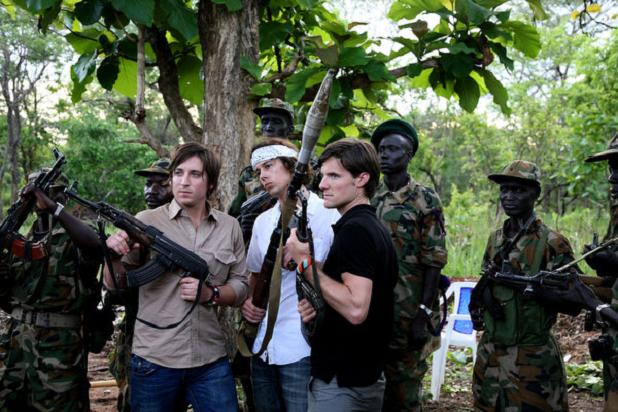
I posted something on Facebook the other day about phenomenon of the "Invisible Children" viral video that is trying to raise the profile of the leader of the Lord's Resistance Army (LRA) Josephy Kony and advocate for US military action in Northern Uganda to bring him to justice to the ICC. I have a few opinions about the conflict in Northern Uganda as I visited the region three times, twice in 2006 to do advocacy on the return of the IDPs and the reintegration of child combatants and once in 2007 to assess MSF's work on sexual violence there. While I am by no means an expert, having sat in the despicable super crowded sad IDP camps and trekked out to the areas of return (as well as having memorably spent Thanksgiving in Juba with the Acholi delegation to the LRA peace talks) I have some idea of the issue. I happened to be ziplining through the jungles of Northern Laos when the video came out and was alerted to it by my friend C and her kids who had asked her about it and wanted to know if they should donate. So I started watching all the back and forth on Facebook and the news once i got back to civilization. In general, I agreed with most of the criticism and since I was a bit late to the game, I didn't get too involved. I met the Invisible Children group back in 2006 and I just remember hearing a lot of complaints about their naivety as well as seeing this iconic photo of them which rubbed a bunch of us the wrong way (for the uninitiated, humanitarians do NOT pose with guns. We are adamantly anti-gun because we're neutral and we;re trying to remain that way. There are WAY too many rumors that we are CIA, US spies, gun runners already so we actively try to dissuade that).

Anyway, the article I posted was about the UN's SRSG for Children and Armed Conflict (Special Representative of the Secretary General) commenting that instead of pushing for a military solution to the LRA (which has failed for years), they would be better off investing that money in services for the former child combatants. This was an excellent and very timely point. The SRSG is tasked with advocating and independently investigating crimes against children in conflict zones for the UN. I'm highly critical of the UN (even more so after having worked for them for a year) but one thing I always felt was that the SRSGs who work on thematic issues take their jobs very seriously and are strong advocates for their causes. These are not just political appointments - these are people who are well known for working in these fields. They are independent and report back to the Security Council with their findings. What they don't have, usually, is much power. While appointed by the Secretary-General, all they can do is report and use their "good offices" to encourage the member states of the UN to take action. Of course, this rarely happens. There are too many vested interests at play for the UN to be able actually address most of the atrocities out there.

 I spent four years in Washington DC advocating with the US government and the UN to do more to address displacement in places like Darfur, Northern Uganda, Sri Lanka, the Democratic Republic of Congo, Liberia, Sierra Leone, Haiti, and South Sudan. I left the advocacy position that I had because I was tired of banging my head against the wall with a predominantly Republican administration and congress who were monomaniacally interested in the Global War on Terror only. But along the way, I met some amazing advocates. And amazing people who put their neck out to do the right thing for people. In the strangest of places, I would find people who were very interested in ending trafficking of children, stopping women from being raped outside the IDP camps of Darfur, stopping UN Peacekeepers from raping women, and in doing the best that they could with the resources they had. Many of them worked for NGOs, some worked for the UN, some worked for US Congress, some worked for memberstates in the UN. In general, the lessons I learned is that we're all in it together and you have to keep your mind open when you are agitating for change. You don't know what argument will sway what powerful person and get them to make the small change you want.

Then I went to work for MSF, Medecins Sans Frontieres, one of the pre-eminent humanitarian organizations in the world. It was my dream job. I wanted to be one of the people who craft the "voice of outrage". I felt that my strengths were in helping add my American citizenship and language skills to the voices of the least powerful and most oppressed in the world to try to bring change to their world. It was a decision that I was thrilled with when I took it but one that I learned to regret in the years after. While I worked for the branch of MSF most known for taking a "human rights" position, it turned out that the organization really didn't care much any more about speaking out on behalf of the oppressed. The much vaunted "temoignage" that most people associate with MSF is dying. The in-fighting between the sections and the way decisions are made (usually only about operational access - never what the people in the country might want) really got under my skin.

So back to Facebook. I posted my little link on facebook where I have many friends form my time in Washington DC, my time at MSF, my time in the UN, and from my home in South Carolina. I like to post links because it might enlighten someone who doesn't read the same articles, websites, magazines, and newspapers as I do. I also love to read other people's links. I know Facebook is not really a venue for well-thought out argument and decent discourse but I have had good arguments on it in the past that I have enjoyed and even learned something from. But the interchange I had with a former colleague made me realize what bothered me about working at MSF was the anti-intellectualism in charge there often. Some of the people that I met there were proud to be ignorant of how the UN works, how international politics works, and how MSF might fit into it. They always played down the role that MSF might have in providing information and taking a stance on behalf of the people who we are supposed to serve. I don't mean to say that my colleague I had the debate with is not an intellectual. He would probably say that he does not strive to be. He's a smart man though - moved from business to humanitarianism, has a quick wit, a smart brain, and really likes an argument. he's open to suggestions and seems to always be seeking more information. However, the debate with him triggered something in me.

His argument boiled down to "its better to DO SOMETHING rather than to advocate or talk about the problem". This irritated me because its the same sad refrain that I learned about in graduate school in the 90s. It smacks of Edward Said's Orientalism, of "the White Man's Burden", and the belief that because you want to do charity, the recipients should be eternally grateful innocent recipients without any thoughts of their own. It also reminded me of the tyranny of the "operational" - do something mentality that predominates in the leadership of MSF. They are critical of those who speak out. The common refrain was that Oxfam had sacrificed quality of operations in the field to focusing on advocacy (a point that people at Oxfam would not agree with). So my colleague has moved into management at MSF and now says "how can a publically funded talk shop criticize someone doing operations?" I heard this refrain all the time when I proposed doing advocacy at MSF. There was so much disdain for the people who spend a lot of time trying to move governments and human rights abusers to the peace talk tables or trying to get agreements to end violence. Its so easy to criticize anyone who is not "operational" but by being operational, you don't necessarily inhabit the high ground. I've seen plenty of useless MSF (and other) projects that don't either add to sustainability, address the real needs of the most vulnerable and helpless in the population, or actually cause more harm by putting local orgs out of work. I've seen the casual colonial like atmosphere of (predominantly white) expats from Northern Europe and the Americas making decisions that impact the populations of desperately poverty stricken communities without once consulting them or setting up a proper way to make sure that the programs were handed over to someone who could actually run them. There is an argument to be made that malicious governments allow "do-gooder" aid agencies to do their work for them so they can invest in other more interesting things that insuring their citizens have healthcare and education and other human rights. (Oddly enough, a comedy novel I just read called "Worst Date Ever" made this argument about Northern Uganda beautifully!) Pure operations that don't consult the population or respond with any form of accountability to them can be harmful. The AID blogosphere is filled with examples of "noble do-gooders" out to save the African continent by "just doing something." I think there is even a twitter hashtag called #SWEDOW (Stuff We Don't Want) that is exactly about this phenomenon. People smarter and more on top of things than me have written about this often.

Despite my criticism of MSF in this post, I still support a lot of the work that they do. But increasingly I am disappointed in the (lack of) stances that they take- no longer taking opportunities to speak to the Security Council to bring the voices of the most powerless to the most powerful, refusing to speak out (even if the population begs them to) in order to maintain programs that may not even be reaching the most vulnerable, and my favorite example - making everything in their communications about them - "MSF DENIED ACCESS TO POPULATION" rather than focusing on the community losing life saving healthcare assistance. It's become a rather navel-gazing organization and not the place I thought it was until I went to work there.

PLEASE NOTE: This is a rant. My friends working at MSF may or may not read this. This is not to denigrate the hard work that they do but to participate in the time -honored criticism of the organization that we all worked and sweated and slaved over. In MSF, I earned the right to criticize them.

My point is that I still believe strongly in advocacy. There is a complimentary role for advocacy and operations. You do not have to sacrifice one for the other. And being a "doer" and not a "thinker" does not make one superior to others. The UN is an easy target for MSF snobbery. It is a talk shop. People there know that. But they also know that the only thing that has ever stopped wars and brought about peace is talk talk talk. So they have their role to play. MSF and other operational agencies have their role to play. And the independent SRSG's have their role to play in pointing out that governments could make a difference but don't. And Refugees International and Human Rights Watch have their role to play in pointing out that the UN is inherently conservative and doesn't like to rock the boat and needs to be kicked in the ass often. But sometimes, the organizations who like to criticize should sometimes look inside their own houses too and see whether or not they are doing everything they can too before they get on their high horses.

Monday, March 19, 2012

Old Emails: 2006 Sudan


Collapsing tents, mud slides, and missed planes. That would summarize up the South of Sudan in a nutshell.  After three days in Juba, the “capitol” of South Sudan, we now have a birds eye view of what is going to take to rebuild this country.

First up: Lodging and Accommodations. In order to even work in Juba – one must undertake a very convoluted and treacherous relationship with the “tented camp” purveyors in Juba. There are three that I know of: Mango Tree, AFEX, and R2 or something. We lucked out by befriending a pretty young woman logistician who scored us a tent in the coveted Mango camp. We arrived to a sweltering hot (about 110 degrees) and the city which consists of a collection of huts and dirt roads. Our tented camp reminded me immediately of summer camp. We had a full size tent with two cots in it and a solar shower and camp toilet behind the tent. This costs about $100 per person. Also, everyone who is there has warned us that 50% of the people get malaria. And there is currently a cholera epidemic in Yei, up river from us and they pump Nile river water into our showers.

But the good thing is that they have a bar and at night you sit on the banks of the Blue Nile under the mango trees and drink beers from Uganda. The bad thing is that their main clientale are “security consultants” from Dyncorp and other ‘private military companies’ which means talking to former military men who are threatened that you can talk their language. So after arguing politics with ex military men and former Zimbabwean farmers, we would collapse exhausted in our sweltering tents to try to sleep.

We did get to go see the Dinka Bor women and children. The Dinka are famous for being extremely tall, extremely skinny, and extremely dark skinned. The women are amazing looking. They are preparing to board a barge and go up the Nile to a town called Bor where they will wait for their men who are living in Cattle Camps to retrieve them. Ironically, the UN determined they were not safe commuting back to Bor with the men and the cattle so they set up this way station camp. And then Cholera broke out and 18 people died. We have the opportunity to go up the Nile with them which I am dying to do. The Nile is almost completely undeveloped here and people live as they did hundreds of years ago. The Sudanese in the south are extremely conservative in their culture and continue to wear traditional dress and do scarification on their faces to mark their tribes. I hope we get a chance to go.

Anyway, after two days of running around town and trying to get flights set up, we got booted out of our camp and had to go to AFEX next door. Well it appears that the rains came early this year. After a mighty clap of thunder, the sky opened up and the deluge began around 3am. The tents at AFEX are not as sturdy, I think and my colleague Betsy’s tent collapsed upon her in the night. She had to climb out of the tent and stand under an awning of a neighboring tent trying to find me. She eventually went to the mess hall and sat in the swamp drinking coffee. It was a swamp. The sand is mostly clay and sand. Small rivers run through the camp. Someone said they awoke to their computer floating next to them. All of our stuff was soaked. After slogging out into the mud to try to find our driver, we noticed that the parking lot had turned into a lake and across the river from us, a local village was dealing with a small mudslide. The South African pilots and Zimbabwean de-miners and various security men told us that there was no way the planes would fly today. This was a problem since we had an 8:30am flight to the Upper Nile. Our driver never showed up and we missed the plane.
So: Plan B. Tonight we are sleeping in a UN compound in a ‘container’ which are slightly less leaky than the tents. We scrapped our plans and are now headed to a place called Malakal. Malakal is represented on the map as surrounded by two enormous swamps and located in the oil region of Sudan. There are landmines all over the town and the UN de-miners are uninterested in working there. We don’t have accommodations yet but hope that the Bangladeshi peacekeepers will put us up.

Today, because we had no driver and no one was showing up to work because of the rain, we decided to do a little exploring in the ‘capitol city’ of the New South Sudan. We drove over with a UN woman to see John Garang’s grave. A garish monument covered in neon colored fake flowers, Sudanese flags, and what looks like someone’s laundry sits in the middle of a barren mud field. It is guarded by four heavily armed Sudanese men in full jungle camouflage sitting in the shade. They yell at us to sign their guest book and make us stand in different positions to photograph the grave. My favorite photo is Garang’s photo surrounded by flowers and an AK47. We also went to the “Salvation Automatic” bakery to buy some bread. It’s really pathetic. The streets are avenues of mud, most of the houses are huts or burned out and the number one thing on sale was some sort of blue soap with a pair of scissors embossed in it. You can also buy what looks like used underwear.

So we head off to a different town in South Sudan tomorrow. And we will go and find returning IDPs and refugees who are telling us over and over again that they want clean water and education for their children. And the World Bank economist I met with yesterday tells me that the Government of Sudan is responsible for providing this and they have zero capacity. Most ministries only have two people in them currently. But still the people return with hope and belief that the war is over and the country will be rebuilt. One only hopes that the international community doesn’t renege on its promises and let them down.

Saturday, September 17, 2011

Somali Region, Ethiopia (video)


From my September 2009 trip to Ethiopia and the Ogaden region. Hanging out with some camels down at the watering hole.

Sunday, February 27, 2011

Old Emails: 2006 in Northern Uganda

November 7, 2006
Kampala to Gulu

When RI visited Gulu in February 2006, it was too
dangerous to drive to Gulu. Due to attacks by the
Lord’s Resistance Army (LRA) who were fighting with
the Uganda People’s Defense Forces (UPDF), NGOs
usually flew or went in military convoys. Since the
government of Uganda and LRA have begun peace talks in
Juba, South Sudan, a lot has changed. My colleague,
Madame X, and I drove to Gulu from Kampala on Tuesday.
While there was a lot of initial confusion about
whether or not we would have to leave at 5am (as many
of you know, I’m not a morning person), we eventually
decided that we would leave at 7am so we would reach a
key bridge before the military convoys and get to Gulu
around 1pm. It was raining and quite cool when we left
Kampala and made our way through the traffic clogged
rush hour listening to a local radio ‘morning show’
that specializes in calling up listeners and
pretending to be in love with them and encouraging
them to declare their love as well. About an hour
outside of the city, the scenary changed- the sun came
out, the countryside became very lush with banana
trees and mango trees and occasional monkeys running
up to our car as we swerved around potholes.

Our driver, Andrew (not his real name), started to
tell me about his childhood in Gulu. “Sometimes, I sit
with my wife and I ask her why I was born an Acholi”
he told me, “to be born an Acholi is to have nothing
but problems.” He elaborated later – “my brother was
abducted by the LRA when he was fourteen years old. We
do not even know where he is. We believe he is dead.
He is dead to us. You see – we cannot be living always
in the past. We have to try to survive. My family fled
to Kampala when the rebels came to fight. But it is
the UPDF who gives us the problems.”

When we drove up to the outskirts of Gulu town, we
began to see the immense government-controlled camps
where the displaced Acholis live. While the conflict
with the LRA has lasted for over 20 years, it wasn’t
until about 1996 when the government of Uganda
mandated that the bulk of the population had to move
into these camps where they could be ‘protected’ by
the UPDF. In order to protect the population, the UPDF
enforced a very strict curfew, beating or killing
anyone found outside the camps for suspected
collaboration with the LRA. Sadly, putting everyone in
the camps, allowed the LRA to attack the population
with ease. Many times the camps would be attacked at
night and children abducted and huts burned down.

Andrew became more visibly agitated the closer we came
to the town. “See that soldier there? All he has to do
is use his gun and steal someone’s bicycle. That
person would have to give it to him. We have no power
here in our own land.” We arrived at our guesthouse
and he was anxious to leave. Have a cold drink, we
offered. “No. I am not from here anymore. I want to go
home to Kampala.” He said and drove off back down the
Gulu-Kampala road.

Old Emails: 2005 in the Congo

Part Two of the Saga

We had quite an exciting day in Ituri on Wednesday of
last week when we finally got out of the town and
surrounding areas. We accompanied CESVI, an Italian
NGO, on a trip to a camp called Kafe on the shores of
Lake Albert. It was in a pretty remote area so we
drove for two hours down to the shore and then boarded
boats loaded up with NFI (Non-food Items - blankets,
soap, tarps) to distribute to the approximately 10,000
IDPs (refugees who are still in their own country) who
had fled recent fighting and moved to this area
trapped between the mountains and the lake. On top of
the area being fairly remote, they also had a big bout
of cholera going on because the lake is cholera -
endemic and people were refusing to drink the treated
water brought in by NGOs because it smelled of
chlorine.


After waiting about 30 minutes at the beginning of the
trip for two Italian journalists to finally get out of
bed and join us, we took off in a convoy of three
jeeps and our truck to head over the mountains down to
the lake. The countryside was so beautiful. I had
always heard how beautiful Congo was but it had never
really hit me until we were driving for hours without
really encountering a lot of people. The rolling hills
are covered in lush green grass with flowering
"flamboyant" trees and boulders dotted about. We did
get stopped twice by the Army at roadblocks but these
are the "Ituri First Brigade" who are trained by the
Belgians and South Africans and supposed to be
professional. As they didn't shake us down for money,
we were impressed. However, we had interviewed IDPs
and other community folk who said that there was a
problem with the brigade - they hadn't been paid for a
few weeks and were starting to "feed themselves by
their guns" and looting some communities.

We landed down by the lake to board the boats. The
boats that were transporting our goods were long "john
boats" (from those of you from South Carolina) with
small outboard motors. We climbed won on to them, made
ourselves comfortable on the tarp settled on top of
the bags of goodies, and settled in fro the two hour
boat ride. As some of you may know, I get seasick
pretty easily so I took the precaution of taking
dramamine and wearing some sea-sick arm bands that are
supposed to help. They helped but I slept for about an
hour on the boat trying to cover my feet with my
backpack and pull my bandana over my face. It wasn't
enough - I'm bright red and sunburned right now with a
lovely demarkation of my long sleeve, my seasickness
band, and my sunglasses outlining parts of my body.


About a half an hour before we reached the camp, we
encountered some pretty fierce winds and the lake got
really choppy. They had handed out lifejackets to the
"muzungos" (white people) so we felt okay about being
plunged into the choleric waters but one of our boats
accompanying us (from German Agro-Action) was not as
lucky. They capsized and lost their entire load of
food and we rescued their workers and continued to
head into Kafe camp. The waves were really choppy and
we got soaked as the water splashed up on us and by
the time we reached Kafe, where we could see the
people lined up on the shores waiting for us, we were
really wet. The Congolese rowed out in pretty
unseaworthy canoes to meet up with us. Those boats are
a three man operation - two to row and one to bail. As
the boats docked, the Congolese men ran out to them
and carried the cargo in to different distribution
points near the shore. It was reminiscent of old
movies about colonials and their African porters
lugging everything on their heads.

It was pretty awe-inspiring to see the non-food item
distribution. There were hundred of bags filled with
blankets,soap, and tarps, one for each family. the
first thing off the boat were ropes and stakes where
the humanitarian workers outlined intake and outtake
queues. The Italian agency, CESVI, had handed out
slips of paper to the head of households the day
before and they lined up to receive the distribution -
as there is very little to do in a refugee camp, the
rest of the people lined up to watch this. CESVI
selected women to pass out the bags because men are
notoriously corrupt in these matters - giving their
friends two or three bags. The tickets were checked
when they entered the queue and checked again as they
left to catch people without them. The women streamed
in with babies strapped to their backs, hoisted the
bags on their heads and then headed back to their
huts. It was a seamless procedure.


After documenting the distribution for a while, we
decided to walk around the IDP camp. The army is
camped out there but the population doesn't mind
because they feel safer. The fact that the army is
Congolese means that they suffer the same
socio-economic condition as the IDPs. In fact, three
soldiers died of cholera. They eat the same food as
the IDPs and most wear flip flops in lieu of boots.
The IDPs seemed to be in pretty good condition - there
was a small market set up where one could buy ladies
underwear, sugar from South Africa, or salt - a
luxury. Some IDPs have money but most have very
little. It's a common misconception that most IDPs and
refugees are completely destitute - the problem is
some of them have money but there is nothing to buy.

The storm on the lake had really begun to pick up so
we decided it would be too difficult to take the boats
back - espescially since they were so light now
without anything loaded into them. We negotiated our
way onto the MONUC (UN in Congo) helicopter piloted by
the Bangladeshi air force. Like any other military
men, they were reluctant to do anything they didn't
have paperwork authorizing them to do. Andrea, my
Italian colleague and the most skilled negotiator, got
them to call their base and get confirmation that we
were okay. After a few hectic uncertain minutes where
I began to worry that we were going to have to stay
overnight in the camp or face another few hours of
sunstroke on the boats, we were cleared.


We said "Au revoir" to the IDPS who all gathered
around the helicopter to wave us off and took off for
the return trip. As opposed to the five hours it took
us to get there, we were home in 30 minutes. So, off
we went to the "Hellenic" - the favorite restaurant
(of two) in Bunia for cold "Nile" beer, brochettes of
beef, pommes frites, and cucumber salads. As the
sunburn kicked in, I decided I need to go home so I
paid a 'moto taxi' (motorcycle) one dollar (way above
'le prix Congolaise') and roared off down the dusty
road to the amusement of all of the Congolaise women
around me.

More later about the convoluted trip routings of the
UN MOVCON (office in charge of transport)....

Old Emails: 2004 Liberia

Monrovia, Liberia
March 14, 2004

Please excuse the group format – I decided that it is much easier to write an email on my computer in my room at night than it is to start writing only to have the electricity go out on the computer right as I’m about to hit send. I’m currently in Monrovia , Liberia . I spent one week in Sierra Leone and landed in Monrovia yesterday. It was not as exciting as my previous trips to Sierra Leone . Sometimes I think its more fun to travel alone because then you get in more scrapes that make more interesting stories.

I did finally get to fly on a helicopter. If you remember from my previous Sierra Leone adventure, my biggest disappointment was that the helicopters were all grounded and I had to take the ferry. Well this time, I got on the helicopter. It was a little anticlimactic. It’s loud, smells like helicopter fuel, and the seats are basically bench seats along the sides of the helicopter so there are no backs. It’s not so bad for the 10-minute flight from the airport to the hotel but for the hour-long trip to the provinces, it’s not that great. They give you headphones to wear to block the noise so you can’t talk to any of your neighbors. I have discovered (something that Alec already knew) that I can pretty much sleep anywhere – on a helicopter, in a train station, in a bumping car on a back highway in Haiti. Closing your eyes and napping is a very useful alternative to nausea, which is my other option. On the last part of the helicopter trip there was a big to do as they loaded up the helicopter with fresh supplies for some of the troops. As our “onboard snack” we were able to help ourselves to the tomatoes, cucumbers, and cabbages that were stacked between our feet. As I was the only woman on the flight, I was also blessed with the only earplugs that they had.

We’ve been using the UN military helicopters and planes and in general, the Ukrainian and Russian pilots are very chivalrous and help me into and out of the helicopters. I felt sort of like a movie star on Friday. The Bangladeshi troops stationed at the Bo Airport asked if they could have their picture taken with me. It could be sweet and innocent but I know better of what those guys are capable of doing. There are probably disgusting things being done with my photo as we speak. That’s the flip side to the chivalry.

Colleague is teaching me to drink single malt scotch and I am teaching him how to hear the beat in music so he can eventually learn how to dance. We have argued a couple of times about gender issues -in criticizing anything about the military, are you ignoring the fact that the soldiers may die at some point fighting to protect the civilians.  I argue, the military are supposed to protect the citizens – particularly the women and children – not rape them. It’s so disturbing the things that you hear in this job. I heard about a gang of Bangladeshi soldiers gang raping a 10 year old. Some man also raped and gave an STI to a 3-½ month old baby. These people are usually never punished. They can often make monetary payments to the victim and get off scott free. Anyway, I’m trying to expose it all in the bulletins that we’re writing so maybe I can embarrass the UN more to take this stuff more seriously and punish these guys.

Surprisingly though, I am not opposed to the military or to the presence of UN peacekeepers. They are in general, very good. You see them playing with the kids in refugee camps, they organized volleyball games with the Sierra Leone kids out in the wilderness outside of Kenema. They are usually fathers who have young children at home and they keep the pictures of their children with them. I met a very nice and enthusiastic young Pakistani man who has three kids. He talks about them fondly and how overwhelmed his wife is and how he wants to go home so he can play with them and let her rest for a while. It’s sweet. Of course, I haven’t really met the Nigerians, Ghanaians, or other African troops. They are supposed to have thousands of girlfriends and leave behind lots of babies as they pull out of the country. This is no new revelation, this has been happening since the beginning of time but it’s scary and sad that absolutely no progress has happened on this issue.

We stayed in Bo at the house of one of the UNHCR staff one night. He was American and had satellite tv so we had a good time watching MTV and talking about Chris Rock, Dave Chapelle, and old Saturday Night Live skits (in particular the one about Strom Thurmond during the Clarence Thomas hearings). Unfortunately, there was no electricity after 11pm and it is the middle of the dry season. That means it’s hot as hell and there is no breeze at night. The next day was a relative paradise compared to that. We stayed with the Pakistani Battalion in the field near Kenema. They put me up in the VIP “container” – it’s a former shipping container that has a bathroom and an air conditioner. I even had my own “room attendant”. The food was out of this world! A huge buffet of several kinds of curry. The Pakistanis treated us like royalty.

Liberia looks a lot better than it did the last time I was here. The restaurant at the hotel we are staying in has instituted a delicious Lebanese style brunch that we indulged in this morning. It was a nice change from the nonstop diet of Barracuda that I had adopted in Sierra Leone . I’ve been trying to avoid dairy, salads, uncooked foods, and anything other than bottled water. So all I eat is barracuda and rice.

The air conditioners are working; we have running water with pretty good water pressure, and CNN. In fact, we were watching CNN yesterday afternoon talking about work and suddenly – Ken Bacon, our boss, appeared on the screen! He was being interviewed live about the Sudan . What a small world. There we sat in Liberia, watching our boss in Washington , talk about the Sudan . We were finally able to get on email today so I am feeling a little less cut off from the world. It looks like there is a lot of construction going on. I am looking forward to getting out of the city. We are going to try to ride along on a patrol of the UN peacekeepers. Perhaps I’ll get my picture on a tank a la Dukakis.

Anyway, nothing too exciting has come out the trip to Liberia yet. We did run into the waiter that was working here the last time I was here. He remembered me because we had a memorable evening doing fancy napkin folds and teaching each other different kinds. He bought me a drink. Unfortunately, it led us to open up the bottle of Scotch that we bought in the Paris duty-free and start drinking while listening to Johnny Cash on colleague's Ipod. I decided it would be fun to stay up to 2:30am and dance in my hotel room to Haitian music. Amazingly, Scotch doesn’t really give you a hangover like wine does! A monster may have been born. We’ve spent today just writing up bulletins and trying to outline a larger document we want to write and put out when we return. I get more work done here than I ever do in DC.

Sunday, February 07, 2010

Bests and Worsts

While sitting in a little bungalow in Kerala reflecting on the sad state of my recent manicure, I decided to reflect on some of the best and worst things that I've learned while traveling these past 15 years. In no particular order:

Best Manicure and Pedicure: Boston Day Spa in Addis Ababa, 2009:  My manicure lasted for almost two weeks – a lifelong record! I was served hot tea, had a massage chair, and nice ambience. Not too expensive either!

Honorable Mentions: Washington DC, 2003 - 2007: The pedicure place across the street from my house on 18th and T streets was reliable and fast and not too expensive. Downside: Constantly trying to make you feel bad and insist that you needed facial waxing.

Singapore, December 2009: In a mall somewhere with Suzie. I have never had such shiny toe nails. And they lasted almost two months.

Worst Mani/Pedi:
(Three-way Tie Amsterdam/Mexico City/Delhi)
Near Nieuwmarkt, Amsterdam, 1999:  They scrubbed my foot so hard they cut it open and I bled, and poured such hot water on my feet that they scalded me. I could barely walk afterwards.

Zona Rosa, Mexico City, Mexico, 2005: Again, the pedicurist believed that my right big toe just needed a good digging to get the nail bed to right itself (it’s never been the same since I dropped an ice bucket on it at Garibaldi’s in South Carolina). Not only did it hurt like hell and bleed, I got an infection and had to lance it with a needle and a match in Guanajuato a week later.

Defence Colony, Delhi, India, January 2010: I could still see through the nail polish after two lackluster coats of varnish and the lady painted over my cuticles. On the way home from the salon, it began to chip.

Best Journey in a foreign country: Train from Fort Cochin to Alleppy, India, January 2010.Inside: chai salesmen, sleeping business men in the bunks above me, and an ambience unchanged from the 1920s. Outside: Water buffalos and green palm trees and canals and bridges.

Drive from Port Elizabeth to Cape town, South Africa, October 2003Most spectacular sunset ever seen somewhere  between Mpmulenga and Knyssna, riding along the Garden Route, riding an ostrich for the amusement of German tourists in Outhoorn, drinking a Castle beer at Ronnie’s Sex Shoppe in the Klein Karoo, crossing the Drakenberg Mountains, coming down into Cape Town to see Table Mountain.

Riverboat ride north of Bangkok, April 2002.Trees so filled with fireflies that they seemed to glow and levitate, heavy smell of dark brown water of South East Asia, green jungle on every side.

Worst Journey in a foreign country: Car ride from Nyala to Kass, South Darfur, Sudan, October 2004We were shot at and it broke out a window. Old pimped out hoopty that we rented broke down and the Janjaweed helped us get back on the road. Lots of tales about bandits that got all the cars on either side of us but not us. Potholes. Tense and frightening. Two weeks later we heard a woman from USAID was shot at the same point we were at. She lost her eye.

Motorcycle Ride from Sigiriya to Polonnaruwa, Sri Lanka, September 2005Styrofoam helmet, aching back from too many books in my backpack, scared out of my mind by the weaving and dodging traffic, screaming buses and 18 wheelers. “A supposedly fun thing I’ll never do again”

Car ride from Port-au-Prince to Gonaives, Haiti and Gonaives to Cap Haitien, Haiti: February 2005A backbreaking trip across the moonscape of a devastated land, it took four hours to go about 60 miles.  The 2nd part of the journey was over an extremely treacherous mountain pass with no guard rails, potholes and people in every treacherous hairpin turn. Afterwards, the driver informed me  about the brake problems in our car.

Best meals in foreign countries:Side of the road from Boguila to Bangui, Central African Republic, March 2007A piece of freshly caught fish grilled over a charcoal flame with hot peri peri powder and tomatoes and onions, washed down with a cold coke, eaten with fingers. It might have been made better by the fact that I was on a 10 hour land rover trip squashed in the front seat with another person and with a big barrel that reeked of oil behind me.

Beirut, Lebanon, August 2006:
Everywhere we went, we would get some sort of street food and it was ALL divine - from zataar filled croissants to labneh to zataar pizzas with fresh goats cheese on them to the Arabic and Italian ice cream parlours where we conducted our meetings. At night, we went to divine little bars and drank "Malcom Lowry's" and ate fresh Ceasar salads prepared by beautiful men while listening to the latest lounge music. All war zones should be so gorgeous.

Le Quartier Francais, Franschhoek, South Africa, October 2003: Freshly caught salmon trout grilled and served on a plank of wood accompanied by a divine South African Sauvignon Blanc by the glass in a beautiful old French Huguenot farmhouse overlooking a vineyard. Downside: My traveling companion had a stomach virus and couldn’t even eat her broth although she tried valiantly.

Califa del Leon in the Colonia Condesa neighborhood, Mexico City, Mexico, May 2006: My first Taco al Pastor - roasted pork served with cilantro and pineapple on a fresh tortilla. All you can eat until you can’t eat anymore. Washed down with a cold beer and eaten on the street corner in a beautiful neighborhood in Mexico City on my first night there.

Camel Market, Khartoum, Sudan, December 2005:Freshly slaughtered lamb purchased and then brought to Sudanese women who stir fried it over charcoal briquettes with salt and pepper -served with a leafy green like arugula, tomato salad, freshly baked bread, and peanut sauce. Washed down with lukewarm plastic bags of water while sitting on plastic garden chairs and swatting flies away in the mid day heat of Sudan. Sometimes the setting isn’t that important.

Malabar House, Fort Cochin, Kerala, India, January 2010: Seafood Uttalpillum (?) – a spicy mix of freshly caught Sea bar, tiger prawns, and squid cooked in a spicy tomato curry sauce with tapioca mashed potatoes served with sparkling water and a Kingfisher beer in the courtyard of the Malabar House next to a Sitar and tambla concert under a full moon. I sat under a mango tree next to a pool of water.

Somewhere outside of Saint Johann in Pongau, Austria, May 1998: I fell off the meat wagon and was trying to get back on. My boyfriend at the time wanted to stop at a famous place for Frankfurters dipped in mustard and grated horseradish. Even though I was a vegetarian, I couldn’t resist. It was delectable and I’ve never looked back since.

Pave d'Auge in Beauvron-en-Ange, Normandy, France, July 2009: A Michelin 1 star – foie gras,  a chilled red Sancerre, divine fish, vintage calvados, exquisite service

Castelmuzio, Tuscany, Italy, August 2009:
My first taste of pecorino cheese dipped in truffle honey served with a Vino Nobile. To die for! Eaten in a small little apartment overlooking the hills of Tuscany, an olive grove, and the abbey from an English Patient.

The Royal Thai restaurant at the Cinnamon Lake Hotel in Colombo, Sri Lanka, September 2005:Thai Seafood Green Curry with Joel. “Make it how it should be made” he answered in response to do you want it spicy. We sweated and ate and sweated and ate until we almost passed out and had to stagger back to our hotel rooms. We came back the next night for more.

Hotel La Cayenne, Les Cayes, Haïti, 2001-2003 :
Poisson au gross el or Lambi Kreyol for dinner. Served with a big boiled plantain and spicy rice and beans and cold Prestige beer. Or Spaghetti with avocado and hot sauce for breakfast. Something about that hotel and the food brings back good memories.

Little restaurant near a great small Fado joint in Alfama, Lisbon, Portugal, February 2008:Grilled sardines, a bottle of vinho verde. Divine!

Worst Meals in a Foreign land:
Saclipea, Liberia, December 2004:Boiled cow head with hard rice in eaten out of a communal bowl with five Liberians and a Congolese. “That white woman can’t eat that hard rice!”

ICRC party in Nyala, Darfur, October 2004: Ate nothing but rancid “La Vache Qui Rit” cheese and sandy bread for three weeks, came to a party at the ICRC rooftop and lined up for the barbecue. My mouth was literally watering. The par-cooked goat meat that I swallowed almost without chewing was bad. I had to decide whether to make myself vomit then or hope for the best. I hoped for the best and got food poisoning. That’s when I learned about Oral Rehydration Salts thanks to my friend Mamie and the MSF clinic.

Most Monotonous Diets in foreign lands:
Everything at our hotel in Pretoria, South Africa, March 2004:
All you can eat buffet. You had to fight off hordes of German tourists to get to the food and then it was bland, over cooked, and sauced with what seemed to be paste. Terrible in its nothingness particularly compared to what I knew South Africa was capable of.

Traveling through Kinshasa, North Kivu, South Kivu and Ituri, DRC , May 2005: Almost every day we ate beef brochette, pommes frites, and a beer. By the end of three weeks, I was dying for vegetables and was pretty convinced that I had “trigger finger” from gout.

The MSF Cafeteria, Amsterdam, the Netherlands, 2007-2010:Every day you have your choice of dried out breads, processed mystery meats and cheeses packaged in plastic wrap or odd salads such as canned beans, celery, canned corn, and olives in mayonnaise or red peppers, canned black olives, fake tofu/feta, celery, and raw onions swimming in olive oil with no vinegar. Deep fried cutlets that when cut open are made of spaghetti. Soups that are either grey or brown and taste vaguely like paste or canned beef flavor. Buttermilk or milk to drink. “But it’s free!”

Worst book to read in a war zone:
David Rieff’s Bed for the Night in Darfur in 2004. Will kill any sense of hopefulness that you might have and replace it with despair.

Best Book to read in Haiti before the earthquake:
The Comedians by Graham Greene. I was reading it all night and woke up in La Cayenne hotel to open my door to the blinding bright Caribbean light. Outside was a Haitian man in mirror shades, a red speedo, with a big gun. I thought it was the tonton macoute. I closed the door and splashed water on my face. When I reopened the door, he was still there. Turns out President Aristide was coming to the hotel and he was in the advance body guard team.

2nd best book to read in Haiti before the earthquake:
The Comte de Monte Cristo by Alexandre Dumas – French. Rackish. Dumas was rumored to have black blood. Keeps you endlessly entertained and is long enough that you don’t have to carry another one around with you.

Best Song to enter a war zone to:
Rock the Casbah” by the Clash. I listened to this as I drove overland from Syria to Beirut during the August 2006 Israel-Hezbollah clash.

Best song to dance to in a refugee camp in Sudan:
African Queen” by 2Face Idiba  – at the Bulls eye night club in Kakuma Refugee Camp near Lokichoggio, Kenya.

Song I’ve heard on every continent that I’ve traveled to:
"Aisha" by Khaled. Sung live in a nightclub in Cairo, innumerous car radios in Beirut, on an iPod at a Save the Children party in Darfur, at the nightclub in Honduras, at a house party in Papua New Guinea, at a hotel party in Mumbai, India.

Books I didn’t like about places I’ve been to:
The Catastrophist, Kinshasa, Congo. All I remember is that the author kept describing the so called irresistible woman as having extremely thin hair. What woman wants to be described by a man who is obsessed with her as having thinning hair? Why did that even occur to the author as a way to describe the heroine? There was something in there about someone spitting in someone’s face. Everyone was annoying and I wanted everyone to die by the end of it.

The God of Small Things, Kerala, India. At this point, I don't know why I didn't like it but I recall not liking it.

 Books I did like about places I’ve been to:
Anil’s ghost in Sri Lanka
The English Patient in Tuscany, Italy
The Comedians, Haiti
The Heart of the Matter, Sierra Leone
Country of my Skull, South Africa
Berlin by Anthony Beevor, Berlin, Germany

Sunday, July 19, 2009

4th of July in George Iowa, part 2: The Pie Auction

The Pie Auction

What could be more small town and quaint than a pie auction? I had visions of the Andy Griffith Show in my head. Some dear old Aunt Bee laboring over her peach pie but being beat out by the hot new spinster teacher in town so the men banding together to purchase Auntie Bee's pie for an inflated price. I had big plans to purchase a rhubarb pie in honor of my Dad who loved rhubarb pie above everything. It was going to be one of the highlights of the 4th of July weekend in the Midwest.

The George, Iowa pie auction was held behind the elementary school by the baseball field right after a musical performance and before the fireworks. There was a small amusement park set up in the parking lot with a ring toss and bingo. You could buy ice cream and popcorn at the concessions stand. I arrived with my sister and my cousin Catherine prepared to bid for a pie.

Imagine my shock and horror to learn that the opening bid for these 109 home made pies was $100! The first pie went for almost $300!!!! This was no small town Southern sleepy pie auction. These Iowa farmers were rich! They auctioned 109 pies with the cheapest one going for $125. And they auctioned them like a true hog auction complete with fast talking auctioneer, spotters, and a loudspeaker placed somewhere over my head. It went on for at least an hour and a half. I couldn't even get in on the action for what sounded like a gross pie - sour cream and raisin. That one still was out of my range at $125.

I realized I had been laboring under a misconception of what small towns were like. Being rural and being a farmer does not necessarily mean being poor, I have learned. Years of living in the south and being subjected to "we're going to lose the family farm" movies form Hollywood lead me to believe that in the midst of the economic crisis that was to be rivaling the Great Depression that a small town pie auction to support the school would be an affordable deal. I know that George, Iowa suffered greatly during the last Great Depression. Signs in the museum spoke about "one of the many single men who drifted into town searching for work" and my father spoke about times being lean. But with the age of government subsidies for farms and a heavy reliance on genetically modified seeds, modern technology, and intense fertilizer - the Iowa farm looks mighty prosperous compared to the meager efforts I've seen in South America, Africa, and Asia.

So while in many ways, the 4th of July celebrations in Iowa were as stereotypical and patriotic and fun as I had expected, I learned an important lesson thanks to the pie auction. I think I may now be opposed to farming subsidies for US farmers.

UPDATE:
I suppose I was struck deaf by the garbled loudspeaker next to my ears at the pie auction. My cousin Linda has informed me that the video shows the pie being auctioned at $50. It was hard to keep track as 109 pies were auctioned and I was just anxiously awaiting the fireworks. But the first pie and several others did go for $300. Most of the purchasers were local businesses.

For those who feel that I maligned the good people of George, Iowa by saying how surprised I was that the town was prosperous, I apologize. I very much enjoyed my visit to George and found very pleasant people there. I was surprised at the wealth in a town of about 1000 people but I invite you to compare and contrast it to the farm towns that I've visited in South Carolina where grinding poverty is a visible way of life. The recession has hit my hometowns of Columbia and Sumter, SC hard and the effect is visible with for sale signs and foreclosure signs all over town and the line around the Salvation Army stretched around the block.

As for not supporting farm subsidies - I also invite me to send me info to educate me to your point of view. While the analogy of the pie auction and the wealth of the US farmer may be a clumsy one, I'm still not sure that farm subsidies are the way to go. Feel free to post links in the comments section.

Tuesday, November 25, 2008

International Day against Violence Against Women

Note: I wrote this for the org that I work for but they chose not to run it today so I run it myself with no mentions of who I work for.

Don’t let women suffer in silence!
The International campaign of 16 Days of Activism Against Gender Violence begins on November 25 and provides an opportunity for everyone to come together to speak out against sexual violence. Where I work is on the frontlines since we work where armed conflicts, breakdown of societies, disintegration of families and communities and disruption of services leave women and girls vulnerable to rape and domestic violence.

From the Democratic Republic of Congo (DRC) to Papua New Guinea, my colleagues witness and treat the consequences of sexual violence including sexually transmitted infections, HIV/AIDS, unintended pregnancy and unsafe abortion. Our mental health programs also help women with psychological trauma including post-traumatic stress disorder, depression or even suicide attempts. The women that we treat are only the tip of the iceberg. Sexual violence is underreported globally and many women suffer in silence because of the stigma around rape and the lack of healthcare services.

Dying from shame In western countries, women who have been raped can get healthcare at almost any clinic. Still, women don’t always go for fear of what people will think of them. This is also true in conflict zones. Many women jeopardize their health and do not seek urgently needed healthcare. Survivors would rather die than have their “shame” known. In the refugee camps in Chad, only 1 woman out of 215 interviewed by my colleague admitted that she had been raped - although many women talked about the problem. After the interview, our staff gave them the opportunity to speak with our mental health counsellors where more women acknowledged that they had been raped. Only then were they able to talk about this painful subject and start their healing process.

Demanding to be heard Not all rape survivors want to keep quiet, however. In the DRC( where sexual violence is reaching epidemic proportions), Women realise that by going to a healthcare clinic, the community will know that they are rape survivors. Yet, they try to get care, sometimes traveling for days to get to the few medical facilities that provide it.

Hardly available In most countries, it is still difficult for rape survivors to get specialized medical care. In Lae, Papua New Guinea, there are legal services available for survivors, but almost no healthcare. In July 2008, I visited our Women and Children’s Support Centre where in 6 months our team provided health and psychosocial services for over 1,000 men, women, and children. I am helping the team to advocate with the ministry of health to provide specialized health services throughout the country. In Colombia, violence against women occurs frequently, but only 20% of survivors seek medical care. Our teams in Colombia treat survivors of sexual violence and also urge authorities to insure there are health services available for all survivors.

Despite the many obstacles facing them, women all over the world struggle and fight to maintain their dignity after sexual assault. Join me for the next 16 days, in making sure that they do not suffer in silence.

More information about what other NGOs are saying:
Christian Aid
Care International
UN Campaign to End Violence Against Women
UNIFEM
ICRC


25 November 2008

Monday, October 27, 2008

Perfection in Kenya


* Driving across the Rift Valley eating mango frozen yogurt
* Lunch at Drifters watching the Storks fish and the Egyptian geese argue
* Tea at Elsamere watching the sunset over Lake Naivasha
* Waking up to hippos grazing on the lawn outside my cottage
* Sunset boat ride around Lake Naivasha
* Breakfast in the garden
* Walking with the giraffes and zebras in Crater Lake
* Drinking pineapple juice on an overhang watching Crater Lake
* Hiking into a crater
* Sunset on the escarpment

Sunday, June 29, 2008

R and R in Uganda

Since my travel agency was unable to get me on a flight home until Sunday night and the travel planned from Kitgum to Kampala was on Friday, I faced the prospect of two days off with no plans.

I wanted to go to Jinja where they have the whitewater rafting into the source of the Nile and Lake Victoria for my two day break before returning to Amsterdam. I didn't bring any good travel clothes since I originally only came to Kampala for a conference. The idea of white water rafting or bungee jumping in a skirt didn't seem too smart and I couldn't see any shops nearby that sold cargo pants or shorts, since I was staying in the middle of a suburb. I asked the Ugandan staff at the MSF house (since no expats were around) the best way to get there. They insisted that I should take a matata. I decided to do it since it wasn't really obvious how I would hire a car and I didn't have a telephone to make any arrangements and the phone in the office was locked and inaccessible.

On line, and courtesy of a 10 year old Lonely Planet sitting in the office, I found a nice guesthouse that promised solitude and bird watching on the banks of the Lake Victoria. Since every morning since I had arrived in Uganda, I had been woken up by loud rooster crows, dog barking, goats bleating, and cows mooing - I was very much looking forward to a little R and R in a garden cottage with a “Balinese style bathroom" by the lake.

After a hair raising journey on the Matata crushed in with 13 other passengers, the one sitting next to me carrying three large boxes of glucose biscuits, I decided that I should hire a car for the ride home. Ugandan mini buses are scary! I was on the flip down seat next to the door and could clearly feel every pothole taken at 7o miles an hour. We swerved around large petroleum trucks, flew past cows in the road, and darted in and out of traffic for an hour and a half.

The Guesthouse seemed very close according to the map from the website. It was not. I ended up taking a moto taxi that assured me he knew where it was but got us lost indeed. We finally got here and the guesthouse was LOVELY. The main house has a large sweeping garden and there are little garden cottages tucked into the outskirts of the garden, all with a view of the lovely Lake Victoria.

I took a shower in the almost Balinese style bathroom (still had a roof which is NOT Balinese) and there was no hot water. No matter. The little cottage I rented was lovely with beautifully decorated interior and lush gardens all around. I sat on the front porch and read for a while. I went up to the main house to have some drinks and the staff was lovely and sweet. I had dinner and went back to my cottage to sit on the front porch, look at the stars and the moon reflected on the lake, listen to the birds, and drink a beer. Instead, the crappy Ugandan guesthouse right next door and over the fence behind my cottage, which I had not noticed before, turned on VERY LOUD rap music. They have no one staying there so it was the owner and his friends drinking beer, getting louder and louder and louder. From 9pm until 11pm, I tried to read and ignore them but all I could hear was the same crappy faux reggae song over and over. It was as if it was right in my bedroom. The stars were out, the lake was there, the crickets and frogs were singing but all I could hear was their crappy music. Between songs, I would try to shout “Turn down your music, please!" but to no avail.

I finally went to sleep at 11pm. I had set my alarm for 10am so I could go see the falls and get back to Kampala in time but I shouldn't have bothered. at 7am, the music started up again, rudely dragging me from my sleep. I looked over the fence, and there was no one there. This time it was the radio so every ten minutes, the songs (with extremely loud and thumping bass lines) were interrupted by Lingala being shouted over the song in a shrill manner. I went up to the main house to complain. A lovely older Ugandan man hung his head and said “there is nothing we can do, it is another establishment". Surely we can ask them to turn the music down! "They will refuse and will just shout at us. We have tried several times". I decided to go over and take matters into my own hands.

He accompanied me. We walked into the grounds- there was an abandoned dried swimming pool, some tables scattered around the yards, and a big pile of beer bottles sitting by the stereo. The stereo was screaming away and the control was inside the dining room. There was no one to be seen. We called out hello! Hello! We knocked on the doors. We walked around looking for someone. I wanted to go inside and just turn off the music. The older man stopped me. They can cause problems for you! He said - they may accuse you of taking money from inside their establishment and call the police. Can't we call the police on them for disturbing the police, I asked? It's 7:30am on a Sunday morning! No, they will not come. He then informed me that he was sure they were inside hiding from us. INFURIATING!

Thwarted, I went back to the main house to eat breakfast and stew in my anger for 2 hours. Its 9:30 now and I can't hear the thump thump thump of the music. I think they may have turned it off. The gardens are quiet again and I can hear the birdsong. If the owner of this establishment can't deal with her crappy neighbors trying to make a quick buck with a hotel, she's going to lose all her hard earned business investment. I was paying $75 a night to stay in a quiet tranquil cottage in a garden overlooking the lake. If I wanted a loud rowdy establishment, I could have paid $20 and stayed at the backpacker hostel. I feel bad for the lovely older Ugandan man who tried to help me and the sympathetic Ugandan staff who apologized to me several times. However, I don't know that I would recommend anyone staying here until they take care of their neighbors. What a pity.

Saturday, June 28, 2008

Sitting on the banks of Lake Victoria

I'm sitting at Gately-on-the-Nile's computer in a lovely colonial villa overlooking Lake Victoria in Uganda. After four days in a sumptious resort on Lake Victoria in Kampala at a conference, I then took a 10 hour car ride up to the North to Kitgum, Uganda - near the border with Sudan. Coincidentally, this was the site of my last mission for Refugees International in November 2006. After a long and grueling trip back to Kampala and a "Nile Special" night out on the town, I'm reveling in the tranquility and beauty of Jinja.

It was interesting to see the difference in Northern Uganda. Gulu has exploded into a typical NGO/UN town. Crowded and expensive - now the most expensive city in Northern Uganda - a sad side effect of Jan Egeland's forceful drive to turn the world's attention to Northern Uganda's forgotten crisis. The IDP camps in Kitgum, the most vulnerable of the counties, I would argue, are not as crowded, yet still shocking to see- a blight on the beautiful landscape. People have moved out but the team spoke of a tension in the National staff that is more palpable than before. Everyone is convinced that the LRA are back in town. Just hiding in the tall green grass waiting to abduct children, kill civilians, and wreak havoc.

I spent the night in Madi Opei, a camp about 1 hour north of Kitgum town where my organization runs a medical clinic with the ministry of health. It was so great to be back in the "bush" and sleeping in a mud tukul with bucket baths under the stars. Alyson, my sister, probably doubts our blood relationshiop when I send her emails telling her how happy I am to talk to the chickens in the morning when I walk to the outdoor shower. I love tucking myself under mosquito netting and seeing geckos run around on the walls. She belives that the Holiday Inn is roughing it. The Uganda team is funny and competent. The National Staff (I don't know why we segregate them) intensely committed and hardworking. I did what I was hired to do. Yet it wasn't the fulfilling experience that I had hoped for. I don't know why.

I guess my mind was clouded with concerns and fear for my father and sister moving in together in the midst of all of it. My father fell in April and broke his arm. His slow recovery prompted Alyson and I to decide that it would be better for him and bring us more peace of mind, if he weren't living alone anymore. Luckily, he agreed. I was able to find them a beautiful house in Columbia to move in. Unfortunately, right as Alyson was packing to move herself, she fell and broke her leg. My leave time had been mostly depleted by my five weeks in Sumter caring for my father as he recovered from surgery. It's been unbelievably frustrating and scary to be a six hour time difference away, hovering by the computer hoping for news from home.

My unexpected trip to the north of Uganda has been enlightening. I"m finally doing the work that my org supposedly wants me to do. I'm good at it. I like it. But it feels strangely unfulfilling when I long to be at home with my family. Work isn't enough anymore. At the conference, I made contact with old friends and put out the word that I'm looking for work. I think I need to be closer. I can always move back to Europe, right? I hope so. Either way, living in a city that I like is no substitute for being there for my family.

I met up with another section of my org's crew last night in Kampala. I was staying in my sections house in a suburb of Kampala all alone - six bedrooms and me! I have no telephone, I had no idea where I was, and was a bit frustrated and lonely. We went out for Thai food and then dancing at the expat hotspot. It was a faux Irish bar called Bubbles O' Malley or some such thing. Really gross. It was fun and exciting when I did it in Sierra Leone. In Uganda, the fact that I'm at LEAST 10 years older than all the silly aid workers and missionaries (?!) dancing with the beautiful young Ugandans out on the prowl made me sad. The old, desperate looking men dancing with young beautiful Ugandans disgusted me as it always does. Am I this person? I love to dance and it was fun laughing and talking with the Spanish section. I felt much more a part of the crowd than I usually do in the dire Eik and Linde where conversation is so forced and boring. Ops this, Ops that. Where is the joie de vivre for our jobs? I feel like headquarters is a refuge for grim, loveless, workaholics determined to wring some sort of meaning out a life in the field.

In the field, however, the joie de vivre is there. The laughing. The mixture of a motley group of people. But not in this bar. In Bubbles O'Malley (where the waiters wear tshirts that declare them Craic dealers), the stench of desperation sticks to the older people. For the young and hedonistic, risking it all on the battlefield and dancing it off in the capitol seems appropriate. Yet I prefer to go to bed at nine with my book most nights now. Not the party girl I used to be.

Anyway, I am enjoying the good food, the beauty of the setting, and the books I have snagged from the org's bookshelves. I can't be that different from my fellow co-workers if we all like to read the same things, can I? But for some reason, the fit is not there.

Tuesday, May 20, 2008

Memories of Northern Uganda

I found this video I took in November 2006 in Kitgum, Northern Uganda that I thought you all might like.

Thursday, March 20, 2008

Attack on town in Central African Republic

Curious as to what happened in Silambi, one of the towns I visited on my trip to the Central African Republic?

Read on for the Human Rights Watch report:

Central African Republic: Chadian Army Attacks, Burns Border Villages, Civilians in Peril in Northwestern CAR
(New York, March 19, 2008)
—The Chadian army has launched numerous cross-border raids on villages in northwestern Central African Republic (CAR) in recent weeks, killing civilians, burning villages, and stealing cattle, Human Rights Watch said today.

Since January 2008, Human Rights Watch researchers documented at least five separate cross-border attacks on Central African border villages, mostly between Markounda and Maitoukoulou in the northwestern part of the country. Chadian army troops appear to be acting in support of CAR and Chadian cattle herders known as Peuhls, at odds with local CAR farmers trying to protect their crops. The worst violence occurred on February 29, in a rampage that destroyed six villages in the area of Maitoukoulou.

More than 1000 people have been internally displaced or have been forced to flee across the border into southern Chad. The internally displaced live in dire conditions in Maitoukoulou camps, and in fear of further attacks, Human Rights Watch has found.

“The people in the northern part of CAR are getting it form all directions. They’ve been attacked by rebel groups, bandits, their own army and now the Chadian army,,” said Georgette Gagnon, Africa Director at Human Rights Watch. “These deadly incursions by the Chadian army further destabilize an already precarious region.”

CAR local farmers and nomadic Peuhl herders driving their cattle south from Chad during the dry season regularly clash over crop destruction by cattle and access to grazing and water sources. Because of the widespread insecurity in the region, the CAR authorities no longer play a prominent role in resolving these conflicts, and armed groups are increasingly involved in the clashes.

Local farmers told Human Rights Watch that in late 2007, they joined with CAR anti-government rebels in the region, the Popular Army for the Restoration of Democracy (APRD), to keep Peuhl herders off their lands. Clashes erupted in Katogo, Batangafo and Bakassa between the Peuhls and the farmer-supported APRD. In response, the Peuhl apparently convinced the Chadian authorities to intervene on their behalf. The first incursions by the Chadian army took place in mid-January in the village of Sabo, followed by increasingly intense attacks on Dokabi, Bele and Daga on the Markounda-Maitoukoulou road, as well as Bedaya Two and Bebingui, north of Paoua, in mid-February.

The clashes intensified on February 29, when marked Chadian military vehicles unloaded soldiers inside CAR, who then crossed the Ouham River on foot and on horseback into the village of Silambi. Together with Peuhl herders, the Chadian soldiers entered the town around 5 a.m., shooting indiscriminately. Witnesses said most of the attackers were men armed with assault weapons, wearing military uniforms with the Chadian flag on the sleeve and the distinct khaki-green turbans of the Chadian armed forces, and were speaking Chadian Arabic. One civilian was killed and another wounded by gunshots. The attackers pillaged and looted the village before setting fire to some 200 thatch-roofed houses, as well as the school and church. All but five buildings with tin roofs were burned down. The population of several hundred people fled, leaving behind their belongings and food.

Eyewitnesses and village officials told Human Rights Watch that the same day the attackers destroyed the next villages they crossed: Maikoyo, Ngartubam, Maissoulo Two, Dawala, and Tira. In each village, they repeated their scorched earth tactics. By mid-morning, they had destroyed all these villages except part of Tira, where they rested until mid-afternoon. They detained five residents to do chores such as fetching water, and slaughtering and cooking goats. The three detained men and two women were whipped and beaten by the soldiers. One 40-year-old woman who was among the detainees described to Human Rights Watch researchers how the soldiers forced her to burn her own house, as well as those of her husband and her son. She refused, but they whipped her until she agreed to participate.

In all, four people were killed during the February 29 attacks and at least four others wounded. Of the wounded, one died later that day. Another wounded was taken to Chad by the attackers and eventually released for a ransom of 15,000 CFA (about $35). A third man was taken by the villagers to a medical clinic in Gon, Chad, and was later abducted by the Chadian army. His family went to the nearest Chadian military base, in Moïssala, to find him, but he remains missing and there are grave concerns about his well-being.

It remains unclear whether the attacks by the Chadian army have been approved and coordinated with the CAR authorities, who have in previous years allowed the Chadian army to operate within the border region. Since the raids were partially in retaliation against the rebel APRD group, evidence suggests that the CAR authorities may have authorized the attacks. One of the villages attacked, Bebingui, is the hometown of APRD spokesperson Laurent Djim Weil.

Between 2005 and 2007, the security forces of the Central African Republic, particularly the elite Presidential Guard, carried out massive abuses against the civilian population of northwestern CAR, executing hundreds of civilians and burning down an estimated 10,000 homes in an abusive counterinsurgency campaign against the APRD. In September 2007, Human Rights Watch published a detailed report, State of Anarchy, documenting these killings and village burnings. The CAR authorities withdrew the abusive Presidential Guards from northwestern CAR in late 2007, leading to a dramatic drop in executions and other abuses.

“The security situation for civilians in northwestern CAR remains very fragile,” said Gagnon. “The Chad government needs to immediately instruct its troops not to participate in these attacks. The victims also deserve accountability for these attacks and the abuse they sustained.”

Monday, March 17, 2008

A few photos from Central African Republic


Hanging out in a tree outside the compound in Boguila.


Igor and his friends in Markounda.


Two little girls enthralled with a Petanque game in Markounda.


Me with some of the midwives and a representative from a woman's group in Boguila.

Monday, March 10, 2008

Flight from Africa

In order to return to Bangui to make my flight to Europe (via Tripoli, Libya!), it was necessary to take a 10 hour drive. I rode in the org's white land cruiser filled up to the brim with some oil drums, luggage, and a patient in the back.

Because it's almost 100 degrees, the only way to stay cool is with the windows down - so I was covered in red dust within 10 minutes. I didn't bother to bathe before leaving because I knew after 10 hours, there was going to be no point. My white shirt was red by the time we got to Bangui.

We have a "white face in the front" policy - supposedly to protect us from bandits who are less likely to rob expats than fellow Africans but since I do not yet have the proficiency in the radio that that is needed, I squeezed into the front hour with my translator. "Situation Oscar Kilo. Transmission Terminee." Like that is so difficult to do. But you have to do it every 30 minutes. For ten hours. ugh.

Since I didn't have to do that, I instead practiced my patented "sleeping in uncomfortable places" routine. I was taking a snooze dangling from my seat belt when we went through a village. Normally, my job is to smile and wave to everyone. The kids like it and get to say Mbonjo (which sounds like bonjour but really means WHITE PERSON). While I was sleeping, my driver and translator cracked up because someone started shouting: Mbonjo lango! (White lady is sleeping!)

The translator and driver also taught me a joke. Whenever a pig ran out in front of the car (which was often) - we would shout Coupeur de Route! Which means, literaly, the cutter of the road. But it's also the name for the vicious highway bandits that they have. A little black humor, Central African Style. We did many variations of this joke "un petit coupeur du route", "beaucoup des coupeurs de route", and so on. My attempt to explain the joke "Why did the chicken cross the road?" went down in resounding failure. I guess its not a universal joke.

We left Boguila at 6am and by 1pm we finally got to the first substantial town, Bossasoa. We pulled over and squatted at the roadside grill to eat some grilled goat meat and Manioc served in the market with super hot peri peri powder and some hot tea to wash it down. No electricity in this town so no cold drinks yet. After an unsatisfactorily short break, we jumped back in the car and headed south again.

After stopping to buy pineapples, check outthe price of fish sold on the side of the road, change a flat tire, we finally reached a town which is famous for having cool drinks. Thank god. We stopped and got some fresh fish grilled over charcoal with salt, limes, and spicy onions and peppers on top. Since they don't really have knives and forks at these roadside stands, I again, ate with my fingers. And got pretty good at it! It's much easier to eat a full fish with your fingers than a knife and fork! We washed it down with the most refreshing coca cola I've ever had.

When we finally arrived in Bangui at 5pm ish, i was dropped off at the expat house where I found one of the Italian expats from the east of the country frying some eggplant and marinating some freshly killed warthog that he had brought from the East (where there are much more game animals). I took a shower. I wanted to throw out the clothes I was wearing but instead put on some clean clothes. I had four hours before the airport and my flight to Tripoli, Libya.

Goodbye Africa!

Fighting HIV in Africa

After my adventures up on the border with Chad and Central Africa, I thought that returning to the hospital in Boguila would be less adventuresome... somehow more staid than the derring do of the mobile clinics.

I spent the day interviewing the national staff (inadvertently getting in the middle of a contract negotiation crisis) and talking to the expats.

An Angolan nurse who runs the HIV/AIDS and TB program at the hospital told me that he really hopes we can do more about HIV and stigma in the area. He had treated a woman with HIV and TB who was about 26 years old. She had a small baby and her mother was taking care of her in the hospital where we were giving her medicine to allow her to live with her illness. Her mother had other children and grandchildren to look after so took her out of the hopsital and brought her home. In Africa, it is up to the family members to bring food and nurse the patients. It's not unusual to go into the Intensive Care Ward and see an old man with three ladies sitting on his bed, trying to feed him some manioc. I had been told in our Markounda office that one of the problems we had ws trying to convince people to go to our hospital in Boguila because it was so far away (almost a three day walk) and people didn't like the food. Which sounds flimsy until you realize that in order to take care of someone who might die anyway, you have to prioritize them over all the children and family members that you normally take care of. You have to sleep surrounded by strangers and scavenge for food in an area that is not your home. It's not that easy.

Anyway the Angolan nurse was worried about this woman because he knew she didn't have acess to her medicine. He asked the mobile health clinic to go into the village and look for her. They did and they found her lying on a mat, near to death. The family refused to return with her to the hospital. The staff demanded of everyone “Who will save this woman’s life?”. There were no takers.