Showing posts with label books. Show all posts

Monday, April 25, 2016

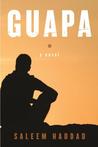
My Review of Guapa: My favorite book of 2016


GuapaGuapa by Saleem Haddad
My rating: 5 of 5 stars

This book was written by my good friend Saleem Haddad - I met him when we worked together at Medecins Sans Frontieres and I recognized a special guy in that crowded London office. My review: I still think about things in this novel 10 days later - something that hasn't happened to me in a while. I recognized so many things in it that called out to me: Rasa's relationship with his Teta- their morning rituals, the silence around his father's fate, the living in a type of mausoleum but also the pain he felt around his mother and the suffocating silence. I'm not Arab but I grew up in a British household and felt many of those same emotions choking inside of me which I think is what makes me so hellbent on being open and speaking about all my taboos now. It made me really thing about the burden of being closeted and what it does to your emotions.

Things I loved: I felt so frustrated and angry at the scene in the wedding. it was so realistic - the whispered drunken asides from his shallow female friend, the mess of angst and emotion and love swirling around inside Rasa as he steadily drinks and argues with the waiter over his change. I just wanted a Hollywood happy ending - run off together! Be together. But that's not life. And the chaos towards the end was necessary. His mother crying as she chopped onions. His self-centered French friend and being forced out of embarrassment to accept the homeless man as his roommate.

Like some other reviewers, I think I would have liked more life inside Guapa. His friend Maj was the most uplifting character but I also wanted more of everything - more lush descriptions of falling in love, more lazy nights tangoing in a sequestered bedroom, more driving around tense parts of town, more revolution. I guess we can't have it all.

I also felt as if I shared Rasa's fatigue at the end of the novel - and that makes me think that the author did his job. My emotions were everywhere as I read it. And to me that is what I am looking for in reading - plunging into another world.

Thanks Saleem- for a fantastic novel. Can't wait to read number 2.


View all my reviews

Tuesday, May 20, 2014

Books that have been influential for my way of thinking


A short and random list of books I have read in graduate school, at MSF, and during my career as a development and Humanitarian Aid worker that have influenced me. 

History/Colonialism and Development

  • Scramble for Africa, Pakenham A comprehensive look at how Africa became colonized. The surprising part is how late in the 19th Century it actually happened. Another is how Belgium, created as a "buffer state" between France and Germany and ruled by one of Victoria's favorite uncles, became a major player. The events in this book lead to actions and reactions that are still being played out on the continent of Africa.
  • King Leopold's Ghost, Hochschild. On King Leopold of Belgium and his rule of terror that would culminate in the deaths of 4 to 8 million. Draws heavily on eyewitness accounts of the colonialists' savagery, brings this little-studied episode in European and African history into new light.
  • The Early Spanish Main, Sauer. Reissued for the 500th Anniversary of Columbus's Voyage to the Americas, Carl Sauer's Classic Account of the Land, Nature, and People Columbus Encountered The history of Columbus's four voyages has been told many times. But Sauer's book is still the only work to provide not only a narrative of the voyages and of the colonizing ventures that followed them, but also an exploration of their impact on the peoples, the flora, and the fauna of the Americas. For Sauer, Columbus was simply "a Genoese of humble birth and small schooling," obstinate and increasingly paranoid. His obsession with gold and the rights he had secured brought the first Spanish venture overseas to the edge of failure. His successors were more competent administrators but continued the quest for riches, destroying the native ecology and the lifestyle of the indigenous peoples. Sauer attempts to show that native Americans had a balanced and highly productive livelihood that gave them abundance, leisure, and satisfaction. This book offers a unique view of the "cultural landscape" Columbus encountered and how it was transformed by the Europeans, establishing a pattern of conquest and settlement that was repeated all over Spanish America
  • Imagined Communities: Reflections on the Origins and Spread of Nationalism. Benedict Anderson What makes people love and die for nations, as well as hate and kill in their name? While many studies have been written on nationalist political movements, the sense of nationality--the personal and cultural feeling of belonging to a nation--has not received proportionate attention. In this widely acclaimed work, Benedict Anderson examines the creation and global spread of the 'imagined communities' of nationality. Anderson explores the processes that created these communities: the territorialization of religious faiths, the decline of antique kingship, the interaction between capitalism and print, the development of vernacular languages-of-state, and changing conceptions of time. He shows how an originary nationalism born in the Americas was modularly adopted by popular movements in Europe, by the imperialist powers, and by the anti-imperialist resistances in Asia and Africa. 

The Politics of Development

  • Lords of Poverty: The Power, Prestige, and Corruption of the International Aid Business A comprehensive and controversial study of the 60-billion-dollar-a-year world foreign-aid business, Lords of Poverty was a bestseller in hardcover and earned the 1990 H.L. Mencken Award honorable mention for an outstanding book of journalism. Hancock investigates why huge aid projects often fail and demands a response from those in the industry
  • Aiding Violence: The Development Enterprise in Rwanda, Uvin explores the contradiction inherent in the existence of massive genocide in Rwanda, a country that was considered by Western aid agencies to be a model of development. The first part of the study focuses on the 1990s, and the second part with the profound long-term structural basis upon which the genocidal edifice was built
  • Pathologies of Power: Health, Human Rights, and the New War on the Poor, Paul Farmer uses harrowing stories of life—and death—in extreme situations to interrogate our understanding of human rights. Paul Farmer, a physician and anthropologist with twenty years of experience working in Haiti, Peru, and Russia, argues that promoting the social and economic rights of the world’s poor is the most important human rights struggle of our times. With passionate eyewitness accounts from the prisons of Russia and the beleaguered villages of Haiti and Chiapas, this book links the lived experiences of individual victims to a broader analysis of structural violence. Farmer challenges conventional thinking within human rights circles and exposes the relationships between political and economic injustice, on one hand, and the suffering and illness of the powerless, on the other.Farmer shows that the same social forces that give rise to epidemic diseases such as HIV and tuberculosis also sculpt risk for human rights violations. He illustrates the ways that racism and gender inequality in the United States are embodied as disease and death. Yet this book is far from a hopeless inventory of abuse. Farmer’s disturbing examples are linked to a guarded optimism that new medical and social technologies will develop in tandem with a more informed sense of social justice. Otherwise, he concludes, we will be guilty of managing social inequality rather than addressing structural violence. Farmer’s urgent plea to think about human rights in the context of global public health and to consider critical issues of quality and access for the world’s poor should be of fundamental concern to a world characterized by the bizarre proximity of surfeit and suffering

Infectious Diseases

  • Malaria Capers Robert S. Desowitz's classic about kala azar and discovering malaria.
  • New Guinea Tapeworms and Jewish Grandmothers: Tales of Parasites and People, Robert S. Desowitz. Examines the threat posed by disease-carrying parasites and insects and identifies the conditions--miracle drugs, destruction of natural controls--that have encouraged them to flourish
  • My Own Country by Abraham Verghese. My Own Country, was a landmark in the literature of AIDS and of medicine. Verghese, an infectious disease physician who had practiced in rural Tennessee, chronicled the impact that AIDS had on both his own life and the conservative, small community in which he worked.
  • War In The Blood: Sex, Politics and AIDS in Southeast Asia by Chris Beyrer. Chris Beyrer is a physician-epidemiologist who has spent the last seven years studying the exploding epidemic of HIV in Southeast Asia, particularly Thailand
  • Surviving the Fall: The Personal Journey of an AIDS Doctor by Peter A. Selwyn, M.D. In the early 1980s, Peter Selwyn found himself in the midst of a growing epidemic of AIDS in the injection drug users he cared for in his Bronx methadone clinic. Over the ensuing years, Selwyn carried out groundbreaking research on the natural history of HIV in this group and provided medical care to many of those whose infection progressed to AIDS.

Economic Development

  • Globalization and Its Discontents, Joseph E. Stiglitz explains the functions and powers of the main institutions that govern globalization--the International Monetary Fund, the World Bank, and the World Trade Organization--along with the ramifications, both good and bad, of their policies. He strongly believes that globalization can be a positive force around the world, particularly for the poor, but only if the IMF, World Bank, and WTO dramatically alter the way they operate, beginning with increased transparency and a greater willingness to examine their own actions closely
  • Development as Freedom Amartya Sen Cambridge economist, 1998 Nobel Prize, argues that open dialogue, civil freedoms and political liberties are prerequisites for sustainable development. He tests his theory with examples ranging from the former Soviet bloc to Africa, but he puts special emphasis on China and India. How does one explain the recent gulf in economic progress between authoritarian yet fast-growing China and democratic, economically laggard India? For Sen, the answer is clear: India, with its massive neglect of public education, basic health care and literacy, was poorly prepared for a widely shared economic expansion; China, on the other hand, having made substantial advances in those areas, was able to capitalize on its market reforms. Yet Sen demolishes the notion that a specific set of "Asian values" exists that might provide a justification for authoritarian regimes. He observes that China's coercive system has contributed to massive famine and that Beijing's compulsory birth control policy "only one child per family" has led to fatal neglect of female children. Though not always easy reading for the layperson, Sen's book is an admirable and persuasive effort to define development not in terms of GDP but in terms of "the real freedoms that people enjoy."

Humanitarian Aid

  • Bed for the Night by David Rieff  reveals how humanitarian organizations are often betrayed and misused, and have increasingly lost sight of their purpose. Drawing on firsthand reporting from war zones around the world, David Rieff shows us what aid workers do in the field and the growing gap between their noble ambitions and their actual capabilities for alleviating suffering. He describes how many humanitarian organizations have moved from their founding principle of neutrality, which gave them access to victims, to encouraging the international community to take action to stop civil wars and ethnic cleansing. By calling for intervention, humanitarian organizations risk being seen as taking sides in a conflict and thus jeopardizing their access to victims. And by overreaching, the humanitarian movement has allowed itself to be hijacked by the major powers. Rieff concludes that if humanitarian organizations are to do what they do best -- alleviate suffering -- they must reclaim their independence
  • Emergency Sex and Other Desperate Measures by Kenneth Cain, Andrew Thompson, and Heidi Postlethwaite. It's the early 1990s and three young people are looking to change their lives, and perhaps also the world. Attracted to the ambitious global peacekeeping work of the UN, Andrew, Ken and Heidi's paths cross in Cambodia, from where their fates are to become inextricably bound. Over the coming years, their stories interweave through countries such as Rwanda, Bosnia, Somalia and Haiti - war-torn, lawless places where the intervention of the UN is needed like nowhere else. Driven by idealism, the three struggle to do the best they can, caught up in an increasingly tangled web of bureaucracy and ineffectual leadership. As disillusionment sets in, they attempt to keep hold of their humanity through black humour, revelry and 'emergency sex'. Brutal and moving in equal measure, Emergency Sex (And Other Desperate Measures) explores pressing global issues while never losing a sense of the personal. Deeply critical of the West's indifference to developing countries and the UN's repeated failure to intervene decisively, the book provoked massive controversy on its initial publication. Kofi Annan called for the book to be banned, and debate was sparked about the future direction of the UN. Brilliantly written and mordantly funny, it is a book that continues to make waves.
  • The Road to Hell: The Ravaging Effects of Foreign Aid and International Charity by Michael Maren and Carla Bolte. Despite the overstated title, this book is a forceful and disturbing portrait of Western intervention in Somalia, plus an investigation of underscrutinized aid foundations. Perhaps because of the book's ambition, Maren's narrative is disjointed, but readers will find it worth the effort. "[D]oing relief and development work in the context of oppression is counterproductive," he asserts, and his personal experience in Somalia, where, after a Peace Corps stint in Kenya, he returned as an aid worker and journalist, bears this out. While the Cold War fueled aid to Somalia, much of the aid was channeled by local power brokers to further their own ends. Indeed, while Somalia was once self-sufficient, it is now chronically dependent on imports of foreign food. Maren is equally scathing about prominent charities such as CARE and Save the Children, which he terms mercenaries more concerned with self-perpetuation than actual famine relief. CARE, he charges, once shipped food to armed fighters in Somalia, while Save the Children "projects don't work." His portrait of the aid biz emphasizes that it is driven mainly by grain-trading companies eager to unload excess capacity, even as their advertisements feature starving victims. Maren's brief report from Rwanda suggests that there, too, aid is falling into the wrong hands and thus financing a war. Maren maintains that journalists are too dependent on such aid organizations to properly evaluate them, and he proposes that an independent agency be established for that purpose. 

War

  • My War Gone By, I Miss it So, by Anthony Loyd. Nothing can prepare you for Anthony Loyd's portrait of war. It is the story of the unspeakable terror and the visceral, ecstatic thrill of combat, and the lives and dreams laid to waste by the bloodiest conflict that Europe has witnessed since the Second World War. Born into a distinguished military family, Loyd was raised on the stories of his ancestors' exploits and grew up fascinated with war. Unsatisfied by a brief career in the British Army, he set out for the killing fields in Bosnia. It was there--in the midst of the roar of battle and the life-and-death struggle among the Serbs, Croatians, and Bosnian Muslims--that he would discover humanity at its worst and best. Profoundly shocking, poetic, and ultimately redemptive, this is an uncompromising look at the brutality of war and its terrifyingly seductive power

Friday, August 30, 2013

Monsoon Living in the footsteps of George Orwell


Aerial view of Rakhine State.
I am sitting in rainy monsoon struck Myanmar (i.e. Burma but we’re not allowed to say that because that’s politically not supporting the current regime) in Rakhine State (formerly known as Arakan State) where I’m working with the Muslim population of internally displaced people (or as they call themselves, the Rohingya – but we’re not allowed to call them that because that acknowledges that they are an ethnic group that belongs to Myanmar and not a bunch of illegal immigrants from Bangladesh as the government calls them).

Sittwe Town from my hotel
Sittwe is a beautiful little village. Just what you imagine a rural decrepit town in Myanmar/Burma might look like. Old colonial houses dripping with dark patches of damp, overgrown and lush green gardens, gorgeous mango trees and coconut palms and people walking by in their lungis with things balanced on their heads and carrying umbrellas to shelter them from the rain and the sun. There is a golden stupa in the middle of town with a giant golden standing Buddha next to it peeking out over the top of the tree canopy and gazing at the Bay of Bengal.  The sense of neglect is visible in all the buildings, the few newer ones are garish and cheap looking with that weird reflecting tinted windows that seems so common in the Middle East and China. There aren’t many cars here. People can travel around town on bicycle-driven rickshaws  where they can sit two very very thin people – not Americans- , one facing each way and the bicyclist wearing a conical bamboo hat, cycles alongside you. Or there are lovely Burmese ladies perched on the back of bicycles always carrying an umbrella to shade themselves from the sun or rain. Or you can ride in a “tuktuk”. These are different than the ones in Bangkok - more of a sort of truck bed with two benches in it and a canvas streteched over the top driven by a motorcycle or a tractor . There are a few scooters and the cars that are here are old jeeps or Landrovers from the NGOs. Men wear button down shirts, flip flops, and lungis – the patterned long piece of material that they wrap around their waist and constantly have to adjust. Many women wear traditional dress and put this pale yellow clay on their faces to protect it from the sun and wear flowers in their hair. There are police and military officers as checkpoints all over the city. The sense of a military dictatorship is still very prevalent as we all have to wait on travel authorizations and permits to leave the town.

Riding to work in the rain

I am supposed to call this country Myanmar (its official name) but I like saying Burma better and most of the human rights activists still call it Burma because that was its name before the military coup and dictatorship here. I spent a week in Yangon – the capitol (formerly known as Rangoon). Yangon is lovely – very green and lush and I’m lucky to have been able to sublet a beautiful old house with a garden. I posted some photos on facebook of the orchids in the garden. I’ve also been reading George Orwell’s Burmese Days from when he was a
colonial policeman here and Finding George Orwell in Burma which retraces his footsteps and analyzes Burma during the height of the military regime (before the recent “reforms”). “Everyone falls in love with Burma except George Orwell” claims the author and I think she might be right. Yangon is a beautiful city and as far away from the skyscrapers and malls and convenience of Bangkok as it can possibly be - definitely more my style than Bangkok. Maybe I’ll get a job here and settle down for a bit which is what I would like.  However, people are
still quite terrified of the authoritarian regime, no matter what the “reforms” say so it’s an odd feeling to be part of the lucky who are benefiting from the opening of Burma and not really aware of the realities of the regular Burmese. And although I love colonial architecture, thinking about the abuses that took place here under colonialism puts a damper on tea or gin and tonics at the Strand.

Rohingya man in IDP camp
In Sittwe where the humanitarian crisis is  - it definitely feels like the place that time forgot. Time moves slowly here and I’ve had to detox (which is a good thing for me!) - I’ve maybe had internet access for 6 hours of the week since I’ve been here and I was issued a mobile phone that works very poorly so I feel very cut off from the world.
Poor little UNFPA, the UN agency that has hired me as a consultant, is relegated to an old storage facility in the basement of a building. The room reeks of mildew and has no ventilation as its two windows open onto the latrine and a garage where they park cars. I am outraged on behalf of my national counterpart – a young Myanmar doctor who is pregnant with her first child. She’s energetic and smart and working really hard with almost no support.  I’ve started squatting upstairs in the UNDP office and spending as much time on the balcony as
possible to breathe in the fresh air when it is not raining and using the time when I have the internet to lobby for a cleaning woman, a dehumidifier, and better office space. We don’t have our own car either so I travel by “tuktuk” to my meetings –it’s a far cry from most of the NGOs which have normal offices and houses and cars here. I
don’t mind the hardship of crappy offices. I’ve worked in tents, in mud huts, and in skyscrapers. A desk is a desk after all  - but the crappy office is a bit of a symbol of how little attention and care is given to the needs of the women who are displaced here in Rakhine State, in my mind. Of all the UN agencies in emergencies, UNFPA is one of the smallest. It doesn’t receive much money from the donors and its’ staff don’t seem to know how to respond to humanitarian emergencies – there is NO urgency. The staff in Yangon don’t prioritize the hinterlands and every request for something is challenged or ignored. Ahhh – life in the field. It’s frustrating being a consultant because I have no power at all but I’m going to use my voice to lobby for a healthier work place for my colleague. After all, I leave in 2 months but she has to work here.

UNFPA office - behind garage
If you haven’t read about it, here’s a brief synopsis: the humanitarian crisis here is a symptom of ethnic and religious violence in Burma – the majority Buddhist population here has been fighting with the Muslim community and burned down their houses and villages in October of 2012 driving them to live in scattered and remote IDP
(internally displaced) camps on rice paddies throughout this area. Most of the Moslems make their living as farmers or fishermen and as you might imagine, living in a rice paddy during the monsoon season is
miserable. I visited one of the best organized camps on Friday and it was very depressing. Because of the rains and the humidity, nothing remains or stays dry, most people only have one set of clothing and the children run around in the mud and rain with nothing but a small pair of shorts on. People have to live 10 to 12 families in a long bamboo thatched hut and most are not free to leave their camps so despair has set in along with the accompanying domestic violence and child beating. That’s why I’m here – to try to support the humanitarian community with training and advice on how to provide services for these women and children.
Rohingya girl
Many of the people are just waiting for the rains to stop so they can try to board really unsafe ships and seek out work in Malaysia, Bangladesh, and next door Thailand (where an immigration official was recently arrested for trafficking them to work on fishing boats as slave labor). They are known as the “Rohingya” and are a separate
ethnic group from the “Rakhines” in this area although they have been here for over 400 years. The Burmese government calls them “Bengalis” and claims they are Bangladeshi citizens and threaten to return them there although most have never been there and have no ties there. They are basically stateless (not recognized as an official ethnic group in Burma and therefor have no citizenship and belong to no government), persecuted by the governments of neighboring countries as well as the government here and are unwanted by everyone. It’s a really tough situation with no real solution at hand.

Rohingya boys in IDP camps
However, it’s a great group of people working here. The humanitarian world is really small – I got here and word got around and an Italian colleague from MSF who I met in Colombia in 2009 reached out to me and invited me to dinner last Friday night which was nice as there’s not much else to do in Sittwe. There is a movie theatre here but I think it only shows local films and is un-airconditioned (in this humidity and heat –it would be like sitting in a steam room with 100 people and watching a movie). There are a few local restaurants and tea houses but since its raining like mad, I’ve basically been holed up this weekend in my hotel room watching the BBC World coverage of the unrest in Cairo and Battlestar Galactica on my computer and reading training manuals and reports. I’ve caught up on any sleep I was missing in Thailand which is nice but I miss Simon, the Siamese cat and a variety of food. They have interesting salads here – and I am fond of a seaweed salad with sesame seeds and chilis that they make here. But mostly they use half a bottle of cooking oil to make anything here and
the food is swimming in oil and not very flavorful although seafood is plentiful since we’re on the sea so I eat squid and shrimp every day. I have been dreaming of spaghetti Bolognese and chocolate bars. But actually I’d be happy to have a big green salad.
IDP camp of Rakhine Buddhists also displaced during fighting
Well that’s it from here -  not much news to report. One year down as an independent consultant and the future is still unclear. I’ve got another 6 weeks work in Burma and then I’m back to Thailand where I’m presenting a paper and chairing a panel at an international conference on sexual violence. Then it’s back to Papua New Guinea for another month’s worth of work and then I’m free! I’m not enamored with the life as a consultant. The supposed “freedom” is not there yet as I still feel like I have to hustle for work and can’t turn anything down but I prefer being busy to not having enough to do. I think that makes me go a bit crazy. I still think I’d like to find an interesting
permanent job and settle down and stop traveling so much in 2014. I’ve been thinking of going back to graduate school – maybe in public health or social work but I’d also just like to have a steady job in a nice organization with a decent office and a nice house so I can hang out with Simon LeBon and have a normal life again. What’s that like? It’s been fun running around Asia but I’m a bit tired of always being on the move and fantasize about taking classes and setting up a routine and getting bored and longing for travel. It’s a vicious cycle, I guess!

Work Commute

Saturday, April 13, 2013

Art, Music and Literature that made an impression in 2012

A few of the pieces of art, literature, and music that I liked and that inspired me in 2012. 

Literature

Kate Atkinson: Behind the Scenes in the Museum
William Boyd: Waiting for Sunrise
Graham Greene: A Burnt-Out Case
Hillary Mantel: Wolf Hall
Marguerite Duras: The Lover

Art: 

Contemporary Vietnamese Artists from Apricot Gallery in Hanoi and Ho Chi Minh City:
Trang Nguyen Dung 
Quach Dong Phuong
Hoang Hai Anh

Le Minh
Dai Hong Phong
Le Quang Ha
Ta Thi Thanh Tam

Tran Luu Hau

Ateneum in Finland: Helene Schjerfbeck retrospective


Modigliani and Soutine at the Pincotheque de Paris


Pre-Raphaelites in Tate Britain


Music: 

Austra: Lose It


Honey Claws: Digital Animal


The Civil Wars: Kingdom Come


The Storm: My Crown


The Frank Popp Ensemble: Breakaway!


Sunday, December 02, 2012

Reading, Emotional Healing, and 2012


I've joined a virtual writing group developed by my friend Saleem and I'm quite enjoying it. 2012 has been marked by a feeling of disengagement and detachment and being connected to friends in far away countries has been very helpful for me. We were discussing the books that we read in 2012 that we liked a lot and I adapted my response for the blog to share with you all - faithful readers.

I like Goodreads (a social network for readers and writers) because it fits the "librarian inside" of me... I can sort the books I've read by categories, analyze trends, keep track, and challenge myself. I'm in a challenge this year to read 43 books. Last year I only managed 25 - an all time low for me but also a symptom of a pretty unhealthy year - spending hours on social media feeling lonely and unattached from the world and being strung along in a pretty unfulfilling relationship. It seemed like a marker of unhealthiness... I could only process short things online and my attention span was getting shorter and shorter.

And this year, I notice that I started out with very easy to digest books (which coincides with me leaving my job at the UN and coming to terms with the fact that I didn't have a full time job or attend school full time for the first time since I was 18 years old.) So as my mental health got steadier, I notice that my reading got deeper. And then I re-approached it as a pleasurable activity again.

But I also like knowing what my friends are reading. I miss my book club from Washington DC and in my sad little Asia expat life, I find that no one here reads. They may have read 50 Shades of Grey or the latest UN communique but who is reading anything else? I'm not even sure how to go about finding other readers because I'm sure they are here.

So my Goodreads feed has my bookish friends in it. I can comment and discuss with my friend Celeste and her husband in Ireland about the latest Booker winners, I was following a War and Peace reading club with another Irish friend, an Italian friend has plunged into obscure Polish novels and now I'm intrigued, a virtual friend from Germany reviews feminist novels for her grad school, and a friend from South Carolina is always reading funny things and writing great reviews.  My DC bookclub friends were on it for a while but they seem to have disbanded so I guess they are not reading either. So for me, Goodreads helps me keep in touch with literature in this shallow bubble in Bangkok.

So - no big thundering novels from 2012's infant terribles this year but the books that I liked that I read in 2012 include:

Jeanette Wintersen: Why Be Happy When You Can Be Normal?
(loved Oranges are Not the Only Fruit and the Passion... I want to re-read them now)

William Boyd's Waiting for Sunrise (I quite love William Boyd - I've been hooked since the Ice Cream War)

Marguerite Duras: The Lover (beautiful and tiny and exquisite) plus I read it while going down the Mekong..

Hillary Mantel's:  Wolf Hall (a book I had schlepped along to probably 12 countries before I just plunged in and then I couldn't stop)

Arundhati Roy's God of Small Things.  I had a snit for a few years where I didn't want to read Indian novels by Feminist writers because it seemed like such a cliche. Instead I wanted to read books by old white men -prferebly English. I do still love the way of writing that the old masters from the turn of the century have but I'm starting to open back up my mind again and not be judged by what people think about what I read.

I love the humor and humanity of Colin Cotterill's Dr. Siri novels aboul Laos in the 70s. I love Henning Mankell's dreary and resigned Kurt Wallendar. I like the funny and dry Inspector Van Wetteren from Hakan Nesser's books. I like a good psychological thriller like Eric Ambler's books. And I like the sensation of being drawn into a book, being unable to put it down and caring so much about the characters.

This year, I can chart my emotional healing through the novels I've read. I started out with adolescent literature - the Hunger Games. It allowed me to accept the angry adolescent inside - its not fair! why does it happen to me? I'm helpless! and then I slowly turned to the mystery genre - I'm solving problems, I'm in an odd situation but I have to make the most of it, and the soothing repetitiveness of my favorite detectives - Kurt, Dr. Siri, Inspector VV... and now, I'm back: Into Tudor England with Anne Boleyn, Going through the crazy Soviet regime of The Master and Margarita, into Kerala where women are not free to have the lovers they want and seek help from the God of Small Things, in McCarthyite Asheville North Carolina longing for Frida Kahlo in Kingsolver's Lacuna, and now discovering the elegant and intriguing expat world of Mavis Gallant (thanks to my friend Saleem). It feels good to plunge back into books again and turn my back on Facebook and Gawker and re-experience what it feels like to lose myself in another world.  

Tuesday, August 30, 2011

Review of "On the Road" by Jack Kerouac


On the Road (Penguin 20th Century Classics)On the Road by Jack Kerouac
My rating: 4 of 5 stars

I remember very clearly reading this book while living in South Carolina, dreaming of a different life. I was 22, working as a bartender, and already pushing the limits of what was acceptable at the time. I sat in some crappy Hardees or Lizard's Thicket eating by myself obsessed with the prose. The zooming enthusiastic embrace of the everyday and the possibility that you don't know what the next day will bring. Through the lens of the book, I saw my crappy surroundings as an adventure.


I'm afraid to re-read it. It's a book for the young and the confused. It's a book to inspire you to find beauty in a place like Hardees. In 2005, when I was 38, I went to the famous La Cucaracha in Mexico with a woman I met at my guest house there. She loved Jack Kerouac. We talked to 18 year old punk american kids fleeing the law, toothless drunk guitar players with heroin problems, and horny Mexican waiters trying to pick up gringas. I didn't enjoy it. I wanted to go someplace nicer with better service and more sophisticated people. I had grown too old for Jack Kerouac.


View all my reviews

Tuesday, January 18, 2011

Read this book!

black and (A)broad: traveling beyond the limitations of identityblack and (A)broad: traveling beyond the limitations of identity by Carolyn Vines
My rating: 4 of 5 stars

Note: I know Carolyn Vines personally

Carolyn's voice is one that is missing from much of the travel literature that I love to read. She's African-American, came out of a challenging childhood from a racially tense country, and is well-educated, funny, and fearless. Carolyn chronicles the story of her fascinating life from Indiana in the American midwest to Voorschotten, Netherlands. You'll learn alot about how black women think and what struggles they must overcome as Carolyn evolves from the "good daughter" or  "sell-out" black woman (depending on who you talk to) who makes good grades, loves her Spanish classes, and grows up in the 70s and the 80s in the United States. As Carolyn tries to find her own path through racial and gender stereotypes, expectations of the family, community and her own fears, and survives heart-breaking personal tragedies, she evolves personally into her own woman who defines herself as a writer, a loving wife, and happy mother of two beautiful biracial girls living in a bizarre little white country in Northern Europe. Her take on everything from cycling through the rain while trying to keep up standards of having "good black hair" to the intricacies of dealing with Crohn's disease in Dutch toilets will make you laugh, make you sigh, and keep you wondering what is next for her.  Personally, I hope she has a second book in her - I'd like to read more about how her academic research about the role of African women in the Caribbean has shaped her own thoughts on racial identity as an African-American woman living outside of the US. This book touches on that topic many times but I kept wanting more.


View all my reviews

Sunday, February 07, 2010

Bests and Worsts

While sitting in a little bungalow in Kerala reflecting on the sad state of my recent manicure, I decided to reflect on some of the best and worst things that I've learned while traveling these past 15 years. In no particular order:

Best Manicure and Pedicure: Boston Day Spa in Addis Ababa, 2009:  My manicure lasted for almost two weeks – a lifelong record! I was served hot tea, had a massage chair, and nice ambience. Not too expensive either!

Honorable Mentions: Washington DC, 2003 - 2007: The pedicure place across the street from my house on 18th and T streets was reliable and fast and not too expensive. Downside: Constantly trying to make you feel bad and insist that you needed facial waxing.

Singapore, December 2009: In a mall somewhere with Suzie. I have never had such shiny toe nails. And they lasted almost two months.

Worst Mani/Pedi:
(Three-way Tie Amsterdam/Mexico City/Delhi)
Near Nieuwmarkt, Amsterdam, 1999:  They scrubbed my foot so hard they cut it open and I bled, and poured such hot water on my feet that they scalded me. I could barely walk afterwards.

Zona Rosa, Mexico City, Mexico, 2005: Again, the pedicurist believed that my right big toe just needed a good digging to get the nail bed to right itself (it’s never been the same since I dropped an ice bucket on it at Garibaldi’s in South Carolina). Not only did it hurt like hell and bleed, I got an infection and had to lance it with a needle and a match in Guanajuato a week later.

Defence Colony, Delhi, India, January 2010: I could still see through the nail polish after two lackluster coats of varnish and the lady painted over my cuticles. On the way home from the salon, it began to chip.

Best Journey in a foreign country: Train from Fort Cochin to Alleppy, India, January 2010.Inside: chai salesmen, sleeping business men in the bunks above me, and an ambience unchanged from the 1920s. Outside: Water buffalos and green palm trees and canals and bridges.

Drive from Port Elizabeth to Cape town, South Africa, October 2003Most spectacular sunset ever seen somewhere  between Mpmulenga and Knyssna, riding along the Garden Route, riding an ostrich for the amusement of German tourists in Outhoorn, drinking a Castle beer at Ronnie’s Sex Shoppe in the Klein Karoo, crossing the Drakenberg Mountains, coming down into Cape Town to see Table Mountain.

Riverboat ride north of Bangkok, April 2002.Trees so filled with fireflies that they seemed to glow and levitate, heavy smell of dark brown water of South East Asia, green jungle on every side.

Worst Journey in a foreign country: Car ride from Nyala to Kass, South Darfur, Sudan, October 2004We were shot at and it broke out a window. Old pimped out hoopty that we rented broke down and the Janjaweed helped us get back on the road. Lots of tales about bandits that got all the cars on either side of us but not us. Potholes. Tense and frightening. Two weeks later we heard a woman from USAID was shot at the same point we were at. She lost her eye.

Motorcycle Ride from Sigiriya to Polonnaruwa, Sri Lanka, September 2005Styrofoam helmet, aching back from too many books in my backpack, scared out of my mind by the weaving and dodging traffic, screaming buses and 18 wheelers. “A supposedly fun thing I’ll never do again”

Car ride from Port-au-Prince to Gonaives, Haiti and Gonaives to Cap Haitien, Haiti: February 2005A backbreaking trip across the moonscape of a devastated land, it took four hours to go about 60 miles.  The 2nd part of the journey was over an extremely treacherous mountain pass with no guard rails, potholes and people in every treacherous hairpin turn. Afterwards, the driver informed me  about the brake problems in our car.

Best meals in foreign countries:Side of the road from Boguila to Bangui, Central African Republic, March 2007A piece of freshly caught fish grilled over a charcoal flame with hot peri peri powder and tomatoes and onions, washed down with a cold coke, eaten with fingers. It might have been made better by the fact that I was on a 10 hour land rover trip squashed in the front seat with another person and with a big barrel that reeked of oil behind me.

Beirut, Lebanon, August 2006:
Everywhere we went, we would get some sort of street food and it was ALL divine - from zataar filled croissants to labneh to zataar pizzas with fresh goats cheese on them to the Arabic and Italian ice cream parlours where we conducted our meetings. At night, we went to divine little bars and drank "Malcom Lowry's" and ate fresh Ceasar salads prepared by beautiful men while listening to the latest lounge music. All war zones should be so gorgeous.

Le Quartier Francais, Franschhoek, South Africa, October 2003: Freshly caught salmon trout grilled and served on a plank of wood accompanied by a divine South African Sauvignon Blanc by the glass in a beautiful old French Huguenot farmhouse overlooking a vineyard. Downside: My traveling companion had a stomach virus and couldn’t even eat her broth although she tried valiantly.

Califa del Leon in the Colonia Condesa neighborhood, Mexico City, Mexico, May 2006: My first Taco al Pastor - roasted pork served with cilantro and pineapple on a fresh tortilla. All you can eat until you can’t eat anymore. Washed down with a cold beer and eaten on the street corner in a beautiful neighborhood in Mexico City on my first night there.

Camel Market, Khartoum, Sudan, December 2005:Freshly slaughtered lamb purchased and then brought to Sudanese women who stir fried it over charcoal briquettes with salt and pepper -served with a leafy green like arugula, tomato salad, freshly baked bread, and peanut sauce. Washed down with lukewarm plastic bags of water while sitting on plastic garden chairs and swatting flies away in the mid day heat of Sudan. Sometimes the setting isn’t that important.

Malabar House, Fort Cochin, Kerala, India, January 2010: Seafood Uttalpillum (?) – a spicy mix of freshly caught Sea bar, tiger prawns, and squid cooked in a spicy tomato curry sauce with tapioca mashed potatoes served with sparkling water and a Kingfisher beer in the courtyard of the Malabar House next to a Sitar and tambla concert under a full moon. I sat under a mango tree next to a pool of water.

Somewhere outside of Saint Johann in Pongau, Austria, May 1998: I fell off the meat wagon and was trying to get back on. My boyfriend at the time wanted to stop at a famous place for Frankfurters dipped in mustard and grated horseradish. Even though I was a vegetarian, I couldn’t resist. It was delectable and I’ve never looked back since.

Pave d'Auge in Beauvron-en-Ange, Normandy, France, July 2009: A Michelin 1 star – foie gras,  a chilled red Sancerre, divine fish, vintage calvados, exquisite service

Castelmuzio, Tuscany, Italy, August 2009:
My first taste of pecorino cheese dipped in truffle honey served with a Vino Nobile. To die for! Eaten in a small little apartment overlooking the hills of Tuscany, an olive grove, and the abbey from an English Patient.

The Royal Thai restaurant at the Cinnamon Lake Hotel in Colombo, Sri Lanka, September 2005:Thai Seafood Green Curry with Joel. “Make it how it should be made” he answered in response to do you want it spicy. We sweated and ate and sweated and ate until we almost passed out and had to stagger back to our hotel rooms. We came back the next night for more.

Hotel La Cayenne, Les Cayes, Haïti, 2001-2003 :
Poisson au gross el or Lambi Kreyol for dinner. Served with a big boiled plantain and spicy rice and beans and cold Prestige beer. Or Spaghetti with avocado and hot sauce for breakfast. Something about that hotel and the food brings back good memories.

Little restaurant near a great small Fado joint in Alfama, Lisbon, Portugal, February 2008:Grilled sardines, a bottle of vinho verde. Divine!

Worst Meals in a Foreign land:
Saclipea, Liberia, December 2004:Boiled cow head with hard rice in eaten out of a communal bowl with five Liberians and a Congolese. “That white woman can’t eat that hard rice!”

ICRC party in Nyala, Darfur, October 2004: Ate nothing but rancid “La Vache Qui Rit” cheese and sandy bread for three weeks, came to a party at the ICRC rooftop and lined up for the barbecue. My mouth was literally watering. The par-cooked goat meat that I swallowed almost without chewing was bad. I had to decide whether to make myself vomit then or hope for the best. I hoped for the best and got food poisoning. That’s when I learned about Oral Rehydration Salts thanks to my friend Mamie and the MSF clinic.

Most Monotonous Diets in foreign lands:
Everything at our hotel in Pretoria, South Africa, March 2004:
All you can eat buffet. You had to fight off hordes of German tourists to get to the food and then it was bland, over cooked, and sauced with what seemed to be paste. Terrible in its nothingness particularly compared to what I knew South Africa was capable of.

Traveling through Kinshasa, North Kivu, South Kivu and Ituri, DRC , May 2005: Almost every day we ate beef brochette, pommes frites, and a beer. By the end of three weeks, I was dying for vegetables and was pretty convinced that I had “trigger finger” from gout.

The MSF Cafeteria, Amsterdam, the Netherlands, 2007-2010:Every day you have your choice of dried out breads, processed mystery meats and cheeses packaged in plastic wrap or odd salads such as canned beans, celery, canned corn, and olives in mayonnaise or red peppers, canned black olives, fake tofu/feta, celery, and raw onions swimming in olive oil with no vinegar. Deep fried cutlets that when cut open are made of spaghetti. Soups that are either grey or brown and taste vaguely like paste or canned beef flavor. Buttermilk or milk to drink. “But it’s free!”

Worst book to read in a war zone:
David Rieff’s Bed for the Night in Darfur in 2004. Will kill any sense of hopefulness that you might have and replace it with despair.

Best Book to read in Haiti before the earthquake:
The Comedians by Graham Greene. I was reading it all night and woke up in La Cayenne hotel to open my door to the blinding bright Caribbean light. Outside was a Haitian man in mirror shades, a red speedo, with a big gun. I thought it was the tonton macoute. I closed the door and splashed water on my face. When I reopened the door, he was still there. Turns out President Aristide was coming to the hotel and he was in the advance body guard team.

2nd best book to read in Haiti before the earthquake:
The Comte de Monte Cristo by Alexandre Dumas – French. Rackish. Dumas was rumored to have black blood. Keeps you endlessly entertained and is long enough that you don’t have to carry another one around with you.

Best Song to enter a war zone to:
Rock the Casbah” by the Clash. I listened to this as I drove overland from Syria to Beirut during the August 2006 Israel-Hezbollah clash.

Best song to dance to in a refugee camp in Sudan:
African Queen” by 2Face Idiba  – at the Bulls eye night club in Kakuma Refugee Camp near Lokichoggio, Kenya.

Song I’ve heard on every continent that I’ve traveled to:
"Aisha" by Khaled. Sung live in a nightclub in Cairo, innumerous car radios in Beirut, on an iPod at a Save the Children party in Darfur, at the nightclub in Honduras, at a house party in Papua New Guinea, at a hotel party in Mumbai, India.

Books I didn’t like about places I’ve been to:
The Catastrophist, Kinshasa, Congo. All I remember is that the author kept describing the so called irresistible woman as having extremely thin hair. What woman wants to be described by a man who is obsessed with her as having thinning hair? Why did that even occur to the author as a way to describe the heroine? There was something in there about someone spitting in someone’s face. Everyone was annoying and I wanted everyone to die by the end of it.

The God of Small Things, Kerala, India. At this point, I don't know why I didn't like it but I recall not liking it.

 Books I did like about places I’ve been to:
Anil’s ghost in Sri Lanka
The English Patient in Tuscany, Italy
The Comedians, Haiti
The Heart of the Matter, Sierra Leone
Country of my Skull, South Africa
Berlin by Anthony Beevor, Berlin, Germany
Tuesday, January 26, 2010

Eat, Pray, Love?

Have I been subconsciously impacted by Eat, pray, Love? I was making folders to organize my holiday plans in Istanbul and India when I noticed I had four holiday destination folders: Iowa, India, Istanbul, and Italy. If Elizabeth Gilbert went to Italy to eat, India to pray, and Indonesia to love - what have I got? Iowa for family, Italy to eat, India to mourn, and Istanbul to breathe? Have I got a book deal here somehow????