I'm currently home in South Carolina looking after my father who is recovering from surgery for a broken arm. I've been here about two weeks and I'm seeing things in a whole new light after living almost a year in Europe. It's not that I didn't know these things before, they are just so in your face now. Maybe I was isolated in Washington DC living in Dupont Circle surrounded by upper middle class people. But here in Sumter, South Carolina - its quite frightening.
Insanely sensational tv news: CNN, Fox News, and every tv media outlet has seized on comments that Barack Obama made about working class voters being bitter about the economy and seizing on illegal immigration, religion, and guns. But people are bitter! That's why they are voting for someone who is not politics as usual! Duh! Suddenly, Hillary Clinton - she of a Wesleyan college and Yale Law School education is proclaiming how she loves guns and shooting them, as well as doing shots of whiskey. Ridiculous! I can't believe how she panders so shamelessly. I will vote for her if she gets the nomination but this whole primary battle has shown her to be as morally shifty and willing to lie as her husband was. 8 years of Clinton was good for economy but it certainly set the tone for the crazy partisan politics that we have to deal with now.
Guns and Religion: I was in the Wal-mart looking for a little exercise bicycle wheel for my fathers physical therapy when I noticed that I could just as easily buy a rifle for about $150 (or 100 Euros). The guy behind the counter selling them was about 18 years old and wished me a "blessed day" when I left. One of my fellow shoppers was wearing a t-shirt that said "You can have my gun when you pry it from my cold, dead, hands" and another one had a "What would Jesus do?" t-shirt on and both were shopping for ammo (which is on the shelf next to the tennis balls).
Gloom and Despair: I have to read the shallowest gossipy magazines in the world to recover from the gloom and despair of the nightly news. The world is ending. There is a 99% chance that there will be a MAJOR earthquake in California in the next 30 years. Or as they put it on the news (It could be tomorrow!!!). Salmon population has declined so much that ther are only 30,000 left. A 27 year old football player was found dead from crack cocaine in my hometown. Women college basketball players are caught selling marijuana and thrown out of college. MOre riots in Pakistan. More people killed in Somalia. Over 4000 US soldiers killed in Iraq. A story in the SC newspaper about a US army doctor going undercover in an Afghanistan hospital to help out while wearing a gun strapped to him to defend himself, probably making more and more hospital workers in Afghanistan legitimate targets of insurgents now.
Obesity and ill health: My father is almost 81 years old and is generally in pretty good health for his age. He's skinny - too skinny- so I'm cooking him anything that he wants to eat to help him recover. So lots of bacon, cream, eggs, and sugar. I live near the poor part of town in Sumter and the nearest grocery store is a Piggly Wiggly where one can buy any kind of pork product in the world (except pate - here its called hash). The amounts of processed foods, fried foods, sugary sodas, and transfat desserts is frightening. The most expensive thing I bought at the store when I went the other day was fresh basil (which I was surprised to find) and an avocado (which you couldn't find until Mexicans moved into town). I could probably buy my weight in twinkies and pork fat for less than I spent on some tomatos. The children here are hugely fat, the adults are fatter, everyone drives big gas guzzling cars which they will sit in and weight for a parking space next to the entrance of the grocery store rather than walk a few feet. I've seen one person riding a bicycle since I got here. Only the wealthy can afford to go to gyms, eat organic food, or be thin in the South. The biggest growth industries in Sumter, South Carolina are drug stores and the hospital. The cancer and diabestes rate is outrageous.
And the list goes on and on....
Tuesday, April 15, 2008


Thursday, March 20, 2008
Attack on town in Central African Republic
Curious as to what happened in Silambi, one of the towns I visited on my trip to the Central African Republic?
Read on for the Human Rights Watch report:
Central African Republic: Chadian Army Attacks, Burns Border Villages, Civilians in Peril in Northwestern CAR
(New York, March 19, 2008)
—The Chadian army has launched numerous cross-border raids on villages in northwestern Central African Republic (CAR) in recent weeks, killing civilians, burning villages, and stealing cattle, Human Rights Watch said today.
Since January 2008, Human Rights Watch researchers documented at least five separate cross-border attacks on Central African border villages, mostly between Markounda and Maitoukoulou in the northwestern part of the country. Chadian army troops appear to be acting in support of CAR and Chadian cattle herders known as Peuhls, at odds with local CAR farmers trying to protect their crops. The worst violence occurred on February 29, in a rampage that destroyed six villages in the area of Maitoukoulou.
More than 1000 people have been internally displaced or have been forced to flee across the border into southern Chad. The internally displaced live in dire conditions in Maitoukoulou camps, and in fear of further attacks, Human Rights Watch has found.
“The people in the northern part of CAR are getting it form all directions. They’ve been attacked by rebel groups, bandits, their own army and now the Chadian army,,” said Georgette Gagnon, Africa Director at Human Rights Watch. “These deadly incursions by the Chadian army further destabilize an already precarious region.”
CAR local farmers and nomadic Peuhl herders driving their cattle south from Chad during the dry season regularly clash over crop destruction by cattle and access to grazing and water sources. Because of the widespread insecurity in the region, the CAR authorities no longer play a prominent role in resolving these conflicts, and armed groups are increasingly involved in the clashes.
Local farmers told Human Rights Watch that in late 2007, they joined with CAR anti-government rebels in the region, the Popular Army for the Restoration of Democracy (APRD), to keep Peuhl herders off their lands. Clashes erupted in Katogo, Batangafo and Bakassa between the Peuhls and the farmer-supported APRD. In response, the Peuhl apparently convinced the Chadian authorities to intervene on their behalf. The first incursions by the Chadian army took place in mid-January in the village of Sabo, followed by increasingly intense attacks on Dokabi, Bele and Daga on the Markounda-Maitoukoulou road, as well as Bedaya Two and Bebingui, north of Paoua, in mid-February.
The clashes intensified on February 29, when marked Chadian military vehicles unloaded soldiers inside CAR, who then crossed the Ouham River on foot and on horseback into the village of Silambi. Together with Peuhl herders, the Chadian soldiers entered the town around 5 a.m., shooting indiscriminately. Witnesses said most of the attackers were men armed with assault weapons, wearing military uniforms with the Chadian flag on the sleeve and the distinct khaki-green turbans of the Chadian armed forces, and were speaking Chadian Arabic. One civilian was killed and another wounded by gunshots. The attackers pillaged and looted the village before setting fire to some 200 thatch-roofed houses, as well as the school and church. All but five buildings with tin roofs were burned down. The population of several hundred people fled, leaving behind their belongings and food.
Eyewitnesses and village officials told Human Rights Watch that the same day the attackers destroyed the next villages they crossed: Maikoyo, Ngartubam, Maissoulo Two, Dawala, and Tira. In each village, they repeated their scorched earth tactics. By mid-morning, they had destroyed all these villages except part of Tira, where they rested until mid-afternoon. They detained five residents to do chores such as fetching water, and slaughtering and cooking goats. The three detained men and two women were whipped and beaten by the soldiers. One 40-year-old woman who was among the detainees described to Human Rights Watch researchers how the soldiers forced her to burn her own house, as well as those of her husband and her son. She refused, but they whipped her until she agreed to participate.
In all, four people were killed during the February 29 attacks and at least four others wounded. Of the wounded, one died later that day. Another wounded was taken to Chad by the attackers and eventually released for a ransom of 15,000 CFA (about $35). A third man was taken by the villagers to a medical clinic in Gon, Chad, and was later abducted by the Chadian army. His family went to the nearest Chadian military base, in Moïssala, to find him, but he remains missing and there are grave concerns about his well-being.
It remains unclear whether the attacks by the Chadian army have been approved and coordinated with the CAR authorities, who have in previous years allowed the Chadian army to operate within the border region. Since the raids were partially in retaliation against the rebel APRD group, evidence suggests that the CAR authorities may have authorized the attacks. One of the villages attacked, Bebingui, is the hometown of APRD spokesperson Laurent Djim Weil.
Between 2005 and 2007, the security forces of the Central African Republic, particularly the elite Presidential Guard, carried out massive abuses against the civilian population of northwestern CAR, executing hundreds of civilians and burning down an estimated 10,000 homes in an abusive counterinsurgency campaign against the APRD. In September 2007, Human Rights Watch published a detailed report, State of Anarchy, documenting these killings and village burnings. The CAR authorities withdrew the abusive Presidential Guards from northwestern CAR in late 2007, leading to a dramatic drop in executions and other abuses.
“The security situation for civilians in northwestern CAR remains very fragile,” said Gagnon. “The Chad government needs to immediately instruct its troops not to participate in these attacks. The victims also deserve accountability for these attacks and the abuse they sustained.”
Read on for the Human Rights Watch report:
Central African Republic: Chadian Army Attacks, Burns Border Villages, Civilians in Peril in Northwestern CAR
(New York, March 19, 2008)
—The Chadian army has launched numerous cross-border raids on villages in northwestern Central African Republic (CAR) in recent weeks, killing civilians, burning villages, and stealing cattle, Human Rights Watch said today.
Since January 2008, Human Rights Watch researchers documented at least five separate cross-border attacks on Central African border villages, mostly between Markounda and Maitoukoulou in the northwestern part of the country. Chadian army troops appear to be acting in support of CAR and Chadian cattle herders known as Peuhls, at odds with local CAR farmers trying to protect their crops. The worst violence occurred on February 29, in a rampage that destroyed six villages in the area of Maitoukoulou.
More than 1000 people have been internally displaced or have been forced to flee across the border into southern Chad. The internally displaced live in dire conditions in Maitoukoulou camps, and in fear of further attacks, Human Rights Watch has found.
“The people in the northern part of CAR are getting it form all directions. They’ve been attacked by rebel groups, bandits, their own army and now the Chadian army,,” said Georgette Gagnon, Africa Director at Human Rights Watch. “These deadly incursions by the Chadian army further destabilize an already precarious region.”
CAR local farmers and nomadic Peuhl herders driving their cattle south from Chad during the dry season regularly clash over crop destruction by cattle and access to grazing and water sources. Because of the widespread insecurity in the region, the CAR authorities no longer play a prominent role in resolving these conflicts, and armed groups are increasingly involved in the clashes.
Local farmers told Human Rights Watch that in late 2007, they joined with CAR anti-government rebels in the region, the Popular Army for the Restoration of Democracy (APRD), to keep Peuhl herders off their lands. Clashes erupted in Katogo, Batangafo and Bakassa between the Peuhls and the farmer-supported APRD. In response, the Peuhl apparently convinced the Chadian authorities to intervene on their behalf. The first incursions by the Chadian army took place in mid-January in the village of Sabo, followed by increasingly intense attacks on Dokabi, Bele and Daga on the Markounda-Maitoukoulou road, as well as Bedaya Two and Bebingui, north of Paoua, in mid-February.
The clashes intensified on February 29, when marked Chadian military vehicles unloaded soldiers inside CAR, who then crossed the Ouham River on foot and on horseback into the village of Silambi. Together with Peuhl herders, the Chadian soldiers entered the town around 5 a.m., shooting indiscriminately. Witnesses said most of the attackers were men armed with assault weapons, wearing military uniforms with the Chadian flag on the sleeve and the distinct khaki-green turbans of the Chadian armed forces, and were speaking Chadian Arabic. One civilian was killed and another wounded by gunshots. The attackers pillaged and looted the village before setting fire to some 200 thatch-roofed houses, as well as the school and church. All but five buildings with tin roofs were burned down. The population of several hundred people fled, leaving behind their belongings and food.
Eyewitnesses and village officials told Human Rights Watch that the same day the attackers destroyed the next villages they crossed: Maikoyo, Ngartubam, Maissoulo Two, Dawala, and Tira. In each village, they repeated their scorched earth tactics. By mid-morning, they had destroyed all these villages except part of Tira, where they rested until mid-afternoon. They detained five residents to do chores such as fetching water, and slaughtering and cooking goats. The three detained men and two women were whipped and beaten by the soldiers. One 40-year-old woman who was among the detainees described to Human Rights Watch researchers how the soldiers forced her to burn her own house, as well as those of her husband and her son. She refused, but they whipped her until she agreed to participate.
In all, four people were killed during the February 29 attacks and at least four others wounded. Of the wounded, one died later that day. Another wounded was taken to Chad by the attackers and eventually released for a ransom of 15,000 CFA (about $35). A third man was taken by the villagers to a medical clinic in Gon, Chad, and was later abducted by the Chadian army. His family went to the nearest Chadian military base, in Moïssala, to find him, but he remains missing and there are grave concerns about his well-being.
It remains unclear whether the attacks by the Chadian army have been approved and coordinated with the CAR authorities, who have in previous years allowed the Chadian army to operate within the border region. Since the raids were partially in retaliation against the rebel APRD group, evidence suggests that the CAR authorities may have authorized the attacks. One of the villages attacked, Bebingui, is the hometown of APRD spokesperson Laurent Djim Weil.
Between 2005 and 2007, the security forces of the Central African Republic, particularly the elite Presidential Guard, carried out massive abuses against the civilian population of northwestern CAR, executing hundreds of civilians and burning down an estimated 10,000 homes in an abusive counterinsurgency campaign against the APRD. In September 2007, Human Rights Watch published a detailed report, State of Anarchy, documenting these killings and village burnings. The CAR authorities withdrew the abusive Presidential Guards from northwestern CAR in late 2007, leading to a dramatic drop in executions and other abuses.
“The security situation for civilians in northwestern CAR remains very fragile,” said Gagnon. “The Chad government needs to immediately instruct its troops not to participate in these attacks. The victims also deserve accountability for these attacks and the abuse they sustained.”
Monday, March 17, 2008
A few photos from Central African Republic

Hanging out in a tree outside the compound in Boguila.

Igor and his friends in Markounda.

Two little girls enthralled with a Petanque game in Markounda.

Me with some of the midwives and a representative from a woman's group in Boguila.
Monday, March 10, 2008
Flight from Africa
In order to return to Bangui to make my flight to Europe (via Tripoli, Libya!), it was necessary to take a 10 hour drive. I rode in the org's white land cruiser filled up to the brim with some oil drums, luggage, and a patient in the back.
Because it's almost 100 degrees, the only way to stay cool is with the windows down - so I was covered in red dust within 10 minutes. I didn't bother to bathe before leaving because I knew after 10 hours, there was going to be no point. My white shirt was red by the time we got to Bangui.
We have a "white face in the front" policy - supposedly to protect us from bandits who are less likely to rob expats than fellow Africans but since I do not yet have the proficiency in the radio that that is needed, I squeezed into the front hour with my translator. "Situation Oscar Kilo. Transmission Terminee." Like that is so difficult to do. But you have to do it every 30 minutes. For ten hours. ugh.
Since I didn't have to do that, I instead practiced my patented "sleeping in uncomfortable places" routine. I was taking a snooze dangling from my seat belt when we went through a village. Normally, my job is to smile and wave to everyone. The kids like it and get to say Mbonjo (which sounds like bonjour but really means WHITE PERSON). While I was sleeping, my driver and translator cracked up because someone started shouting: Mbonjo lango! (White lady is sleeping!)
The translator and driver also taught me a joke. Whenever a pig ran out in front of the car (which was often) - we would shout Coupeur de Route! Which means, literaly, the cutter of the road. But it's also the name for the vicious highway bandits that they have. A little black humor, Central African Style. We did many variations of this joke "un petit coupeur du route", "beaucoup des coupeurs de route", and so on. My attempt to explain the joke "Why did the chicken cross the road?" went down in resounding failure. I guess its not a universal joke.
We left Boguila at 6am and by 1pm we finally got to the first substantial town, Bossasoa. We pulled over and squatted at the roadside grill to eat some grilled goat meat and Manioc served in the market with super hot peri peri powder and some hot tea to wash it down. No electricity in this town so no cold drinks yet. After an unsatisfactorily short break, we jumped back in the car and headed south again.
After stopping to buy pineapples, check outthe price of fish sold on the side of the road, change a flat tire, we finally reached a town which is famous for having cool drinks. Thank god. We stopped and got some fresh fish grilled over charcoal with salt, limes, and spicy onions and peppers on top. Since they don't really have knives and forks at these roadside stands, I again, ate with my fingers. And got pretty good at it! It's much easier to eat a full fish with your fingers than a knife and fork! We washed it down with the most refreshing coca cola I've ever had.
When we finally arrived in Bangui at 5pm ish, i was dropped off at the expat house where I found one of the Italian expats from the east of the country frying some eggplant and marinating some freshly killed warthog that he had brought from the East (where there are much more game animals). I took a shower. I wanted to throw out the clothes I was wearing but instead put on some clean clothes. I had four hours before the airport and my flight to Tripoli, Libya.
Goodbye Africa!
Because it's almost 100 degrees, the only way to stay cool is with the windows down - so I was covered in red dust within 10 minutes. I didn't bother to bathe before leaving because I knew after 10 hours, there was going to be no point. My white shirt was red by the time we got to Bangui.
We have a "white face in the front" policy - supposedly to protect us from bandits who are less likely to rob expats than fellow Africans but since I do not yet have the proficiency in the radio that that is needed, I squeezed into the front hour with my translator. "Situation Oscar Kilo. Transmission Terminee." Like that is so difficult to do. But you have to do it every 30 minutes. For ten hours. ugh.
Since I didn't have to do that, I instead practiced my patented "sleeping in uncomfortable places" routine. I was taking a snooze dangling from my seat belt when we went through a village. Normally, my job is to smile and wave to everyone. The kids like it and get to say Mbonjo (which sounds like bonjour but really means WHITE PERSON). While I was sleeping, my driver and translator cracked up because someone started shouting: Mbonjo lango! (White lady is sleeping!)
The translator and driver also taught me a joke. Whenever a pig ran out in front of the car (which was often) - we would shout Coupeur de Route! Which means, literaly, the cutter of the road. But it's also the name for the vicious highway bandits that they have. A little black humor, Central African Style. We did many variations of this joke "un petit coupeur du route", "beaucoup des coupeurs de route", and so on. My attempt to explain the joke "Why did the chicken cross the road?" went down in resounding failure. I guess its not a universal joke.
We left Boguila at 6am and by 1pm we finally got to the first substantial town, Bossasoa. We pulled over and squatted at the roadside grill to eat some grilled goat meat and Manioc served in the market with super hot peri peri powder and some hot tea to wash it down. No electricity in this town so no cold drinks yet. After an unsatisfactorily short break, we jumped back in the car and headed south again.
After stopping to buy pineapples, check outthe price of fish sold on the side of the road, change a flat tire, we finally reached a town which is famous for having cool drinks. Thank god. We stopped and got some fresh fish grilled over charcoal with salt, limes, and spicy onions and peppers on top. Since they don't really have knives and forks at these roadside stands, I again, ate with my fingers. And got pretty good at it! It's much easier to eat a full fish with your fingers than a knife and fork! We washed it down with the most refreshing coca cola I've ever had.
When we finally arrived in Bangui at 5pm ish, i was dropped off at the expat house where I found one of the Italian expats from the east of the country frying some eggplant and marinating some freshly killed warthog that he had brought from the East (where there are much more game animals). I took a shower. I wanted to throw out the clothes I was wearing but instead put on some clean clothes. I had four hours before the airport and my flight to Tripoli, Libya.
Goodbye Africa!
Fighting HIV in Africa
After my adventures up on the border with Chad and Central Africa, I thought that returning to the hospital in Boguila would be less adventuresome... somehow more staid than the derring do of the mobile clinics.
I spent the day interviewing the national staff (inadvertently getting in the middle of a contract negotiation crisis) and talking to the expats.
An Angolan nurse who runs the HIV/AIDS and TB program at the hospital told me that he really hopes we can do more about HIV and stigma in the area. He had treated a woman with HIV and TB who was about 26 years old. She had a small baby and her mother was taking care of her in the hospital where we were giving her medicine to allow her to live with her illness. Her mother had other children and grandchildren to look after so took her out of the hopsital and brought her home. In Africa, it is up to the family members to bring food and nurse the patients. It's not unusual to go into the Intensive Care Ward and see an old man with three ladies sitting on his bed, trying to feed him some manioc. I had been told in our Markounda office that one of the problems we had ws trying to convince people to go to our hospital in Boguila because it was so far away (almost a three day walk) and people didn't like the food. Which sounds flimsy until you realize that in order to take care of someone who might die anyway, you have to prioritize them over all the children and family members that you normally take care of. You have to sleep surrounded by strangers and scavenge for food in an area that is not your home. It's not that easy.
Anyway the Angolan nurse was worried about this woman because he knew she didn't have acess to her medicine. He asked the mobile health clinic to go into the village and look for her. They did and they found her lying on a mat, near to death. The family refused to return with her to the hospital. The staff demanded of everyone “Who will save this woman’s life?”. There were no takers.
I spent the day interviewing the national staff (inadvertently getting in the middle of a contract negotiation crisis) and talking to the expats.
An Angolan nurse who runs the HIV/AIDS and TB program at the hospital told me that he really hopes we can do more about HIV and stigma in the area. He had treated a woman with HIV and TB who was about 26 years old. She had a small baby and her mother was taking care of her in the hospital where we were giving her medicine to allow her to live with her illness. Her mother had other children and grandchildren to look after so took her out of the hopsital and brought her home. In Africa, it is up to the family members to bring food and nurse the patients. It's not unusual to go into the Intensive Care Ward and see an old man with three ladies sitting on his bed, trying to feed him some manioc. I had been told in our Markounda office that one of the problems we had ws trying to convince people to go to our hospital in Boguila because it was so far away (almost a three day walk) and people didn't like the food. Which sounds flimsy until you realize that in order to take care of someone who might die anyway, you have to prioritize them over all the children and family members that you normally take care of. You have to sleep surrounded by strangers and scavenge for food in an area that is not your home. It's not that easy.
Anyway the Angolan nurse was worried about this woman because he knew she didn't have acess to her medicine. He asked the mobile health clinic to go into the village and look for her. They did and they found her lying on a mat, near to death. The family refused to return with her to the hospital. The staff demanded of everyone “Who will save this woman’s life?”. There were no takers.
Lifestyles of the Young and Foolish
Bara, Central African Republic
In the morning after the mobile clinic, we break camp and head to Bara for another clinic. After some negotiation with the local secourists, we decide the easiest way for me to go 5km (or 3 miles) into the bush to meet up with some displaced families is by bicycle. African bicycles, as it turns out, do not have brakes anymore. Nor do they have decent saddles or pedals anymore. And there are no paved roads. So all in all, it was a bit of a risky adventure.
To the amusement of the children who had never seen a white woman on a bicycle before, I took off with my translators into the bush. The first bit was a challenge – the path was wide enough for two people to walk side by side but there were termite mounds, roots, lots of loose shifting sand, and branches everywhere. After a few minutes, I got into the stride on this brakeless bicycle and away we went. The women we passed carrying their babies to the MSF clinics seemed amazed to see me and laughed and called out Lalee (hello). About 10 minutes into the ride, we hear a motorcycle approaching us. It’s the rebel commander of the APRD coming out to personally greet me! He is driving, wearing a lovely Hawaiian shirt, with his body guard (?) behind him with a very menacing looking Kalishnakov. But both have huge smiles on their faces and great me enthusiastically in French. I explain that my French isn’t that great and we have a nice little conversation where he welcomes me to his village. After much effusive shaking of hands and smiling, we part ways, he turns around from the way he came and we follow him but in a good distance back.
After 15 more minutes of biking through the bush past some scraggly looking cotton plants about to be harvested, we come to a small clearing that has a hut built in it and two older women living there with some goats and chickens. We sit down to interview them. They seem fairly well to do since they have clean clothes on and lots of goats and chickens. In the other villages where people weren’t even displaced, the population is almost in rags with very few animals and only small amounts of food on display. After a few minutes talking with them it becomes clear that this is Captain Felix’s mother! We finish up the interview and head off to the next encampment – which turns out to be the rebel camp where the rebel captain and his men and about three motorcycles are all parked. They call us over again and demand that I come to inspect a man that is lying under a lean-to. We try to explain that I’m not a doctor but I guess my logod t-shirt was not convincing them. I go over to see what I can do – it’s an elderly man who is the rebel captains uncle. It turns out he’s been seen in our hospital but has an inoperable tumor in his chest and was sent home to die. I call the base and they explain again to the captain on my satellite telephone that there is nothing else they can do for him but if they want to bring him to the clinic, they’ll look at him again. I’m left in the awkward position of trying to portray comfort and compassion to this man lying in the heat and dust in the bush dying with his helpless family around him. Still, I would rather die with my family around me in my home than in a tent after a four hour truck ride.
We head on – after about another 30 minutes biking in the heat through increasingly difficult paths, we came to a little settlement of about 8 brand new huts. There about 10 women sitting in a shelter and they agree to talk to us. We discuss their problems – no soap, hard to keep clean, when the bandits come they have to run further into the bush and when they sleep without shelter, the babies get sick from malaria and get respiratory infections. I don’t feel comfortable asking them about any rebel abuses because I know the rebel chief knows I’m here and I don’t want to put them in any danger.
It seems hard to imagine the smiling man in the Hawaiian shirt fretting about his dying uncle as someone who would terrorize the population. Perhaps they don’t – but one thing about armed men in Africa that I’ve learned is that they can be ruthless and charming, you cant’ judge them by appearances. The women tell me that the bandits often kidnap women and take them far away. They can sometimes find their way back and they are often pregnant. Thankfully, there doesn’t appear to be a lot of stigma within the community. They also complained vociferously about the fact that our clinic ignores them when they want help with sexually transmitted infections. You only treat pregnant women and children! A spirited discussion with our translator ensues and he almost runs off a few times. It’s good to see girl power!
We pedal back to the mobile clnic to the general hilarity of all that witness me. Sadly, the photo that my translator took of me didn't turn out because it was too blurry.
In the morning after the mobile clinic, we break camp and head to Bara for another clinic. After some negotiation with the local secourists, we decide the easiest way for me to go 5km (or 3 miles) into the bush to meet up with some displaced families is by bicycle. African bicycles, as it turns out, do not have brakes anymore. Nor do they have decent saddles or pedals anymore. And there are no paved roads. So all in all, it was a bit of a risky adventure.
To the amusement of the children who had never seen a white woman on a bicycle before, I took off with my translators into the bush. The first bit was a challenge – the path was wide enough for two people to walk side by side but there were termite mounds, roots, lots of loose shifting sand, and branches everywhere. After a few minutes, I got into the stride on this brakeless bicycle and away we went. The women we passed carrying their babies to the MSF clinics seemed amazed to see me and laughed and called out Lalee (hello). About 10 minutes into the ride, we hear a motorcycle approaching us. It’s the rebel commander of the APRD coming out to personally greet me! He is driving, wearing a lovely Hawaiian shirt, with his body guard (?) behind him with a very menacing looking Kalishnakov. But both have huge smiles on their faces and great me enthusiastically in French. I explain that my French isn’t that great and we have a nice little conversation where he welcomes me to his village. After much effusive shaking of hands and smiling, we part ways, he turns around from the way he came and we follow him but in a good distance back.
After 15 more minutes of biking through the bush past some scraggly looking cotton plants about to be harvested, we come to a small clearing that has a hut built in it and two older women living there with some goats and chickens. We sit down to interview them. They seem fairly well to do since they have clean clothes on and lots of goats and chickens. In the other villages where people weren’t even displaced, the population is almost in rags with very few animals and only small amounts of food on display. After a few minutes talking with them it becomes clear that this is Captain Felix’s mother! We finish up the interview and head off to the next encampment – which turns out to be the rebel camp where the rebel captain and his men and about three motorcycles are all parked. They call us over again and demand that I come to inspect a man that is lying under a lean-to. We try to explain that I’m not a doctor but I guess my logod t-shirt was not convincing them. I go over to see what I can do – it’s an elderly man who is the rebel captains uncle. It turns out he’s been seen in our hospital but has an inoperable tumor in his chest and was sent home to die. I call the base and they explain again to the captain on my satellite telephone that there is nothing else they can do for him but if they want to bring him to the clinic, they’ll look at him again. I’m left in the awkward position of trying to portray comfort and compassion to this man lying in the heat and dust in the bush dying with his helpless family around him. Still, I would rather die with my family around me in my home than in a tent after a four hour truck ride.
We head on – after about another 30 minutes biking in the heat through increasingly difficult paths, we came to a little settlement of about 8 brand new huts. There about 10 women sitting in a shelter and they agree to talk to us. We discuss their problems – no soap, hard to keep clean, when the bandits come they have to run further into the bush and when they sleep without shelter, the babies get sick from malaria and get respiratory infections. I don’t feel comfortable asking them about any rebel abuses because I know the rebel chief knows I’m here and I don’t want to put them in any danger.
It seems hard to imagine the smiling man in the Hawaiian shirt fretting about his dying uncle as someone who would terrorize the population. Perhaps they don’t – but one thing about armed men in Africa that I’ve learned is that they can be ruthless and charming, you cant’ judge them by appearances. The women tell me that the bandits often kidnap women and take them far away. They can sometimes find their way back and they are often pregnant. Thankfully, there doesn’t appear to be a lot of stigma within the community. They also complained vociferously about the fact that our clinic ignores them when they want help with sexually transmitted infections. You only treat pregnant women and children! A spirited discussion with our translator ensues and he almost runs off a few times. It’s good to see girl power!
We pedal back to the mobile clnic to the general hilarity of all that witness me. Sadly, the photo that my translator took of me didn't turn out because it was too blurry.
My first day out in the bush

Maitekolou, Central African Republic
After a trip from Boguila to Markounda with a “Kiss” (where two cars meet up to exchange passengers and their bumpers kiss) at a town called Tale, I met the Markounda team. The first day I spent in their very small compound next to their inpatient department of about 25 beds with five expats. They have a small cat and a vegetable garden.
We spend the day in meetings and at 7am the next morning headed off with two cars packed to the gills with 31 people (including patients being transferred home) and all the supplies that they need to carry out two mobile clinics, supply several malaria testing field sites, and food for the expats. We took off down a long dirt road with mango trees on either side and miles and miles of brush and fields of straw as far as the eye could see. It was quite deserted. From time to time, we would see birds or once or twice a civet cat dart out in the road but there were very few people. We arrived in a small town to find the local staff waiting for us. The coupeurs de route or highway bandits that plague this area had struck.
Because of the low intensity war between the government of the Central African Republic (FACA) and the Armee de Populaire Resistance pour Democracie (APRD), there is absolutely no law and order in this area. Deep in rebel territory, former mercenaries from Chad and Sudan who were hired by the current president to aid him in seizing power along with renegade Chadian army and local thugs prowl the area stealing everything they can get their hands on. IN this case, they stole all the malaria test kits, paracetomol (Tylenol) and cotton swabs that we had left behind and terrorized the population. They’ve killed 8 people this week along this road, we learned. After restocking them and offering them solace, we took off again for a town called Silambi that is on the border with Southern Chad and at the junction of two rivers. The town is frequently the scene of fighting between local farmers defending their sorghum, manioc, and cotton crops from the Peuhl, the ethnic cattle herders. The Peuhl call in the Chadian military to help them and the villagers call in the rebels to help them. People die in the meantime. (Note: about four days after I wrote this, Silambi was attacked and burned down. Stay tuned for more info).
I interviewed two groups of people who told me about hiding in the bush from the frequent clashes as well as from the Couepeurs de Route. While in the bush, they are eaten alive by mosquitos and tsetse flies which cause huge amounts of malaria and sleeping sickness. In fact, 30 percent of all the illnesses we see in our clinics are malaria. There was a malaria bed net distribution in June of 2007 but by August, the bandits had stolen almost all of the mosquito nets and the population was vulnerable again. Pregnant women and children are particularly susceptible to malaria so MSF attempts to distribute bed nets to them but most probably, they end up with the man of the household or traded in the market for food. The other thing missing is soap. We see huge amounts of scabies, eye infections, and other signs of people living without the bare necessities of life. They try to bathe in the river but soap costs more than they can afford and takes a 2 day walk into Chad past hostile border guards to buy. So they live withtout.
After our interviews, we had to return to Maitekolou, the site of our big mobile clinic. We had about 200 people lined up under a tree to see our four nurses. The expat doctor does triage, supervises, and pops in for difficult cases, such as an epileptic boy who fell into a fire during a seizure and burned almost all the skin of his buttocks. Because its too unsafe to travel after dark, the team spends the night every week in the health clinic. We brought out mattresses, mosquito nets (a necessity for delicate expat flesh!), and tables and chairs.
By 6pm, the sun was down and the national staff were gathered around to eat their communal meal of a big steamed boule of manioc and a stew of the three unfortunate chickens that I had met earlier in the day. The expats ate boxed rice and chili con carne. We all drank warm sterilized water toted from Markounda in old plastic liter seven up bottles that had baked in the sun all day. DELICIOUS!
By 7pm, most people were exhausted and had hit the hay. I sat up with a few of the national staff and the expat doctor practicing my French and quizzing each other on African geography. By 8pm, we crawled into our mosquito nets.
“Oh! We can’t shut the door to the room!” said one of the expat nurses I was bunking with… “since you are by the door, just be careful of snakes and scorpions when you wake up in the morning” she said, “I’m sure the guard will keep any wild dogs out.”
Nighty Night.
Market Day in Boguila, Central African Republic

Boguila, Central African Republic
Sunday was the day off here today. I felt a bit lazy because I wasn’t out running around and interviewing everyone but I didn’t want to bother the staff on their day off. (Another difference to Refugees International!) I went to the very tiny and uninspiring market in Boguila with one of the French Canadian nurses. She knows everyone’s names and stops to chat and make jokes. She knows many of the people in the market. I really enjoyed accompanying her. Finally - one of the staff practicing proximity! The town was small and it was hot - about 100 degrees. Some nice memories from today – taking photos again of little kids in the market place which makes them happy and they laugh. Looking at the stuff on sale in the market place. Walking around saying Bonjour to everyone. Walking home from the office with a little kerosene lamp under the pitch black sky, the smell of the white flowered tree which smells like gardenias, the big fat stars in the sky, another cool shower in the hot hot dusty evening before crawling into the mosquito netting. Beer kept cold in the vaccine refrigerator. Listening to Yamore by Selif Keita and eating Crepes with nutella and plum jam on them for breakfast.
Bad memories: the pit latrine. the polyester sheets.
The roads here are better than in most African countries and better than I would have expected for a country billed as Africa’s forgotten humanitarian crisis. It seems calm. It seems like a sleepy little African country. They have taxation points and check points and a paved and graded road. Even the “bad part” of the road was not as bad as roads I’ve ridden on in Haiti, DR Congo, Liberia, or South Sudan. There are mango trees planted all along the road and its not deforested or trashed. There are no teeming over crowded camps without a tree around them. The hospital that MSF runs is nice and this house for expats is rather nice. The latrine is truly the cleanest one I’ve ever used in Africa. It’s so much better than where we were staying in Darfur in 2004 or in Liberia with Fidele or even in Ituri.
We ate a boa constrictor casserole for dinner and listened to one of the doctors play guitar. In bed by nine pm.
Almost missing the plane to Africa
I don’t know why it always surprises me that after a year, it’s difficult to travel to Africa. I have become soft – used to traveling around Europe on cheap airlines with electronic kiosks and my elite status boarding pass. But I’m also cursed – moving to work to Europe to work at MSF took every veneer of sophistication, patience, or pride that I had and destroyed it. I used to be able to navigate security seamlessly at Dulles Airport. I had the science of packing for a trip down to an hour. I knew exactly what to do and when to do it. I had a tidy little life in Washington DC. Good friends I could call at any point, restaurants that would deliver to my apartment, a cute and homey apartment with free cable TV and wifi access.
Now – I haul two suitcases to the metro, to take the train to the airport at Schiphol. Bicyclists ring their bell at me as I navigate the bike paths, sidewalks, tram tracks, and roads. Teenagers run past me as I lumber down the stairs, tugging my too heavy and bulky luggage with me. I miss the first metro. I push my way through the Dutch people and the interminable tourists with my bags to check in for my flight to Central African Republic. Finally! I’m going back to Africa! Back to the field. 9 months and 2 weeks after I started my job, I’m finally getting what I was promised a year and six weeks ago – my first trip to peer inside the inner workings of MSF.
I booked the tickets a month ago when the dates where confirmed. I carefully save my emails in a highly regimented systems of Active and Other. Inside the Active folder, there is a folder called trips. I keep all the emails of my itineraries in there. While I haven’t been to the field, I’ve taken approximately 15 trips to London, Berlin, Brussels, Geneva, and Paris since starting the job. I know the travel agency well. But Desiree (what a name for at travel agent) is leaving us for greener pastures. She’s entrusted my travel well-being to two new people. So far so good, I got an itinerary that while not perfect suited my needs. Yes, I’m traveling through Libya but I’ll make it to Berlin for my friends birthday and I’ll get to spend 10 good hard days in the field before that.
Smugly, I arrive at the Air France/KLM ticket counter and try to log in on the kiosk. I had attempted an online check in earlier but was not dismayed when it didn’t work because after all, I’m traveling to Africa. It was only 1 year and six weeks ago that we insisted on paper tickets because of the unreliability of electricity in Northern Uganda. I’m going to Central African Republic – a much more difficult context! Of course electronic tickets won’t work. So I use my elite boarding pass to circumvent the approximately 200 Korean passengers waiting in line and go straight to the Business class baggage check. I have two hours before my flight to Paris (despite lingering on the phone with my father) and I feel pretty good. WRONG.
Africa is always waiting to throw a wrench in your path when checking in for flights. It’s Africa’s way of saying “Don’t be so arrogant. You don’t know anything. You need to slow down, be patient, and wait for things to happen. And if you push or are bitchy, well, you had better believe its only going to get slower.”
“Madam, the computer will not allow me to check you in because you are too late for your flight!” But I have two hours. “Go to the Ticket Counter”. I go to the Ticket counter. “I’m sorry Madam, but you are not on this flight. You were booked on an Air Afrique flight to Libya at 9:30am this morning”. My itinerary clearly shows that I’m on an Air France flight for 8pm tonight. It’s 6:30. Time is ticking. Something went wrong. Somewhere in my meticulous planning of balancing a trip to Portugal, a trip to Berlin, a trip for work, I ended up doing something wrong. Or did I? I never approved a 9:30am flight to Libya that would end me right back to Amsterdam. Somewhere the wires were crossed. Another previously discarded itinerary was booked.
I must have known. I was doubtful that things would go smoothly for me. I was knocking on wood and throwing salt over my shoulder. This afternoon, I stopped by the travel agency to check on my ticket and to get a copy of my electronic ticket number. The new Non-Desiree was being trained. He was harried. He was speaking rapid Dutch with another woman. I waited patiently to double check. He handed me the paper. All I did was check to see if it said Bangui. It did. I didn’t double check the times. I left because I already felt a bit of a prat with my questions, my desires for guidance, my demands for protocols and checklists to make me feel a bit more at home. How could it be harder to go to Africa with a giant organization that moved medicine and eager white doctors and nurses all over the world than it was when it was me, another woman (usually), some money and a passport. I landed in Syria and drove into the Lebanon war. I was on the plane with women being trafficked into Liberia 2 months after Charles Taylor stepped down. I flew alone through Ghana Airways into Sierra Leone and navigated a ferry crossing. I drove in a car through the mountains of Rwanda and survived a near death incident. And here – a Dutch travel agent flummoxes me.
But that’s the experience of being an expatriate. It’s the daily humiliations, my friend Jennifer told me. The inability to make a flight from the most modern and convenient airport in Europe. The inability to take a minute and swallow my pride and double check things. The fear of being thought a simpleton. An American! A person without a travel background! Not ONE OF US. My pride. My insecurity.
It’s a good lesson for Africa. Africa is filled with arrogant white people demanding that their way be the way that Africa goes. I do not know the Central African Republic but I’m sure they have more than their share of pushy Western development and relief experts. A good reminder to try not to be one of them.
I made my plane.
Now – I haul two suitcases to the metro, to take the train to the airport at Schiphol. Bicyclists ring their bell at me as I navigate the bike paths, sidewalks, tram tracks, and roads. Teenagers run past me as I lumber down the stairs, tugging my too heavy and bulky luggage with me. I miss the first metro. I push my way through the Dutch people and the interminable tourists with my bags to check in for my flight to Central African Republic. Finally! I’m going back to Africa! Back to the field. 9 months and 2 weeks after I started my job, I’m finally getting what I was promised a year and six weeks ago – my first trip to peer inside the inner workings of MSF.
I booked the tickets a month ago when the dates where confirmed. I carefully save my emails in a highly regimented systems of Active and Other. Inside the Active folder, there is a folder called trips. I keep all the emails of my itineraries in there. While I haven’t been to the field, I’ve taken approximately 15 trips to London, Berlin, Brussels, Geneva, and Paris since starting the job. I know the travel agency well. But Desiree (what a name for at travel agent) is leaving us for greener pastures. She’s entrusted my travel well-being to two new people. So far so good, I got an itinerary that while not perfect suited my needs. Yes, I’m traveling through Libya but I’ll make it to Berlin for my friends birthday and I’ll get to spend 10 good hard days in the field before that.
Smugly, I arrive at the Air France/KLM ticket counter and try to log in on the kiosk. I had attempted an online check in earlier but was not dismayed when it didn’t work because after all, I’m traveling to Africa. It was only 1 year and six weeks ago that we insisted on paper tickets because of the unreliability of electricity in Northern Uganda. I’m going to Central African Republic – a much more difficult context! Of course electronic tickets won’t work. So I use my elite boarding pass to circumvent the approximately 200 Korean passengers waiting in line and go straight to the Business class baggage check. I have two hours before my flight to Paris (despite lingering on the phone with my father) and I feel pretty good. WRONG.
Africa is always waiting to throw a wrench in your path when checking in for flights. It’s Africa’s way of saying “Don’t be so arrogant. You don’t know anything. You need to slow down, be patient, and wait for things to happen. And if you push or are bitchy, well, you had better believe its only going to get slower.”
“Madam, the computer will not allow me to check you in because you are too late for your flight!” But I have two hours. “Go to the Ticket Counter”. I go to the Ticket counter. “I’m sorry Madam, but you are not on this flight. You were booked on an Air Afrique flight to Libya at 9:30am this morning”. My itinerary clearly shows that I’m on an Air France flight for 8pm tonight. It’s 6:30. Time is ticking. Something went wrong. Somewhere in my meticulous planning of balancing a trip to Portugal, a trip to Berlin, a trip for work, I ended up doing something wrong. Or did I? I never approved a 9:30am flight to Libya that would end me right back to Amsterdam. Somewhere the wires were crossed. Another previously discarded itinerary was booked.
I must have known. I was doubtful that things would go smoothly for me. I was knocking on wood and throwing salt over my shoulder. This afternoon, I stopped by the travel agency to check on my ticket and to get a copy of my electronic ticket number. The new Non-Desiree was being trained. He was harried. He was speaking rapid Dutch with another woman. I waited patiently to double check. He handed me the paper. All I did was check to see if it said Bangui. It did. I didn’t double check the times. I left because I already felt a bit of a prat with my questions, my desires for guidance, my demands for protocols and checklists to make me feel a bit more at home. How could it be harder to go to Africa with a giant organization that moved medicine and eager white doctors and nurses all over the world than it was when it was me, another woman (usually), some money and a passport. I landed in Syria and drove into the Lebanon war. I was on the plane with women being trafficked into Liberia 2 months after Charles Taylor stepped down. I flew alone through Ghana Airways into Sierra Leone and navigated a ferry crossing. I drove in a car through the mountains of Rwanda and survived a near death incident. And here – a Dutch travel agent flummoxes me.
But that’s the experience of being an expatriate. It’s the daily humiliations, my friend Jennifer told me. The inability to make a flight from the most modern and convenient airport in Europe. The inability to take a minute and swallow my pride and double check things. The fear of being thought a simpleton. An American! A person without a travel background! Not ONE OF US. My pride. My insecurity.
It’s a good lesson for Africa. Africa is filled with arrogant white people demanding that their way be the way that Africa goes. I do not know the Central African Republic but I’m sure they have more than their share of pushy Western development and relief experts. A good reminder to try not to be one of them.
I made my plane.
Sunday, January 27, 2008
Sunday Afternoon at the Flea Market

I went with my friend Luuk and Sandra to the Zwarte Market today. It's a HUGE flea market about 18 kilometres from Amsterdam. Sandra used to work there as a manager and as part of my Dutch acculturation curriculum, they thought it would be good for me to be exposed to a non-Amsterdam part of the culture.
The things I learned today:
1. The Dutch are just as tacky and crazy about ugly cheap things as Americans. I saw so many cheap tee shirts, plastic toys, vinyl shoes, and bootlegged dvds as any US flea market. The only difference that I could tell is that the Dutch tend to like more cartoony funny sculptures of men peeing or gnomes and Americans tend to prefer solemn eagles or native Americans in their cheesy home decoration. Also, a lot less flag oriented gear.
2. Turkish food is the Mexican food of America. Similarities: spicy, greasy meat wrapped in a carbohydrate laden bread thing with lettuce and tomatos, fast, easy to eat with fingers, decor frighteningly similar. Turkish fast food places tend to have less decoration of the Virgin Mary. All the men tend to have moustaches.
3. Dutch Rednecks are not as fat as American rednecks. Maybe its the turkish food.
4. It is impossible to spend even 50 euros at the Zwarte Market. I tried in vain to find something to buy - I was tempted by a statue of a dog's ass digging into the ground but not sure there would be a place to put it on my balcony.
5. Unlike American flea markets, Dutch flea markets provide live musical entertainment- synthesizers and love songs!
6. Hema is the best store in the world.
7. Tony Montana of Scarface is a national hero to some.
8. You'll never go broke selling Che Guevera's image to teenagers.
9. 50 Cent could give Tony Montana a run for his money.
and finally...
10. There are more brands of soy sauce available at the Oriental Super Market than should be allowed by law.
Tuesday, January 22, 2008
The Dutch Bike Police!
Woke up this morning to loud sawing sounds outside my house. The Dutch Bike Police are busy sawing through bike chains and cleaning out the bike rack in front of my house! They are putting bikes on the back of truck to take them away. i have to park my bike in front of my neighbors window where it clearly says (no bike parking please) because no matter what time of the night or day you get home, the bike rack is full. Most Dutch people have two bikes at least so I guess some of these are second bikes but I'm sure some of them are bikes that people lost their keys to. Anyway, go Dutch efficiency! In DC, on the way to work I used to pass by the same bicycle frame sans wheels, gears, and saddle chained to a mailbox every day for three years.
Sunday, January 20, 2008
Happy Belated New Year!
A happy belated new year to you. I've recently returned home from a much needed vacation in South Carolina with my dad and sister and after one week back at work, immediately got a stomach flu and had to stay home for a day. Perhaps, it turns out, I'm allergic to work. Or maybe I'm just becoming French?
I spent about three weeks at home in South Carolina at my Dad's house for my vacation. I cooked a lot, watched a lot of movies, and hung out with my dad doing such soothing tasks as driving to the library, going to the Bi-Lo, Piggly Wiggly, Super Walmart, and Food Lion looking for fresh herbs and salmon (not easy to do in Sumter, South Carolina). We also went to McDonalds and Burger King after a day shopping in the hardware store and changing lightbulbs. The sky was Carolina Blue for a goodly part of the three weeks, the sun was shining, I understood the news on CNN, I voted in the South Carolina Democratic Primary, and for 18 days or so, i was a true blue American again. In short, it was heaven.
Anyway, I really wanted to see many of you when I was home but was unable to do so. I've decided to stop relying on technology so much and go back to the good old hand written address book. I found that when I was in the US without my computer or my Amsterdam or DC mobile phone, I had no record of anyone's phone number or mailing address. It was pathetic. So I basically didn't call or email anyone. In fact, in order to check my email, I had to ask my dad's permission to go to the sumter county library and log on. And to top things off, on my last week in the US, on my way down I-95 right past Wilson, North Carolina (an evil hateful place), I received a speeding ticket from one of North Carolina's finest. Since my well documented money problems and the sliding dollar vs euro rate depleted my savings account upon my arrival to Holland, I was unable to pay my ticket until november 2007. So they suspended my driver's license. And my sister and father are not scofflaws like me, so they refused to let me drive their cars and I had to rely up on them for transportation. Alyson kindly drove me to DC but didn't have as much time off as me so I was only able to stay there for two days. (Yes, I've cleared up the ticket and am legal again!)
Anyway, 2007 is safely behind me. It was a hell of a year.
* Started off with my father breaking his pelvis as I contemplated a job offer with Medecins Sans Frontieres in Amsterdam. (he recovered nicely)
* Sold, packed, and gave away my cute apartment on 18th street and said goodbye to DC with fun but drunken going away party held during the worst monsoon DC has seen in many years.
* Aforementioned Speeding ticket after Ava Gardner Museum in Wilson, North Carolina.
* Moving to Amsterdam in time for Queen's Day, enjoying approximately three days of fabulous sunny weather without humidity, never to be seen again.
* Difficult adjustment to living six hours ahead of all of my friends and confidantes (but slowly making new ones)
* Arrival of Simon LeBon, the loud Siamese and learning that litter boxes in Holland cost about 50 euros (about 75 dollars!)
* Eviction in Amsterdam
* Giant international incident with other MSF sections which lead to me being VERY well known in the organization (I am still feeling the ramifications- let's just say, Americans with DC connections + French people do not mix well).
* The Dreaded 40th Birthday
* Adjustment to the low lands, bicycling, rainy weather, good beer, and cobblestones and tram tracks.
* Wonderful visits from friends and colleagues - from a few hours in a train station coffee shop to exploring the city on bicycles, your visits kept me human this year - thank you!!!!
* The Year of not traveling - From December 2006 until now, I have not been in a developing country (unless you count Belgium, ha ha). It was a bit strange to not go to Africa, Asia, or Latin America. But I needed the time to understand all the changes that had happened in my life. So in retrospect, they managed without me for 2007.
This year promises to see the traveling resume. MSF is sending me to Ethiopia and Somalia in the summer, Papua New Guinea in the spring, and Central African Republic in about three weeks. I plan European vacations to Poland, Portugal, Italy, and Germany.
And after 2008 I'm going to explore my options for retiring to Mexico to live the good life at age 42 or getting myself knocked up and married to a European Industrial millionaire ala Salma Hayek and many other model/actresses.
Thanks to all of you for your support and wisdom and guidance in the past year. It was extremely difficult but I've made it through it and now - hopefully, I'll have more fun adventures in foreign lands to convey to you. Thank you again for your love and support. Turning on my email at night was a lifeline, many nights, and I appreciate your support (and the US Weeklies - KOL!)
Your friend,
Sarah
I spent about three weeks at home in South Carolina at my Dad's house for my vacation. I cooked a lot, watched a lot of movies, and hung out with my dad doing such soothing tasks as driving to the library, going to the Bi-Lo, Piggly Wiggly, Super Walmart, and Food Lion looking for fresh herbs and salmon (not easy to do in Sumter, South Carolina). We also went to McDonalds and Burger King after a day shopping in the hardware store and changing lightbulbs. The sky was Carolina Blue for a goodly part of the three weeks, the sun was shining, I understood the news on CNN, I voted in the South Carolina Democratic Primary, and for 18 days or so, i was a true blue American again. In short, it was heaven.
Anyway, I really wanted to see many of you when I was home but was unable to do so. I've decided to stop relying on technology so much and go back to the good old hand written address book. I found that when I was in the US without my computer or my Amsterdam or DC mobile phone, I had no record of anyone's phone number or mailing address. It was pathetic. So I basically didn't call or email anyone. In fact, in order to check my email, I had to ask my dad's permission to go to the sumter county library and log on. And to top things off, on my last week in the US, on my way down I-95 right past Wilson, North Carolina (an evil hateful place), I received a speeding ticket from one of North Carolina's finest. Since my well documented money problems and the sliding dollar vs euro rate depleted my savings account upon my arrival to Holland, I was unable to pay my ticket until november 2007. So they suspended my driver's license. And my sister and father are not scofflaws like me, so they refused to let me drive their cars and I had to rely up on them for transportation. Alyson kindly drove me to DC but didn't have as much time off as me so I was only able to stay there for two days. (Yes, I've cleared up the ticket and am legal again!)
Anyway, 2007 is safely behind me. It was a hell of a year.
* Started off with my father breaking his pelvis as I contemplated a job offer with Medecins Sans Frontieres in Amsterdam. (he recovered nicely)
* Sold, packed, and gave away my cute apartment on 18th street and said goodbye to DC with fun but drunken going away party held during the worst monsoon DC has seen in many years.
* Aforementioned Speeding ticket after Ava Gardner Museum in Wilson, North Carolina.
* Moving to Amsterdam in time for Queen's Day, enjoying approximately three days of fabulous sunny weather without humidity, never to be seen again.
* Difficult adjustment to living six hours ahead of all of my friends and confidantes (but slowly making new ones)
* Arrival of Simon LeBon, the loud Siamese and learning that litter boxes in Holland cost about 50 euros (about 75 dollars!)
* Eviction in Amsterdam
* Giant international incident with other MSF sections which lead to me being VERY well known in the organization (I am still feeling the ramifications- let's just say, Americans with DC connections + French people do not mix well).
* The Dreaded 40th Birthday
* Adjustment to the low lands, bicycling, rainy weather, good beer, and cobblestones and tram tracks.
* Wonderful visits from friends and colleagues - from a few hours in a train station coffee shop to exploring the city on bicycles, your visits kept me human this year - thank you!!!!
* The Year of not traveling - From December 2006 until now, I have not been in a developing country (unless you count Belgium, ha ha). It was a bit strange to not go to Africa, Asia, or Latin America. But I needed the time to understand all the changes that had happened in my life. So in retrospect, they managed without me for 2007.
This year promises to see the traveling resume. MSF is sending me to Ethiopia and Somalia in the summer, Papua New Guinea in the spring, and Central African Republic in about three weeks. I plan European vacations to Poland, Portugal, Italy, and Germany.
And after 2008 I'm going to explore my options for retiring to Mexico to live the good life at age 42 or getting myself knocked up and married to a European Industrial millionaire ala Salma Hayek and many other model/actresses.
Thanks to all of you for your support and wisdom and guidance in the past year. It was extremely difficult but I've made it through it and now - hopefully, I'll have more fun adventures in foreign lands to convey to you. Thank you again for your love and support. Turning on my email at night was a lifeline, many nights, and I appreciate your support (and the US Weeklies - KOL!)
Your friend,
Sarah
Saturday, January 19, 2008
Next Step in Dutch immersion
I hit another step in my Dutch immersion this week! I successfully rode my friend Jen home on the back of my bicycle!
Monday, December 10, 2007
Tribute to my Dutch friends
One of the complaints of expats in Holland is that they don't know any Dutch people. The Dutch, while friendly, have a reputation of being aloof. My father even taught me a little ditty from his childhood in Iowa to warn me off. "The Irish and the Dutch, they don't amount to much, but I'd rather be an Irish than a Goddamned Dutch". All signs pointed to an unsatisfying cultural experience where I only hung out with fellow expats.
That hasn't been my experience, however. In general, I've been extremely lucky during this eight months (!!) and have met some great Dutch people. This post is a shoutout to all my Dutch friends who have made this transition better. While I've had my struggles, in general, I'm not sad that I moved here. I love this city and Dutch people and can't wait to spend another year exploring it.
First up are my Dutch friends from my time back in DC at "Melrose Place" - Saskia, Vinz, and Remco. They have all been extremely warm and welcoming to me - Corinne and Remco even put me up in their house for a few weeks when I moved here! They all repeatedly reminded me during my darkest moments that things were not lost - they were there and they would help me. I learned how to eat bitterballen, was instructed on the proper way to celebrate a baby's birth with muisjes, why Swarte Piet is not a colonialist racist tradition (I'm still not convinced), and fortitude in bicycling. My rear end is still bruised from learning how to ride on the back of a bicycle behind Saskia in Antwerp. Carolyn and Corinne (while not Dutch) both count as honorary dutch friends due to the fact that they can order food in Dutch and help me understand Dutch men. (and they are the support that keeps me going on despite their own trying years, thank you ladies!)
Through my Dutch friend Margo in DC, I met Sandra and Luuk and Clara - all of whom were responsible for helping me through "the Great Housing Crisis of 2007". They've taken me to cool restaurants and bars and taught me Dutch beach culture (fries on the beach! yea!). I even managed to make friends with Fabien, Sandra and Luuk's little son despite the language barriers.
Another wonderful Dutch friend is Esther - who makes me laugh and stimulates my intellect with great discussions on gender. I don't see her and her new husband enough but that's a new year's resolution.
At work, my friend Willy has served as a sounding board for my frustration, a translator for my health insurance and online shopping needs, and a much needed happy hour partner. She's encouraged me to learn rowing, join a gym, and dress nicer. Other dutch colleagues like my friend Akke and Monique have reassured me that my frustrations are not specific to the Dutch culture but shared - therefore allowing me to focus my frustrations where they belong - on the individuals- rather than hiding behind lame cultural complaints. I am hoping Akke comes back soon so we can spend more time watching Bollywood films together and I look forward to more cups of tea in the lovely waterlands with Monique.
I may have left a few out but as 2007 draws to a close, I just wanted to say "Dank u wel" and I'm looking forward to seeing you all in 2008 and getting onto your agendas early so I can see you more!
That hasn't been my experience, however. In general, I've been extremely lucky during this eight months (!!) and have met some great Dutch people. This post is a shoutout to all my Dutch friends who have made this transition better. While I've had my struggles, in general, I'm not sad that I moved here. I love this city and Dutch people and can't wait to spend another year exploring it.
First up are my Dutch friends from my time back in DC at "Melrose Place" - Saskia, Vinz, and Remco. They have all been extremely warm and welcoming to me - Corinne and Remco even put me up in their house for a few weeks when I moved here! They all repeatedly reminded me during my darkest moments that things were not lost - they were there and they would help me. I learned how to eat bitterballen, was instructed on the proper way to celebrate a baby's birth with muisjes, why Swarte Piet is not a colonialist racist tradition (I'm still not convinced), and fortitude in bicycling. My rear end is still bruised from learning how to ride on the back of a bicycle behind Saskia in Antwerp. Carolyn and Corinne (while not Dutch) both count as honorary dutch friends due to the fact that they can order food in Dutch and help me understand Dutch men. (and they are the support that keeps me going on despite their own trying years, thank you ladies!)
Through my Dutch friend Margo in DC, I met Sandra and Luuk and Clara - all of whom were responsible for helping me through "the Great Housing Crisis of 2007". They've taken me to cool restaurants and bars and taught me Dutch beach culture (fries on the beach! yea!). I even managed to make friends with Fabien, Sandra and Luuk's little son despite the language barriers.
Another wonderful Dutch friend is Esther - who makes me laugh and stimulates my intellect with great discussions on gender. I don't see her and her new husband enough but that's a new year's resolution.
At work, my friend Willy has served as a sounding board for my frustration, a translator for my health insurance and online shopping needs, and a much needed happy hour partner. She's encouraged me to learn rowing, join a gym, and dress nicer. Other dutch colleagues like my friend Akke and Monique have reassured me that my frustrations are not specific to the Dutch culture but shared - therefore allowing me to focus my frustrations where they belong - on the individuals- rather than hiding behind lame cultural complaints. I am hoping Akke comes back soon so we can spend more time watching Bollywood films together and I look forward to more cups of tea in the lovely waterlands with Monique.
I may have left a few out but as 2007 draws to a close, I just wanted to say "Dank u wel" and I'm looking forward to seeing you all in 2008 and getting onto your agendas early so I can see you more!
Monday, November 19, 2007
Swarte Piet and Dutch Christmas
In the US, we complain every year that Christmas starts earlier and earlier - sometimes even pre-empting Halloween! Christmas started this weekend in Amsterdam when Sinterklaas and Swarte Piets all came to town on a boat from Spain to hang out in Amsterdam.

The most disturbing thing for this American girl is Swarte Piet - Santa's little helper who is a White man dressed in black face who is traditionally a Moor from Spain who helps Sinterklaas. Watching hundreds of men running around in blackface and small children dressed up in blackface this weekend was quite interesting.

At one point, I was about to cross the big street near my apartment and there was a huge police escort and a city bus covered in balloons flying down the street. When I looked inside, it was filled with tens of Swarte Piets!

Anyway, for your amusement, some photos of Sinterclause coming to Amsterdam and then after this, a small story by David Sedaris about Christmas in Amsterdam.

The most disturbing thing for this American girl is Swarte Piet - Santa's little helper who is a White man dressed in black face who is traditionally a Moor from Spain who helps Sinterklaas. Watching hundreds of men running around in blackface and small children dressed up in blackface this weekend was quite interesting.

At one point, I was about to cross the big street near my apartment and there was a huge police escort and a city bus covered in balloons flying down the street. When I looked inside, it was filled with tens of Swarte Piets!

Anyway, for your amusement, some photos of Sinterclause coming to Amsterdam and then after this, a small story by David Sedaris about Christmas in Amsterdam.

Six To Eight Black Men
By David Sedaris
A heartwarming tale of Christmas in a foreign land where, if you've been naughty, Saint Nick and his friends give you an ass-whuppin'.
I've never been much for guidebooks, so when trying to get my bearings in a strange American city, I normally start by asking the cabdriver or hotel clerk some silly question regarding the latest census figures. I say silly because I don't really care how many people live in Olympia, Washington, or Columbus, Ohio. They're nice enough places, but the numbers mean nothing to me. My second question might have to do with average annual rainfall, which, again, doesn't tell me anything about the people who have chosen to call this place home.
What really interests me are the local gun laws. Can I carry a concealed weapon, and if so, under what circumstances? What's the waiting period for a tommy gun? Could I buy a Glock 17 if I were recently divorced or fired from my job? I've learned from experience that it's best to lead into this subject as delicately as possible, especially if you and the local citizen are alone and enclosed in a relatively small space. Bide your time, though, and you can walk away with some excellent stories. I've heard, for example, that the blind can legally hunt in both Texas and Michigan. They must be accompanied by a sighted companion, but still, it seems a bit risky. You wouldn't want a blind person driving a car or piloting a plane, so why hand him a rifle? What sense does that make? I ask about guns not because I want one of my own but because the answers vary so widely from state to state. In a country that's become so homogenous, I'm reassured by these last touches of regionalism.
Guns aren't really an issue in Europe, so when I'm traveling abroad, my first question usually relates to barnyard animals. "What do your roosters say?" is a good icebreaker, as every country has its own unique interpretation. In Germany, where dogs bark "vow vow" and both the frog and the duck say "quack," the rooster greets the dawn with a hearty "kik-a-ricki." Greek roosters crow "kiri-a- kee," and in France they scream "coco-rico," which sounds like one of those horrible premixed cocktails with a pirate on the label. When told that an American rooster says "cock-a-doodle-doo," my hosts look at me with disbelief and pity.
"When do you open your Christmas presents?" is another good conversation starter as it explains a lot about national character.People who traditionally open gifts on Christmas Eve seem a bit more pious and family oriented than those who wait until Christmas morning. They go to mass, open presents, eat a late meal, return to church the following morning, and devote the rest of the day to eating another big meal. Gifts are generally reserved for children, and the parents tend not to go overboard. It's nothing I'd want for myself, but I suppose it's fine for those who prefer food and family to things of real value.
In France and Germany, gifts are exchanged on Christmas Eve, while in Holland the children receive presents on December 5, in celebration of Saint Nicholas Day. It sounded sort of quaint until I spoke to a man named Oscar, who filled me in on a few of the details as we walked from my hotel to the Amsterdam train station. Unlike the jolly, obese American Santa, Saint Nicholas is painfully thin and dresses not unlike the pope, topping his robes with a tall hat resembling an embroidered tea cozy. The outfit, I was told, is a carryover from his former career, when he served as a bishop in Turkey.
One doesn't want to be too much of a cultural chauvinist, but this seemed completely wrong to me. For starters, Santa didn't use to do anything. He's not retired, and, more important, he has nothing to do with Turkey. The climate's all wrong, and people wouldn't appreciate him. When asked how he got from Turkey to the North Pole, Oscar told me with complete conviction that Saint Nicholas currently resides in Spain, which again is simply not true. While he could probably live wherever he wanted, Santa chose the North Pole specifically because it is harsh and isolated. No one can spy on him, and he doesn't have to worry about people coming to the door. Anyone can come to the door in Spain, and in that outfit, he'd most certainly be recognized. On top of that, aside from a few pleasantries, Santa doesn't speak Spanish. He knows enough to get by, but he's not fluent, and he certainly
doesn't eat tapas.
While our Santa flies on a sled, Saint Nicholas arrives by boat and then transfers to a white horse. The event is televised, and great crowds gather at the waterfront to greet him. I'm not sure if there's a set date, but he generally docks in late November and spends a few weeks hanging out and asking people what they want. "Is it just him alone?" I asked. "Or does he come with backup?" Oscar's English was close to perfect, but he seemed thrown by a term normally reserved for police reinforcement. "Helpers," I said. "Does he have any elves?" Maybe I'm just overly sensitive, but I couldn't help but feel personally insulted when Oscar denounced the very idea as grotesque and unrealistic. "Elves," he said. "They're just so silly."
The words silly and unrealistic were redefined when I learned that Saint Nicholas travels with what was consistently described as "six to eight black men." I asked several Dutch people to narrow it down, but none of them could give me an exact number. It was always "six to eight," which seems strange, seeing as they've had hundreds of years to get a decent count. The six to eight black men were characterized as personal slaves until the mid-fifties, when the political climate changed and it was decided that instead of being slaves they were just good friends. I think history has proven that something usually comes between slavery and friendship, a period of time marked not by cookies and quiet times beside the fire but by bloodshed and mutual hostility. They have such violence in Holland, but rather than duking it out among themselves, Santa and his former slaves decided to take it out on the public. In the early years, if a child was naughty, Saint Nicholas and the six to eight black men would beat him with what Oscar described as "the small branch of a tree."
"A switch?"
"Yes," he said. "That's it. They'd kick him and beat him with a switch. Then, if the youngster was really bad, they'd put him in a sack and take him back to Spain."
"Saint Nicholas would kick you?"
"Well, not anymore," Oscar said. "Now he just pretends to kick you."
"And the six to eight black men?"
"Them, too."
He considered this to be progressive, but in a way I think it's almost more perverse than the original punishment. "I'm going to hurt you, but not really." How many times have we fallen for that line? The fake slap invariably makes contact, adding the elements of shock and betrayal to what had previously been plain, old- fashioned fear. What kind of Santa spends his time pretending to kick people before stuffing them into a canvas sack? Then, of course, you've got the six to eight former slaves who could potentially go off at any moment. This, I think, is the greatest difference between us and the Dutch. While a certain segment of our population might be perfectly happy with the arrangement, if you told the average white American that six to eight nameless black men would be sneaking into his house in the middle of the night, he would barricade the doors and arm himself with whatever he could get his hands on.
"Six to eight, did you say?"
In the years before central heating, Dutch children would leave their shoes by the fireplace, the promise being that unless they planned to beat you, kick you, or stuff you into a sack, Saint Nicholas and the six to eight black men would fill your clogs with presents. Aside from the threats of violence and kidnapping, it's not much different from hanging your stockings from the mantel. Now that so few people have a working fireplace, Dutch children are instructed to leave their shoes beside the radiator, furnace, or space heater. Saint Nicholas and the six to eight black men arrive on horses, which jump from the yard onto the roof. At this point, I guess, they either jump back down and use the door, or they stay put and vaporize through the pipes and electrical wires. Oscar wasn't too clear about the particulars, but, really, who can blame him? We have the same problem with our Santa. He's supposed to use the chimney, but if you don't have one, he still manages to come through. It's best not to think about it too hard.
While eight flying reindeer are a hard pill to swallow, our Christmas story remains relatively simple. Santa lives with his wife in a remote polar village and spends one night a year traveling around the world. If you're bad, he leaves you coal. If you're good and live in America, he'll give you just about anything you want. We tell our children to be good and send them off to bed, where they lie awake, anticipating their great bounty. A Dutch parent has a decidedly hairier story to relate, telling his children, "Listen, you might want to pack a few of your things together before you go to bed. The former bishop from Turkey will be coming along with six to eight black men. They might put some candy in your shoes, they might stuff you in a sack and take you to Spain, or they might just pretend to kick you. We don't know for sure, but we want you to be prepared."
This is the reward for living in Holland. As a child you get to hear this story, and as an adult you get to turn around and repeat it. As an added bonus, the government has thrown in legalized drugs and prostitution-so what's not to love about being Dutch?
Oscar finished his story just as we arrived at the station. He was a polite and interesting guy-very good company-but when he offered to wait until my train arrived, I begged off, saying I had some calls to make. Sitting alone in the vast terminal, surrounded by other polite, seemingly interesting Dutch people, I couldn't help but feel second-rate. Yes, it was a small country, but it had six to eight black men and a really good bedtime story. Being a fairly competitive person, I felt jealous, then bitter, and was edging toward hostile when I remembered the blind hunter tramping off into the Michigan forest. He might bag a deer, or he might happily shoot his sighted companion in the stomach. He may find his way back to the car, or he may wander around for a week or two before stumbling through your front door. We don't know for sure, but in pinning that license to his chest, he inspires the sort of narrative that ultimately makes me proud to be an American.
Thursday, November 15, 2007
Friday, October 26, 2007
Continuing Misadventures in Holland
Just when you thought it was all settling down and you could relax - two new things in Holland happen:
1. I received an email from my former landlady/colleague - the one I had originally rented my first ill-fated apartment from - it turns out that the one utility bill that was in my name, the internet bill, was never completely turned off. Even though I sent a letter to them and tried to cancel it through their Dutch internet site - it's been on since August when I moved. And since they didn't hear from me, they just kept debiting it out of her bank account. She signed a years contract for the internet access starting in March, I will now have to pay for August - March internet access at an apartment I don't live in costing me about 200€. No way around it. Doesn't matter that I don't live there according to the sales company/accounting department at said internet company.
2. I got the light on my bike fixed about three weeks ago - its the type that has a little generator that rubs against your front tire and it powers the front and back light. I hit a big bump coming home one night and it just stopped working. Until I can get it fixed (when I have money and time to go to a bicycle shop in the middle of the day since they all close at 6pm), I wear my backpack with a little red light on the back and carry a detachable light inside it that I can stick on the handlebars. But sometimes, I don't bother snce most of the Amsterdammers are going light free and the streets are pretty brightly lit. Yesterday, I decided not to bring my heavy backpack since I was going out to dinner and just carry my purse.
Sure enough, I got caught in a traffic stop. The very cute Blonde police woman and men were standing near the Weteringschans traffic circle and pulling over bicyclists without lights on their bike. They listened politely as I apologized and tried to explain that the bike light had just stopped working and since all the bike shops close at 6pm, I hadn't been able to fix it. They smiled and said "Well, I just gave that man a ticket so it wouldn't really be fair to him if I let you go." and gave me a 20€ ticket and made me walk my bike to the restaurant.
Sigh...they have to be the nicest traffic cops I've ever met but I wonder when my "Foolish Foreigners Tax" will end?
1. I received an email from my former landlady/colleague - the one I had originally rented my first ill-fated apartment from - it turns out that the one utility bill that was in my name, the internet bill, was never completely turned off. Even though I sent a letter to them and tried to cancel it through their Dutch internet site - it's been on since August when I moved. And since they didn't hear from me, they just kept debiting it out of her bank account. She signed a years contract for the internet access starting in March, I will now have to pay for August - March internet access at an apartment I don't live in costing me about 200€. No way around it. Doesn't matter that I don't live there according to the sales company/accounting department at said internet company.
2. I got the light on my bike fixed about three weeks ago - its the type that has a little generator that rubs against your front tire and it powers the front and back light. I hit a big bump coming home one night and it just stopped working. Until I can get it fixed (when I have money and time to go to a bicycle shop in the middle of the day since they all close at 6pm), I wear my backpack with a little red light on the back and carry a detachable light inside it that I can stick on the handlebars. But sometimes, I don't bother snce most of the Amsterdammers are going light free and the streets are pretty brightly lit. Yesterday, I decided not to bring my heavy backpack since I was going out to dinner and just carry my purse.
Sure enough, I got caught in a traffic stop. The very cute Blonde police woman and men were standing near the Weteringschans traffic circle and pulling over bicyclists without lights on their bike. They listened politely as I apologized and tried to explain that the bike light had just stopped working and since all the bike shops close at 6pm, I hadn't been able to fix it. They smiled and said "Well, I just gave that man a ticket so it wouldn't really be fair to him if I let you go." and gave me a 20€ ticket and made me walk my bike to the restaurant.
Sigh...they have to be the nicest traffic cops I've ever met but I wonder when my "Foolish Foreigners Tax" will end?
Monday, October 22, 2007
The ant and the grasshopper
Are you familiar with the story of the ant and the grasshopper? How the ant spent all summer working to prepare for the winter and the grasshopper did nothing and eventually had to depend on the ant for help?
My best friend from college and I were always known as two grasshoppers - jumping around all summer singing and playing the fiddle thinking "fiddle dee dee - tomorrow is another day". (we were the Scarlett O'Hara of grasshoppers). I spent much of my life like that - not paying bills on time, jumping from job to job, house to house, boyfriend to boyfriend and pursuing happiness.
I got serious after my mother died. I decided to get a job with health insurance and develop a career. So I've spent the last ten years in love with the idea of the ant within me. I focused hard on my work and I spent a lot of time sacrificing things for my career. Now a grasshopper's habits die hard so I still struggled with my bills, I still struggled with committing, but not with my job. To my job I was faithful and true.
I saw my fellow grasshopper this week. She's married with two kids and happy and full of energy. She's not the grasshopper she was in the past either. But we drank our way around Amsterdam and laughed and gossiped like the good ole days. I went back to work reluctantly but still in love with the idea of trying to make it happen.
On Friday, I received news that a new colleague had died. I had met him several times. I'm new to this organization but it didn't take long to know about K. He was a loud, funny, smart Greek man who had gone from shipping engineer to Greenpeace organizer to Operational manager at MSF. He always had a cigarette in his hand, a big smile, and hug for everyone, and was always the life of the party. I saw him about two weeks ago in Berlin where I went for the annual planning session. He seemed tired, the sparkle faded. He seemed anxious, his hands were shaking, and he didn't look well. He confided to my colleague and I that he just wasn't himself. Another colleague told me that he though K needed to take a vacation - a long vacation to go home and see his wife and child.
On Friday, we heard that he died alone in the apartment he was living in Berlin. He had stayed home sick and when no one could get in touch with him, they had the police break the door down and found him. When the news was delivered on Friday afternoon, the entire office was shocked. Some of the most macho people there wept openly. No one could believe it was true. All I could think of was how stressed out he looked in Berlin and how sad it was that he died alone in a strange city far away from his loved ones.
I moved to Amsterdam, in a way, to get away from the very "Ant" friendly city of Washington DC. I had hoped that a move away would make it easier to go home early, pursue hobbies, meet a boyfriend, maybe start a family. But old habits die hard. The past six months have been amongst the most stressful months of my life. Rather than using that time to really break all the old modes, I've replicated them here. I don't want to die alone in five years (for K. was only five years older than me) in my apartment from work-induced stress. I think I need to make a change - retain some of the good of the ant but find some of the grasshopper from my twenties.
My best friend from college and I were always known as two grasshoppers - jumping around all summer singing and playing the fiddle thinking "fiddle dee dee - tomorrow is another day". (we were the Scarlett O'Hara of grasshoppers). I spent much of my life like that - not paying bills on time, jumping from job to job, house to house, boyfriend to boyfriend and pursuing happiness.
I got serious after my mother died. I decided to get a job with health insurance and develop a career. So I've spent the last ten years in love with the idea of the ant within me. I focused hard on my work and I spent a lot of time sacrificing things for my career. Now a grasshopper's habits die hard so I still struggled with my bills, I still struggled with committing, but not with my job. To my job I was faithful and true.
I saw my fellow grasshopper this week. She's married with two kids and happy and full of energy. She's not the grasshopper she was in the past either. But we drank our way around Amsterdam and laughed and gossiped like the good ole days. I went back to work reluctantly but still in love with the idea of trying to make it happen.
On Friday, I received news that a new colleague had died. I had met him several times. I'm new to this organization but it didn't take long to know about K. He was a loud, funny, smart Greek man who had gone from shipping engineer to Greenpeace organizer to Operational manager at MSF. He always had a cigarette in his hand, a big smile, and hug for everyone, and was always the life of the party. I saw him about two weeks ago in Berlin where I went for the annual planning session. He seemed tired, the sparkle faded. He seemed anxious, his hands were shaking, and he didn't look well. He confided to my colleague and I that he just wasn't himself. Another colleague told me that he though K needed to take a vacation - a long vacation to go home and see his wife and child.
On Friday, we heard that he died alone in the apartment he was living in Berlin. He had stayed home sick and when no one could get in touch with him, they had the police break the door down and found him. When the news was delivered on Friday afternoon, the entire office was shocked. Some of the most macho people there wept openly. No one could believe it was true. All I could think of was how stressed out he looked in Berlin and how sad it was that he died alone in a strange city far away from his loved ones.
I moved to Amsterdam, in a way, to get away from the very "Ant" friendly city of Washington DC. I had hoped that a move away would make it easier to go home early, pursue hobbies, meet a boyfriend, maybe start a family. But old habits die hard. The past six months have been amongst the most stressful months of my life. Rather than using that time to really break all the old modes, I've replicated them here. I don't want to die alone in five years (for K. was only five years older than me) in my apartment from work-induced stress. I think I need to make a change - retain some of the good of the ant but find some of the grasshopper from my twenties.
Saturday, October 13, 2007
Broek in Waterland
I just found this post from my trip in October up to broek in Waterland - a lovely little village about a 40 minute cycle north of Holland... enjoy!
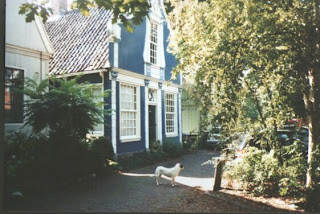


Wednesday, October 03, 2007
Another side of Holland
Because I live in Amsterdam, famed licentious city of prostitutes and marijuana, its easy to forget as an outsider that there is a whole other side of Holland... one where strictly religious people frown on "sinning" and where Calvinism reigns supreme. I was just looking at the International Herald Tribune and there was an interesting article there called Small Town of Urk exemplifies pious heart of the Dutch Christian Right. It was quite enlightening to see that there was also a Christian right here.
I was talking to two new friends of mine, she's American and he's Dutch. He's from the South and we were talking about visiting family. He mentioned that where he grew up, you could never see your friends or hang out with them on Sundays. "Sunday is the day for family"he said - "in Holland, your house is your church and you keep it clean like a religion. The man cleans the garden and the car and the woman cleans the house. On Sundays you visit your parents and you all sit together and talk - no tv, no fooling around." This would explain why most of the shops, except around Centraal Station are closed on Sundays.
I've also heard that the Dutch take their mealtimes VERY SERIOUSLY. Most of the people in my office take off at 5pm. From what I have been told, dinner is at 6pm with the whole family around the table. Now, not everyone is like this - I do live in Amsterdam after all. But I'm also an expat so I tend to hang out more with either expats or Dutch people who have had an expat experience. But because the country is so small, we have people commuting in from Utrecht, the Hague, and other countries. A lovely woman that I work closely with commutes 2 hours each way on the train through the countryside to come to work and she has four children!
I've slowly been acclimatizing to the Dutch life but I still feel like there will be a side that I will never know. While friendly, open, and fun - the Dutch are also extremely close with their friends from university and childhood - the hierarchy is family, those friends, work events, and if there is any time left over - perhaps some strange expats. But maybe its not so different from the US after all... I remember thinking how difficult it was to assimilate to North Carolina when I moved there - trying to find someone who wasn't married with kids to befriend me and in the end, my close friends became other transplants looking for the same.
I was talking to two new friends of mine, she's American and he's Dutch. He's from the South and we were talking about visiting family. He mentioned that where he grew up, you could never see your friends or hang out with them on Sundays. "Sunday is the day for family"he said - "in Holland, your house is your church and you keep it clean like a religion. The man cleans the garden and the car and the woman cleans the house. On Sundays you visit your parents and you all sit together and talk - no tv, no fooling around." This would explain why most of the shops, except around Centraal Station are closed on Sundays.
I've also heard that the Dutch take their mealtimes VERY SERIOUSLY. Most of the people in my office take off at 5pm. From what I have been told, dinner is at 6pm with the whole family around the table. Now, not everyone is like this - I do live in Amsterdam after all. But I'm also an expat so I tend to hang out more with either expats or Dutch people who have had an expat experience. But because the country is so small, we have people commuting in from Utrecht, the Hague, and other countries. A lovely woman that I work closely with commutes 2 hours each way on the train through the countryside to come to work and she has four children!
I've slowly been acclimatizing to the Dutch life but I still feel like there will be a side that I will never know. While friendly, open, and fun - the Dutch are also extremely close with their friends from university and childhood - the hierarchy is family, those friends, work events, and if there is any time left over - perhaps some strange expats. But maybe its not so different from the US after all... I remember thinking how difficult it was to assimilate to North Carolina when I moved there - trying to find someone who wasn't married with kids to befriend me and in the end, my close friends became other transplants looking for the same.
Saturday, September 22, 2007
Just bring your beret and some perfume!
I'm heading off to Paris next weekend with my friends Carolyn and Corinne. Carolyn and I have both just turned 40 and have writer-ly aspirations. We were both a bit bummed about our 40th birthdays- mostly because we had envisioned creating some huge extravaganza and I couldn't because I was broke and depressed (see housing woes) and she couldn't because her daughter has a birthday at the same time as her and, well, you know, kids steal the show. Plus, neither of us were able to get it together to plan a big event.
We decided to treat ourselves to a weekend away. So where do two American expat women with writerly ambitions go for a weekend away? Paris of course!
Her sweet husband (and my friend) Vinz agreed to watch after the kids for a weekend. (He also made some half hearted remark about booking us a suite at the Ritz but I'm still waiting for the reservation!) Corinne has had a trying summer as well, so we decided to make it a girls weekend away. Corinne's a photographer so she can follow her muse as well...
Here's the itinerary for next weekend:
Arrive in Paris. Drink wine, drink coffee, sit in cafes, write in journals, walk around and look at beautiful paris. Eat in fabulous restaurants. Drink wine. Shop for cheese and pate. Listen to jazz in nightclubs. Drink wine. Eat in fabulous restaurants. Hang out in cafes and write. Reluctantly return to Amsterdam.
We are entertaining suggestions for restaurants and cafes that we must see! Please feel free to send advice!
We decided to treat ourselves to a weekend away. So where do two American expat women with writerly ambitions go for a weekend away? Paris of course!
Her sweet husband (and my friend) Vinz agreed to watch after the kids for a weekend. (He also made some half hearted remark about booking us a suite at the Ritz but I'm still waiting for the reservation!) Corinne has had a trying summer as well, so we decided to make it a girls weekend away. Corinne's a photographer so she can follow her muse as well...
Here's the itinerary for next weekend:
Arrive in Paris. Drink wine, drink coffee, sit in cafes, write in journals, walk around and look at beautiful paris. Eat in fabulous restaurants. Drink wine. Shop for cheese and pate. Listen to jazz in nightclubs. Drink wine. Eat in fabulous restaurants. Hang out in cafes and write. Reluctantly return to Amsterdam.
We are entertaining suggestions for restaurants and cafes that we must see! Please feel free to send advice!
Tuesday, September 18, 2007
Funky music scene in Amsterdam
Thursday night, I was invited by my friend Celeste's husband, Eoghan, to go to Paradiso and see "The Ex" and Getachew, a Dutch punk rock band playing with an Ethiopian saxophonist from the 60s. Paradiso is an amazing club set in an old church. There are stained glass windows behind the stage and balconies lining the theatre. They have excellent acoustics and beer is 2 euro 20 cents (much cheaper than a similar US venue, I think).
It was a great evening but the band ended at 10:30pm. After the show, Eoghan took off with his friends and my friend Jen and I decided to hang out see what the next band was like.
The dj was spinning some very cool Indian lounge music and mixing it up with some really great Arabic music. We had heard that the next band was Shantel and his Bucovar Orkestar. I really like Balkan beat music and we had already paid to see The Ex and enjoyed it so why the hell not?
As Shantel hit the stage in his trackie suit and knit hop hop hat, he started noodling around on the keyborad. Then the Drummer took the stage with slicked back long thin hair, a red sateen vest reminiscent of the ones I wore in "Show choir" and a cheesy goatee. The trombone player, accordionist, and the rest of the horns took the stage and suddenly BAM! the party started... and what a party it was. At one point as Shantel poured vodka over us and we jumped up and down in the air chanting "Disco Disco something something" "Hup Hup Hup!" - Jen screamed in my ear - "THIS IS LIKE BEING AT THE FUNKIEST FUNNEST WEDDING EVER!"
For your enjoyment, I paste the review of his latest album and I encourage you to get out there and see this band if you ever get a chance!
Crazy eclectic mix of mutant funk, Romanian ballads, Balkan brass and freestyle electronica: Shanelt and the Bucovina Orkestar.
Follow up to the hugely successfull "Bucovina Club" - curated and hosted by Frankfurter Shantel - who's forsaken his old downtempo weedhop stylings for the manic music of the Balkans. The record's a sort of imaginary soundtrack to a defunct but amazing, vodka-fuelled, gypsy-rave all-nighter club, the Bucovina, that used to take place under the portals of an elegant old Frankfurt theatre.The album transports the mood of the Bucovina Club nights, which gives the audience the right feeling for a sweatdriven dancenight. These featured 15 tracks are the ultimate drenching floorfillers in the small hours when hundreds of dance-hungry people are still going strong.
On Bucovina Club 2, 5 of the 15 tracks are exclusive original recordings and 5 are exclusive mixes. SHANTEL’s own tracks featuring stars of the Gypsy and Balkan music scene: BOBAN MARKOVIC and his son MARKO, JONY ILIEV, VESNA PETKOVIC, the all-star line-up BUCOVINA CLUB ORKESTAR, the exclusive remixes feature MAHALA RAI BANDA, FANFARE CIOCARLIA, SANDY LOPICIC ORKESTAR & French-Romanian actress RONA HARTNER (of TONY GATLIF’s movie Gadjo Dilo) while the other tracks present a host of famous artists and some newcomers such as: DR. NELLE KARAJLIC, BALKAN BEAT BOX, SLONOVSKI BAL and GORAN BREGOVIC. SHANTEL’s crazily eclectic mix of Clubsounds, Future Funk, Roma Ballads, Balkan Brass and Freestyle Electronica is already legendary across the dancefloors of Europe. Digital teams up with analogue, beat embraces melody, tango goes lyrical – and it ain’t over til even the samovar sings. There’s no denying SHANTEL’s former life as a producer of Downtempo and Electronica – it’s an experience that has taught him to fly in the face of convention by treating local Eastern European and Balkan music in the same way as HipHop or all kinds of club music and making them just as much an integral part of today’s youth and pop culture.
There’s nothing clichéd about this new wave of music – and not a bobble-hatted world music purist in sight. Bucovina Club is pure, naked euphoria and brings together all ages and nationalities. Not in a politically correct, happy-clappy multiculturalists way – but by placing a direct and visceral punch that really gets people moving. The parties take up where the ecstatic raves of the House and Techno generation left off. This atmosphere is transferred into the second BUCOVINA CLUB CD. SHANTEL and his Bucovina Club is in great demand, not only at European festivals and Clubs. The big names of the Gypsy music scene jamed with him or have had their recordings produced by him or remixed by him: TARAF DE HAIDOUKS, MAHALA RAI BANDA, KOCANI ORKESTAR, ZDOB SI ZDUB, BOBAN MARKOVIC ORKESTAR, FRANK LONDON’S KLEZMER BRASS ALLSTARS, SANDY LOPICIC ORKESTAR, just to name a few.
On the Electric Gypsyland tour he played 30 festivals from France to Morocco and La Reunion, and he has taken his Bucovina Club to such in-clubs as the Nouveau Casino and Favela Chic (Paris), Futuro Flamenco/Nottinghill Arts Club (London), P.P.C. (Graz), the MTV Festival in Bucharest's biggest disco, the legendary Transmusicales in Rennes, to Tel-Aviv, the Balkan Fever Festival (Vienna) and even to such temples of high culture as the State Theatres of Vienna, Hamburg and Stuttgart, the Hebbel Theater in Berlin and the Vienna Festival. A large number of cities have now regular Club evenings like Zurich (Xtra), Nuremberg (K 4) and, of course, hometown Frankfurt (Schauspiel). Even vast crowds have been drawn into the world of the Bucovina Club: as the closing act of the Station-to-Station-Festivals in Florence, on the biggest square in Czernowitz (Bucovina) and at the summer open air events in Frankfurt. SHANTEL’s Bucovina Club has put the Balkans firmly on the map of contemporary pop culture, throwing overboard the stereotypes and clichés, putting a whole new slant on the way we think about the “wild east” and Gypsy culture. Bucovina Club is a heady mix of electronic club music and vibrant Roma music.
It was a great evening but the band ended at 10:30pm. After the show, Eoghan took off with his friends and my friend Jen and I decided to hang out see what the next band was like.
The dj was spinning some very cool Indian lounge music and mixing it up with some really great Arabic music. We had heard that the next band was Shantel and his Bucovar Orkestar. I really like Balkan beat music and we had already paid to see The Ex and enjoyed it so why the hell not?
As Shantel hit the stage in his trackie suit and knit hop hop hat, he started noodling around on the keyborad. Then the Drummer took the stage with slicked back long thin hair, a red sateen vest reminiscent of the ones I wore in "Show choir" and a cheesy goatee. The trombone player, accordionist, and the rest of the horns took the stage and suddenly BAM! the party started... and what a party it was. At one point as Shantel poured vodka over us and we jumped up and down in the air chanting "Disco Disco something something" "Hup Hup Hup!" - Jen screamed in my ear - "THIS IS LIKE BEING AT THE FUNKIEST FUNNEST WEDDING EVER!"
For your enjoyment, I paste the review of his latest album and I encourage you to get out there and see this band if you ever get a chance!
Crazy eclectic mix of mutant funk, Romanian ballads, Balkan brass and freestyle electronica: Shanelt and the Bucovina Orkestar.
Follow up to the hugely successfull "Bucovina Club" - curated and hosted by Frankfurter Shantel - who's forsaken his old downtempo weedhop stylings for the manic music of the Balkans. The record's a sort of imaginary soundtrack to a defunct but amazing, vodka-fuelled, gypsy-rave all-nighter club, the Bucovina, that used to take place under the portals of an elegant old Frankfurt theatre.The album transports the mood of the Bucovina Club nights, which gives the audience the right feeling for a sweatdriven dancenight. These featured 15 tracks are the ultimate drenching floorfillers in the small hours when hundreds of dance-hungry people are still going strong.
On Bucovina Club 2, 5 of the 15 tracks are exclusive original recordings and 5 are exclusive mixes. SHANTEL’s own tracks featuring stars of the Gypsy and Balkan music scene: BOBAN MARKOVIC and his son MARKO, JONY ILIEV, VESNA PETKOVIC, the all-star line-up BUCOVINA CLUB ORKESTAR, the exclusive remixes feature MAHALA RAI BANDA, FANFARE CIOCARLIA, SANDY LOPICIC ORKESTAR & French-Romanian actress RONA HARTNER (of TONY GATLIF’s movie Gadjo Dilo) while the other tracks present a host of famous artists and some newcomers such as: DR. NELLE KARAJLIC, BALKAN BEAT BOX, SLONOVSKI BAL and GORAN BREGOVIC. SHANTEL’s crazily eclectic mix of Clubsounds, Future Funk, Roma Ballads, Balkan Brass and Freestyle Electronica is already legendary across the dancefloors of Europe. Digital teams up with analogue, beat embraces melody, tango goes lyrical – and it ain’t over til even the samovar sings. There’s no denying SHANTEL’s former life as a producer of Downtempo and Electronica – it’s an experience that has taught him to fly in the face of convention by treating local Eastern European and Balkan music in the same way as HipHop or all kinds of club music and making them just as much an integral part of today’s youth and pop culture.
There’s nothing clichéd about this new wave of music – and not a bobble-hatted world music purist in sight. Bucovina Club is pure, naked euphoria and brings together all ages and nationalities. Not in a politically correct, happy-clappy multiculturalists way – but by placing a direct and visceral punch that really gets people moving. The parties take up where the ecstatic raves of the House and Techno generation left off. This atmosphere is transferred into the second BUCOVINA CLUB CD. SHANTEL and his Bucovina Club is in great demand, not only at European festivals and Clubs. The big names of the Gypsy music scene jamed with him or have had their recordings produced by him or remixed by him: TARAF DE HAIDOUKS, MAHALA RAI BANDA, KOCANI ORKESTAR, ZDOB SI ZDUB, BOBAN MARKOVIC ORKESTAR, FRANK LONDON’S KLEZMER BRASS ALLSTARS, SANDY LOPICIC ORKESTAR, just to name a few.
On the Electric Gypsyland tour he played 30 festivals from France to Morocco and La Reunion, and he has taken his Bucovina Club to such in-clubs as the Nouveau Casino and Favela Chic (Paris), Futuro Flamenco/Nottinghill Arts Club (London), P.P.C. (Graz), the MTV Festival in Bucharest's biggest disco, the legendary Transmusicales in Rennes, to Tel-Aviv, the Balkan Fever Festival (Vienna) and even to such temples of high culture as the State Theatres of Vienna, Hamburg and Stuttgart, the Hebbel Theater in Berlin and the Vienna Festival. A large number of cities have now regular Club evenings like Zurich (Xtra), Nuremberg (K 4) and, of course, hometown Frankfurt (Schauspiel). Even vast crowds have been drawn into the world of the Bucovina Club: as the closing act of the Station-to-Station-Festivals in Florence, on the biggest square in Czernowitz (Bucovina) and at the summer open air events in Frankfurt. SHANTEL’s Bucovina Club has put the Balkans firmly on the map of contemporary pop culture, throwing overboard the stereotypes and clichés, putting a whole new slant on the way we think about the “wild east” and Gypsy culture. Bucovina Club is a heady mix of electronic club music and vibrant Roma music.
Friday, September 14, 2007
The show!
The show last night was wonderful! It was an interesting experience going to a Dutch rock concert... people openly smoke marijuana and get wasted on beer and noone cares. I haven't smelled so much pot since my last grateful dead show! Anyway, I had to sit alone but I still had a fabulous time. I splurged and bought tickets as close to the stage as I could find. They had some fabulous video screens so you could see closeups and Sting was as beautiful as ever.
Sadly, after the show was over, I went to the bar in the arena to get a drink and they were playing their final concert in 1984 and you could tell how much they had aged. But they sounded good if not as tight and falsetto-y as the 80s.
Here's the play list:
Message in a bottle
Synchronicity 2
Walking on the moon
Voices/World is Running Down
Don't stand so close to me
Driven to Tears
Hole in my life
Truth hits everybody
Every little thing she does is magic
De Doo Doo Doo
Invisible sun
Walking in their footsteps
One World
Can't Stand Losing You
Roxanne
Encore: King of Pain
So Lonely
Every Breath You take
Next To You
Sadly, after the show was over, I went to the bar in the arena to get a drink and they were playing their final concert in 1984 and you could tell how much they had aged. But they sounded good if not as tight and falsetto-y as the 80s.
Here's the play list:
Message in a bottle
Synchronicity 2
Walking on the moon
Voices/World is Running Down
Don't stand so close to me
Driven to Tears
Hole in my life
Truth hits everybody
Every little thing she does is magic
De Doo Doo Doo
Invisible sun
Walking in their footsteps
One World
Can't Stand Losing You
Roxanne
Encore: King of Pain
So Lonely
Every Breath You take
Next To You
Thursday, September 13, 2007
My 40th birthday with Sting and the Police
My 40th birthday happened in August. Unfortunately for me, it occurred simultaneously with my giant housing disaster. I was panicked and anxiety ridden about trying to find a new place to live and the fact that I had to come up with more than a months salary to put down a deposit to live and was losing my deposit from the apartment I was currently in. Instead of renting the beer bike with my good Dutch friends here and having a riotous day of drunken debauchery, I had a small gathering with a few people in my apartment where I drank a bit too much wine on an empty stomach and tried to keep the anxiety at bay. My dream party - flying to New York City, partying with Brian and Kevin, Bernice, Alec, my sister, and other assorted friends and then going to see the Police on their reunion tour was not to happen.
So tonight, I'm going to do what I really really wanted to do - I'm going to go see the Police in concert. Unfortunately, I'm basically going alone because noone I knew wanted to go with me and another friend bought tickets to the event and never called to see if I was interested. But I don't mind. It'll be me and Sting singing to each other, making eye contact, and falling in love all over again like we did when I was 15.
Yes, I'm still bitter that my parents never let me go to the Police's final concert tour in Greensboro, NC because I was too young! I've seen Sting in concert a number of times but Sting's solo persona is a bit too blandly romantic for me. I prefer the sunbleached punk rock bassist with the sexy mouth from Zenyatta Mondatta, Outlandos d'Amour, and Regatta de Blanc. Synchronicity and Ghosts in the Machine are not my favorite albums but my favorite song comes from Ghosts in the Machine --"Every Little Thing She does is Magic" - coincidentally, those lyrics were presented to me by Gene Matthews my freshman year in high school when he attempted to tell me that he was in love with me.
I still remember listening to the first album of their's I ever bought - "Regatta de Blanc". I had to do a poetry project for my Junior year's advanced English class. I chose the song "Message in a bottle"and I attempted to paste photos that reflected my lonely outcast teenage angst feelings onto a wine bottle. In particular, I clearly remember photos from Iceland of a man that looked like Sting sitting in a lonely thermal pool in the mountains.
I sang "So Lonely" into my college boyfriend, Nick Leoncavallo's answering machine when he was away on a trip. I have consoled myself with "Can't Stand Losing" when life hasn't gone my way and cried to "the Bed's too big without you" when I have been heart broken. I analyzed "Wrapped around your finger" and told everyone it was written in Iambic Pentameter like the pretentious English major to be I was. I listened to "King of Pain" late at night in my bedroom. I danced riotously to "De doo doo doo, de daa daa daa" and wanted to be the subject of "Don't stand so close to me" with my English professor in college.
I can't imagine my life without the Police so here's to my 40th and here's to tonight.
So tonight, I'm going to do what I really really wanted to do - I'm going to go see the Police in concert. Unfortunately, I'm basically going alone because noone I knew wanted to go with me and another friend bought tickets to the event and never called to see if I was interested. But I don't mind. It'll be me and Sting singing to each other, making eye contact, and falling in love all over again like we did when I was 15.
Yes, I'm still bitter that my parents never let me go to the Police's final concert tour in Greensboro, NC because I was too young! I've seen Sting in concert a number of times but Sting's solo persona is a bit too blandly romantic for me. I prefer the sunbleached punk rock bassist with the sexy mouth from Zenyatta Mondatta, Outlandos d'Amour, and Regatta de Blanc. Synchronicity and Ghosts in the Machine are not my favorite albums but my favorite song comes from Ghosts in the Machine --"Every Little Thing She does is Magic" - coincidentally, those lyrics were presented to me by Gene Matthews my freshman year in high school when he attempted to tell me that he was in love with me.
I still remember listening to the first album of their's I ever bought - "Regatta de Blanc". I had to do a poetry project for my Junior year's advanced English class. I chose the song "Message in a bottle"and I attempted to paste photos that reflected my lonely outcast teenage angst feelings onto a wine bottle. In particular, I clearly remember photos from Iceland of a man that looked like Sting sitting in a lonely thermal pool in the mountains.
I sang "So Lonely" into my college boyfriend, Nick Leoncavallo's answering machine when he was away on a trip. I have consoled myself with "Can't Stand Losing" when life hasn't gone my way and cried to "the Bed's too big without you" when I have been heart broken. I analyzed "Wrapped around your finger" and told everyone it was written in Iambic Pentameter like the pretentious English major to be I was. I listened to "King of Pain" late at night in my bedroom. I danced riotously to "De doo doo doo, de daa daa daa" and wanted to be the subject of "Don't stand so close to me" with my English professor in college.
I can't imagine my life without the Police so here's to my 40th and here's to tonight.
Tuesday, September 04, 2007
Monday, September 03, 2007
My horoscope today
You are riding the career train to success. You have sufficient energy and determination, but today something can muck it all up. A coworker, perhaps, has unwittingly interfered by tampering with the tracks causing you to derail. Don't worry if you are thrown off course; it's not permanent. But then again, nothing is.
For those of you who know my current difficulties with my job... this is ironic.
For those of you who know my current difficulties with my job... this is ironic.
Tuesday, August 28, 2007
Sunday, August 26, 2007
Sunday Lovely Sunday
Now that the “Housing Drama” is over, my life in
Most places in
I walked out of the store with the aforementioned rain pants, but also a photo frame, a tank top, some hair clips, some lights for my bike, a few organizer shelves for my new home office, and a bottle of wine! All for about 20 euros! I am hooked! There are some super cute duvet covers for sale there and I can pick up a feather duvet and they have an excellent bath goods section! Anyway, I think I’ve found a new favorite store to make errands running more exciting!
And even more exciting – there is a pretty decent thai takeaway one block from my new apartment! Sundays have never seemed so normal.
Monday, August 13, 2007
New Apartment Pics!
The Bedroom (love that Orange)

The Study off the living room:

View from the Kitchen into the living room and out into the balcony:

The Kitchen:

Other amenities - a lovely bathroom with a large tub that looks out onto a garden. No waterheater above the bed to disturb my sleep! A small balcony that looks out onto the street (not ideal) but big enough for flower boxes and maybe a tree! A much larger toilet than the 'marble tomb' from my current place. A small sunroom off the bedroom that looks out onto the garden.
Home sweet home.
Housing Woes
Oh the housing woes I've had.
- May 15: Found an apartment through a woman who was moving away from Amsterdam. Took the apartment.
- May 25: Cable tv that is included in rent is turned off for lack of payment.
- May 26: Called Housing Agency, they said call Housing Management Service, Called them. "We'll take care of it."
- For the next five weeks, call housing agencies periodically to find out why cable tv not working - told that its taken care of, not their responsibility, can't turn it back on, not their responsibility, taken care of, etc. Every call gets a different answer. Finally, it turns out that the cable company won't turn it back on because the owner has been delinquent in paying the bill before.
- July 1: Get notice from owner of apartment that the "makelaar"needs to come look at it.
- July 9: Makelaar informs me that the apartment is going up for auction in October because owner hasn't paid the mortgage.
- July 10: Contact owner who tells me not to worry. I worry.
- July 17: Get notice that the bank/tax man is coming to seize all the goods inside the apartment. Really start to freak out.
- July 18: Seek legal advice. Told that I can't stay there because he wasn't allowed to rent it in the first place.
- August 1: Contact owner who says - don't pay August rent and I'll reimburse September rent as the deposit.
- August 7: My current housing agency tries to tell me that there are NO apartments in my price range and that it is illegal for them to try to show me any because I make TOO MUCH MONEY (!!)
- August 7: Find a new apartment in my price range, thanks to networking with friends. Its cute, bigger than my current place, and with a MUCH nicer toilet but not a balcony on the back - balcony faces street.
- August 9: I try to put down the deposit - although I can't get the keys until August 14, if I want the apartment, I have to pay the rent from August 10 on.
- August 9: Realize I didn't inform them that I have a cat.
- August 9 - 12 worry that they will withdraw apartment, decide to be honest and tell them.
- August 13: All is well! I pick up the keys tomorrow and move in on the 15th.
Thursday, August 02, 2007
Taking a Break
I've got the week off in Amsterdam which is nice because the weather has been spectacular. A few people have commented that i seem to be having a lot of ups and downs. That's definately true. In the relief world, we talk about the five lifesaving needs: food, water, shelter, hygiene, and healthcare. Some of those have been threatened in the past month making me extremely anxious. The coping mechanisms don't seem to be working like they used to. But having Alec, my bestest buddy and concrete wall of support, visit me for three days makes me feel renewed and in love with this city again.
While i don't want to bore with the particulars, here's the goods and the bads of three months in Amsterdam.
Goods:
Bads:
While i don't want to bore with the particulars, here's the goods and the bads of three months in Amsterdam.
Goods:
- Exploring the city on my bike - remembering what it felt like in the pre-car days of zipping through the streets at night with the wind in your hair.
- Cool restaurants, bars, cafes, parks, museums, and galleries - definately a wonderful city
- Meeting new people - meeting my new Dutch friends and other expats
- Renewing friendships with old friends and their kids.
- Being challenged at work - meeting really dedicated people who are working under hard conditions to help others. feeling proud whenever I tell someone where I work and they react positively - I'm learning new things almost every day which is good.
- Losing some weight from exercising and feeling healthy
- Long summer evenings
- Riding small boats around on the canals drinking wine with friends
- Very good inexpensive wine in the grocery stores
- Great cheese everywhere
- Fabulous breads
- The option of taking a boat ferry for a commute!
Bads:
- Mosquitos - the Dutch mosquitos are the only ones in the world that have ever bitten me.
- Being awakened at 3am by my neighbors fighting, a mosquito buzzing in my ear, the water heater over my bed cycling on and off constantly, and simon chasing the mosquito - falling asleep at 5am and having to awaken at 5:3oam to ride to the train station in the pouring rain.
- 50 degrees and July.
- Learning that I will probably be evicted from my apartment in October so having to do the apartment hunt all over again but in August when everyone is on vacataion - fear of being tossed out on the street with my cat.
- The office politics of where I work - lots of french male egos and obscure regulations
- Dealing with new systems for the daily life (bank, travel, health care, shopping)
- Being in a whole different timezone from my family and friends
- Feeling like noone here really understands me yet - still constantly in small talk mode.
- Feeling anxious to prove myself at work and do something worthwhile but afraid of running afoul of all the egos and the obscure work regulations and inadvertently causing a negative reputation.
Subscribe to:
Posts (Atom)